

Mend vs Pandy
Two Shopify apps, side by side: detected stores, momentum, reviews, plans, listed features and who runs each. Store counts as of Oct 13, 2026.
The short answer
- Paid plans start at $29/month for Mend and $8/month for Pandy.
- Mend lists 12 features Pandy’s listing doesn’t mention, including Agent analytics, Analytics, Customer notifications.
Head to head


Starter
- · 1,000 AI replies per month
- · 100 customer conversations per month
- · No overages or surprise fees
Growth
- · 5,000 AI replies per month
- · 500 customer conversations per month
- · No overages or surprise fees
Scale
- · 2,000 customer conversations per month
- · 20,000 AI replies per month
- · No overages or surprise fees
Annual
Basic
Coverage counts what each App Store listing names. Every feature, checked off app by app, is in Shoplist.
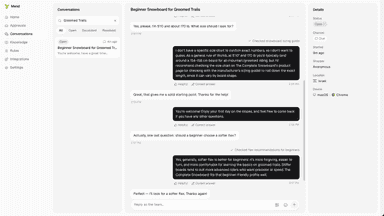
See every featureMend brings storefront chat and forwarded email into one AI support workflow. It answers from your synced catalog, Shopify policies, and knowledge base, recommends products, and verifies shoppers before order lookups. It can track orders, start returns, process refunds, cancel eligible orders, edit shipping addresses, create service-recovery discounts, and issue store credit.
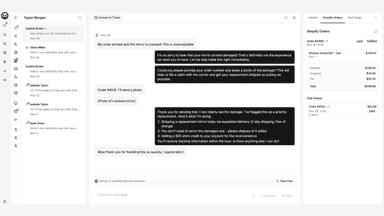
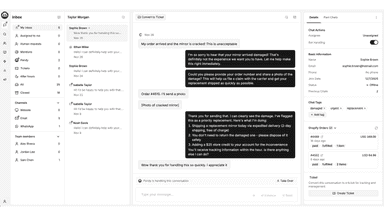
Pandy connects to your Shopify store and handles support automatically - order lookups, cancellations, address changes - done by AI before you see the message. Customers verify with postal code, card digits, or email code before any action. Fast for them, impossible for fraud. Includes order history in every conversation, chat widget, email, WhatsApp, and human handoff when needed. Works in minutes.
- Answer questions from your catalog, policies, FAQs, and store knowledge
- Support chat and email, verify shoppers, and handle order requests
- Keep control with rules, approvals, team replies, and human takeover
- View customer orders directly in conversations without leaving the chat
- AI handles FAQs automatically and escalates complex issues to your team
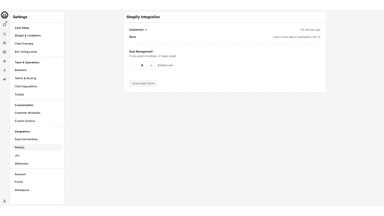
- Chat widget installs on your storefront via theme extension—no code needed




All the numbers
Every figure, side by side
A green dot marks the app ahead on a measured figure. Estimates, gaps and apps that leave no storefront trace never take the lead.
Adoption
| Measure |  Mend |  Pandy |
|---|---|---|
| Detected stores | Not published | Not published |
| Net store change, 28 days | 0 | 0 |
| Stores added, 28 days | Not enough data | Not enough data |
| Big-brand share | Not enough data | Not enough data |
| Top store categories | Not published | Not published |
| Top store countries | Not published | Not published |
Reviews
| Measure | Mend | Pandy |
|---|---|---|
| App Store rating | Not published | Not published |
| App Store reviews | Not published | Not published |
| New reviews, 28 days | Not enough data | Not enough data |
| Reviewers a year or more in | Not enough data | Not enough data |
FAQ
Mend and Pandy: common questions
- Is Mend or Pandy cheaper?
- Paid plans start at $29/month for Mend and $8/month for Pandy. Shoplist compares base prices only between monthly plans in the same currency; usage charges and annual plans vary, so check each plan’s limits.
- What features does each app list that the other doesn’t?
- Mend lists 12 the others don’t mention, such as Agent analytics, Analytics, Customer notifications, Discounts. Pandy lists 9 the others don’t mention, such as Auto-assign, Business hours, Chat assignment, Chat flows. A feature missing from a listing may still be supported; this compares what each App Store listing says.
- Where does this comparison’s data come from?
- Shoplist crawls Shopify storefronts to detect which apps each store runs, and reads each app’s Shopify App Store listing for reviews, pricing, features and integrations. Store counts are as of Oct 13, 2026; estimated figures are labeled.
How Shoplist compares apps
Store counts come from Shoplist’s crawl of Shopify storefronts, which detects the apps each store runs; they are as of Oct 13, 2026. Reviews, ratings, plans, features and integrations come from each app’s Shopify App Store listing. 28-day figures are labeled when estimated, and a figure that is missing or estimated never decides who leads. Read the methodology.