
Riskified vs Yofi
Two Shopify apps, side by side: detected stores, momentum, reviews, plans, listed features and who runs each. Store counts as of Oct 14, 2026 for Riskified, Nov 16, 2026 for Yofi.
The short answer
- On the Shopify App Store: Riskified 4.5 from 43 reviews and Yofi 5.0 from 3 reviews.
- Yofi lists 8 features Riskified’s listing doesn’t mention, including App notifications, Custom alerts, Delivery.
Head to head


- United States
- United Kingdom
- Canada
Momentum
New reviews each month
Review pace is the clearest public read on how fast an app is winning new merchants.
Free to install
Starter Plan
- · Claims & policy abuse
- · Free one-time Bad Actor Diagnostic to quantify:
- · Good and bad resellers
- · Readout of total impact
- · Return fraud & abuse
Coverage counts what each App Store listing names. Every feature, checked off app by app, is in Shoplist.
See every featureRiskified’s AI platform delivers real-time fraud decisions with guaranteed chargeback protection, empowering merchants to scale their ecommerce business safely while minimizing risk. Approve more good orders and block fraud and abuse, with end-to-end visibility and a self-learning feedback system that continuously enhances protection.
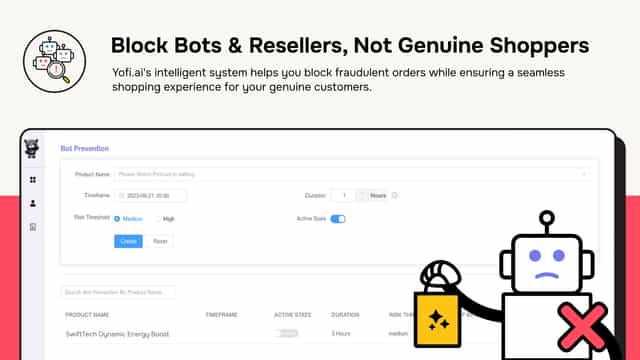
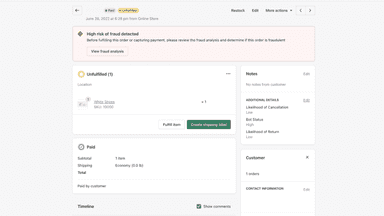
At Yofi, we empower retailers to combat return fraud and policy abuse while protecting the customer experience. Our app helps merchants identify fraudsters, even those using multiple identities and tactics like fake tracking or “Did Not Arrive” schemes. By reducing revenue loss from fraud and easing the burden on support teams, Yofi ensures merchants can refund confidently.
- Enjoy full chargeback protection on every transaction
- End-to-end visibility and automated reporting to take control of conversion
- Automatically identify and block abusive refunds and returns with Policy Protect
- Recover revenue with streamlined, automated chargeback management
- Identify and prevent bots, bad actors, and duplicate accounts
- Reduce the cost of acquiring new customers
- Customer segmentation
- Optimize fulfillment times, planning, and software spending





All the numbers
Every figure, side by side
A green dot marks the app ahead on a measured figure. Estimates, gaps and apps that leave no storefront trace never take the lead.
Adoption
| Measure |  Riskified | Yofi |
|---|---|---|
| Detected stores | Not published | 166 |
| Net store change, 28 days | 0 | 0 |
| Stores added, 28 days | Not enough data | Not enough data |
| Big-brand share | Not enough data | Not enough data |
| Top store categories | Not published | Apparel & Accessories, Home & Garden, Health & Beauty |
| Top store countries | Not published | United States, United Kingdom, Canada |
Reviews
| Measure | Riskified | Yofi |
|---|---|---|
| App Store rating | 4.5 ★ | 5.0 ★(ahead) |
| App Store reviews | 43(ahead) | 3 |
| New reviews, 28 days | Not enough data | 0 |
| Reviewers a year or more in | Not enough data | Not enough data |
FAQ
Riskified and Yofi: common questions
- Which has better reviews, Riskified or Yofi?
- On the Shopify App Store: Riskified 4.5 from 43 reviews and Yofi 5.0 from 3 reviews.
- What features does each app list that the other doesn’t?
- Riskified lists 6 the others don’t mention, such as Chargeback alerts, Chargeback analytics, Chargebacks, One-time password (OTP). Yofi lists 8 the others don’t mention, such as App notifications, Custom alerts, Delivery, Gift card abuse. A feature missing from a listing may still be supported; this compares what each App Store listing says.
- Where does this comparison’s data come from?
- Shoplist crawls Shopify storefronts to detect which apps each store runs, and reads each app’s Shopify App Store listing for reviews, pricing, features and integrations. Store counts are as of Oct 14, 2026 for Riskified, Nov 16, 2026 for Yofi; estimated figures are labeled.
How Shoplist compares apps
Store counts come from Shoplist’s crawl of Shopify storefronts, which detects the apps each store runs; they are as of Oct 14, 2026 for Riskified, Nov 16, 2026 for Yofi. Reviews, ratings, plans, features and integrations come from each app’s Shopify App Store listing. 28-day figures are labeled when estimated, and a figure that is missing or estimated never decides who leads. Read the methodology.