

Catalog Intake vs LinkyFlow
Two Shopify apps, side by side: detected stores, momentum, reviews, plans, listed features and who runs each. Store counts as of Oct 13, 2026.
The short answer
- Only LinkyFlow lists a free plan. Paid plans start at $4.99/month for Catalog Intake and $19.99/month for LinkyFlow.
- Catalog Intake lists 5 features LinkyFlow’s listing doesn’t mention, including Conditional logic, Custom workflows, Order processing.
Head to head


Basic
- · 10 uploads/month
- · Approve products and inventory updates
- · Automatically match Shopify Files images
- · CSV, PDF, image, packing slip intake
- · Create reviewed Shopify draft products
- · One upload means one supplier file
Lite
- · 50 uploads/month
- · All Basic features
Starter
- · 150 uploads/month
- · All Basic features
Growth
- · 400 uploads/month
- · All Basic features
free
- · 1 connection (shopify)
- · 2,000 data lines per month
- · Excel and MCP
starter
- · 1 active agent
- · 250,000 data lines per month
- · 3 connections
- · Excel and MCP
- · scheduled and on-demand agent runs
pro
- · 10 connections
- · 5 active agents
- · 5,000,000 data lines per month
- · Excel and MCP
- · scheduled and on-demand agent runs
business
- · 15 active agents
- · 20,000,000 data lines per month
- · 25 connections
- · Excel and MCP
- · scheduled and on-demand agent runs
Coverage counts what each App Store listing names. Every feature, checked off app by app, is in Shoplist.
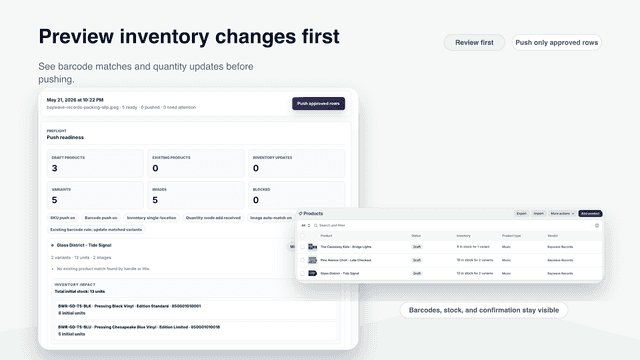
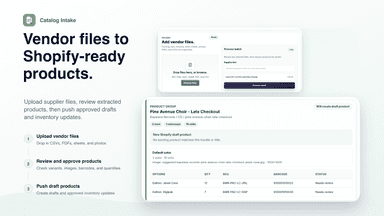
See every featureTurn supplier files into reviewed Shopify products and inventory updates. Upload CSVs, Excel files, PDFs, packing slips, invoices, product sheets, or photos. The app extracts titles, variants, prices, SKUs, barcodes, quantities, suppliers, product types, and Shopify Files image matches, then lets you approve every product or inventory update before anything changes in Shopify.
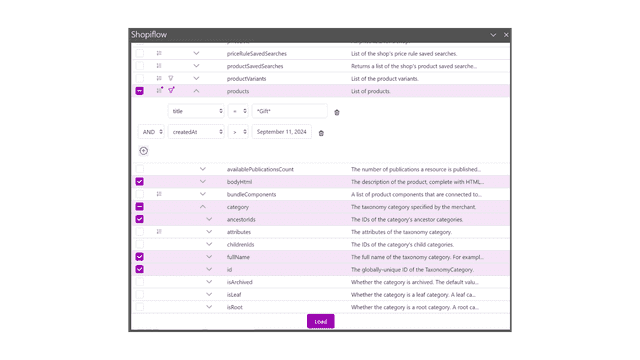
ShopFlow connects Shopify to Excel for powerful bulk product editing, inventory management, and data sync. It easily edit products, variants, prices, & SEO in spreadsheets and also validate data, then push changes to Shopify fast. Great for efficient Shopify data management and bulk operations. An easy way to get precise control over your store from Excel.
- Extract product rows from CSVs, PDFs, invoices, packing slips, and photos
- Review titles, variants, prices, SKUs, barcodes, quantities, and image matches
- Create reviewed draft products or update inventory by barcode
- Create active products
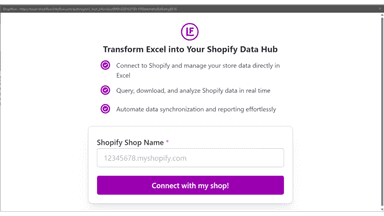
- Manage your store data directly in Excel with seamless integration
- Query, download, and analyze Shopify data in real-time for up-to-date insights.
- Automate data synchronization and reporting to save time and reduce errors



All the numbers
Every figure, side by side
A green dot marks the app ahead on a measured figure. Estimates, gaps and apps that leave no storefront trace never take the lead.
Adoption
| Measure |  Catalog Intake |  LinkyFlow |
|---|---|---|
| Detected stores | Not published | Not published |
| Net store change, 28 days | 0 | 0 |
| Stores added, 28 days | Not enough data | Not enough data |
| Big-brand share | Not enough data | Not enough data |
| Top store categories | Not published | Not published |
| Top store countries | Not published | Not published |
Reviews
| Measure | Catalog Intake | LinkyFlow |
|---|---|---|
| App Store rating | 5.0 ★ | Not published |
| App Store reviews | 1 | Not published |
| New reviews, 28 days | Not enough data | Not enough data |
| Reviewers a year or more in | Not enough data | Not enough data |
Pricing
| Measure | Catalog Intake | LinkyFlow |
|---|---|---|
| Free plan | Not listed | Yes |
| Lowest paid monthly plan | $4.99/month(ahead) | $19.99/month |
| Longest free trial | 14 days | 15 days |
| Plans listed | 4 | 4 |
Listing
| Measure | Catalog Intake | LinkyFlow |
|---|---|---|
| Shopify category rank | #165 | #296 |
| Shopify App Charts | Not on this week’s charts | Not on this week’s charts |
| Built for Shopify | No | No |
| Launched | May 22, 2026 | Oct 28, 2024 |
| Languages | 1 | 1 |
| Developer | Catalog Intake | Golden F |
FAQ
Catalog Intake and LinkyFlow: common questions
- Is Catalog Intake or LinkyFlow cheaper?
- Only LinkyFlow lists a free plan. Paid plans start at $4.99/month for Catalog Intake and $19.99/month for LinkyFlow. Shoplist compares base prices only between monthly plans in the same currency; usage charges and annual plans vary, so check each plan’s limits.
- What features does each app list that the other doesn’t?
- Catalog Intake lists 5 the others don’t mention, such as Conditional logic, Custom workflows, Order processing, Product tags. A feature missing from a listing may still be supported; this compares what each App Store listing says.
- Where does this comparison’s data come from?
- Shoplist crawls Shopify storefronts to detect which apps each store runs, and reads each app’s Shopify App Store listing for reviews, pricing, features and integrations. Store counts are as of Oct 13, 2026; estimated figures are labeled.
How Shoplist compares apps
Store counts come from Shoplist’s crawl of Shopify storefronts, which detects the apps each store runs; they are as of Oct 13, 2026. Reviews, ratings, plans, features and integrations come from each app’s Shopify App Store listing. 28-day figures are labeled when estimated, and a figure that is missing or estimated never decides who leads. Read the methodology.