

Vtober: AI SEO Blog Automation vs Vyrlo: AI Blog Autopilot
Two Shopify apps, side by side: detected stores, momentum, reviews, plans, listed features and who runs each. Store counts as of Oct 13, 2026.
The short answer
- Only Vyrlo lists a free plan. Paid plans start at $8.90/month for Vtober and $19/month for Vyrlo.
- Vyrlo lists 21 features Vtober’s listing doesn’t mention, including Alt tags, ALT text, APIs and webhooks.
Head to head


Momentum
New reviews each month
Review pace is the clearest public read on how fast an app is winning new merchants.
Free
- · 5 Credits/Month
- · AI SEO analysis
- · Auto-Generate Blogs for New Products
- · English-Only AI Blog Generation
- · Generate AI Blog Cover Images
- · Generate Blogs from Product/Topic/URL
Premium Lite
- · 100 Credits/Month
- · AI Chapter Images for Topic Blogs
- · Free version features
- · Generate Blogs in Multiple Languages
Premium
- · 300 Credits/Month
- · Premium Lite version features
Free
- · 3 AI Articles / month
- · Basic Support
- · Manual Publishing
- · Standard SEO Optimization
Pro
- · 20 AI Articles / month
- · Auto-Publishing
- · Autopilot Mode
- · Priority Email Support
Growth
- · 100 AI Articles / month
- · AI-Powered SEO
- · Full Autopilot Mode
- · Priority Email Support
Coverage counts what each App Store listing names. Every feature, checked off app by app, is in Shoplist.
See every featureVtober automatically generates SEO-optimized blog posts when you publish products—no manual work required. Using advanced AI, Vtober creates high-quality content following Google's E-E-A-T principles, complete with AI-generated images to enhance visual appeal and search rankings. Blogs are fully integrated with your store, allowing customers to add products directly to their cart from the article.
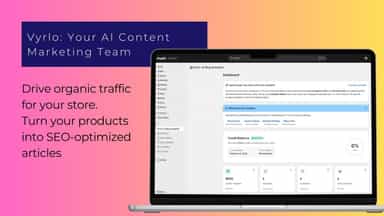
Vyrlo acts as your 24/7 content marketing team. Our AI Agents research your niche to publish SEO-optimized articles automatically. Use 'Post Factory' for instant updates or Autopilot for consistent traffic growth. Includes automatic professional image generation and full meta-tag optimization. Perfect for merchants who want automated search results without spending hours writing.
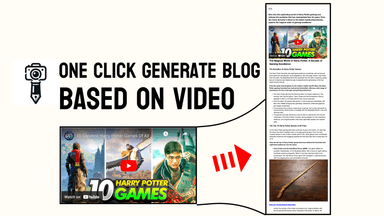
- Generate blogs using Customized Descriptions, and Products.
- AI generates blog covers and content images relevant to the blog content.
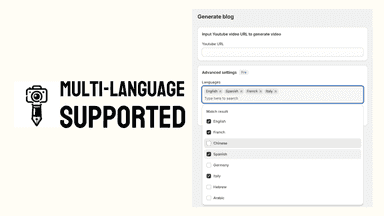
- Supports multiple languages for batch blog creation.
- Generate SEO-friendly blog article tags.
- AI Articles: Generate professional, SEO-optimized blog posts.
- Image Generation: Automatically creates unique, on-brand cover images.
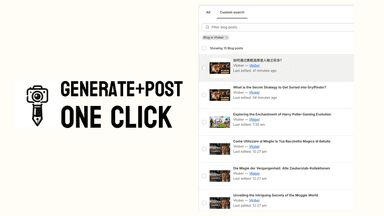
- Push AI Blog poster on autopilot




All the numbers
Every figure, side by side
A green dot marks the app ahead on a measured figure. Estimates, gaps and apps that leave no storefront trace never take the lead.
Adoption
| Measure |  Vtober |  Vyrlo |
|---|---|---|
| Detected stores | Not published | Not published |
| Net store change, 28 days | 0 | 0 |
| Stores added, 28 days | Not enough data | Not enough data |
| Big-brand share | Not enough data | Not enough data |
| Top store categories | Not published | Not published |
| Top store countries | Not published | Not published |
Reviews
| Measure | Vtober | Vyrlo |
|---|---|---|
| App Store rating | 4.9 ★ | Not published |
| App Store reviews | 13 | Not published |
| New reviews, 28 days | 0 | Not enough data |
| Reviewers a year or more in | Not enough data | Not enough data |
FAQ
Vtober and Vyrlo: common questions
- Is Vtober or Vyrlo cheaper?
- Only Vyrlo lists a free plan. Paid plans start at $8.90/month for Vtober and $19/month for Vyrlo. Shoplist compares base prices only between monthly plans in the same currency; usage charges and annual plans vary, so check each plan’s limits.
- What features does each app list that the other doesn’t?
- Vtober lists 3 the others don’t mention, such as Content analysis, Embedded products, Multi-language. Vyrlo lists 21 the others don’t mention, such as Alt tags, ALT text, APIs and webhooks, Article tags. A feature missing from a listing may still be supported; this compares what each App Store listing says.
- Where does this comparison’s data come from?
- Shoplist crawls Shopify storefronts to detect which apps each store runs, and reads each app’s Shopify App Store listing for reviews, pricing, features and integrations. Store counts are as of Oct 13, 2026; estimated figures are labeled.
How Shoplist compares apps
Store counts come from Shoplist’s crawl of Shopify storefronts, which detects the apps each store runs; they are as of Oct 13, 2026. Reviews, ratings, plans, features and integrations come from each app’s Shopify App Store listing. 28-day figures are labeled when estimated, and a figure that is missing or estimated never decides who leads. Read the methodology.