

viaSocket vs Zapier: Workflow Automation
Two Shopify apps, side by side: detected stores, momentum, reviews, plans, listed features and who runs each. Store counts as of Oct 13, 2026.
The short answer
- Only Zapier lists a free plan. Paid plans start at $30/month for viaSocket and $29.99/month for Zapier.
- Zapier lists 6 features viaSocket’s listing doesn’t mention, including Email responses, Inventory levels, Order fulfillment.
Head to head


Momentum
New reviews each month
Review pace is the clearest public read on how fast an app is winning new merchants.
Starter Plan
- · Execution Time Limit: 30 s
- · For personal projects and small-scale automation needs.
- · Invocations: 10,000/month
Team Plan
- · Execution Time Limit: 60 s
- · For freelancers and entrepreneurs. Advanced integrations to streamline your workflow.
- · Invocations: 10,000/month
Free
- · * Shopify requires a paid Zapier plan
- · Automate workflows
- · Two-step Zaps
- · Unlimited Zaps
Professional
- · Automate advanced workflows with Zapier.
- · Email Support
- · Multi-step Zaps
- · Unlimited Premium Apps
- · Webhooks
Team
- · Build and manage automated workflows.
- · Premier Support
- · SSO add-on
- · Shared Workspaces
- · Shared app connections
- · Unlimited Users
Coverage counts what each App Store listing names. Every feature, checked off app by app, is in Shoplist.
See every featureViaSocket lets you automate workflows across apps like Google Sheets, Airtable, and Slack. For example, when a new customer is added to Shopify, their details can be automatically added to Google Sheets or Airtable for easy tracking. You can also send instant notifications to Slack whenever a new order is placed, keeping your team updated in real-time.
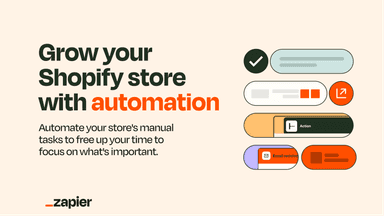
Zapier empowers you to automate your work across 7,000+ apps, like Google Sheets, Facebook Offline Conversions, and Slack. In just a few minutes, you can create Zaps that connect Shopify with the other apps you rely on. Track new orders in your favorite spreadsheet tool, add new customers to your ads platform, and much more—helping you solve problems faster and make a visible impact at work.
- Create Workflows from Scratch or Use Templates
- Automate several tasks at once with multi-step workflows—no coding required.
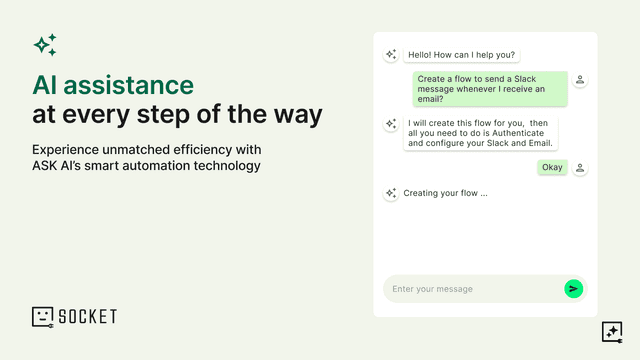
- Interact with AI to build and connect your workflows.
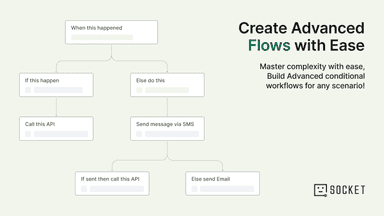
- Create workflows that perform different actions based on if/then logic.
- Create Zaps from scratch or use existing templates to get started quickly.
- Build multi-step Zaps that automate several tasks at once—no code needed.
- Create Zaps that perform different actions based on if/then logic through paths.
- Use filters so Zaps run only when certain conditions are met.


All the numbers
Every figure, side by side
A green dot marks the app ahead on a measured figure. Estimates, gaps and apps that leave no storefront trace never take the lead.
Adoption
| Measure |  viaSocket |  Zapier |
|---|---|---|
| Detected stores | Not published | Not published |
| Net store change, 28 days | 0 | 0 |
| Stores added, 28 days | Not enough data | Not enough data |
| Big-brand share | Not enough data | Not enough data |
| Top store categories | Not published | Not published |
| Top store countries | Not published | Not published |
Reviews
| Measure | viaSocket | Zapier |
|---|---|---|
| App Store rating | Not published | 3.7 ★ |
| App Store reviews | Not published | 73 |
| New reviews, 28 days | Not enough data | 0 |
| Reviewers a year or more in | Not enough data | Not enough data |
FAQ
viaSocket and Zapier: common questions
- Is viaSocket or Zapier cheaper?
- Only Zapier lists a free plan. Paid plans start at $30/month for viaSocket and $29.99/month for Zapier. Shoplist compares base prices only between monthly plans in the same currency; usage charges and annual plans vary, so check each plan’s limits.
- What features does each app list that the other doesn’t?
- viaSocket lists 2 the others don’t mention, such as APIs, Customer segments. Zapier lists 6 the others don’t mention, such as Email responses, Inventory levels, Order fulfillment, Order processing. A feature missing from a listing may still be supported; this compares what each App Store listing says.
- Where does this comparison’s data come from?
- Shoplist crawls Shopify storefronts to detect which apps each store runs, and reads each app’s Shopify App Store listing for reviews, pricing, features and integrations. Store counts are as of Oct 13, 2026; estimated figures are labeled.
How Shoplist compares apps
Store counts come from Shoplist’s crawl of Shopify storefronts, which detects the apps each store runs; they are as of Oct 13, 2026. Reviews, ratings, plans, features and integrations come from each app’s Shopify App Store listing. 28-day figures are labeled when estimated, and a figure that is missing or estimated never decides who leads. Read the methodology.