

Uptime – Automated Store Tests vs Krito
Two Shopify apps, side by side: detected stores, momentum, reviews, plans, listed features and who runs each. Store counts as of Oct 13, 2026.
The short answer
- Only Krito lists a free plan. Paid plans start at $29/month for Uptime and $299/month for Krito.
- Krito lists 1 features Uptime’s listing doesn’t mention, including Custom reports.
Head to head


Momentum
New reviews each month
Review pace is the clearest public read on how fast an app is winning new merchants.
Essentials
- · 2 Shopify apps monitored
- · Shopify status page monitoring
Pro
- · 3 automated UI tests
- · Run automatic UI tests on theme update
- · Shopify status page monitoring
- · Slack alerts
- · Unlimited Shopify apps monitored
Plus
- · 10 automated UI tests
- · Dedicated account manager
- · Everything in Pro
- · Headless ready
- · Priority support
- · Test markets (test in multiple geos)
Krito Free
- · 1 monitoring agent
- · 1 screen size
- · 3 runs per month
- · Issue reports
Krito Pro
- · 1 screen size
- · 2 monitoring agents
- · 20 runs per month
- · Issue reports
- · MCP access
- · Scheduled monitoring
Krito Enterprise
- · 10 monitoring agents
- · 2 screen sizes
- · 200 runs per month
- · Dedicated support
- · Issue reports
- · MCP access
Coverage counts what each App Store listing names. Every feature, checked off app by app, is in Shoplist.
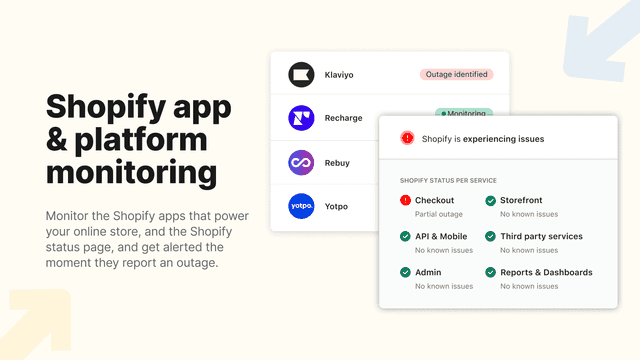
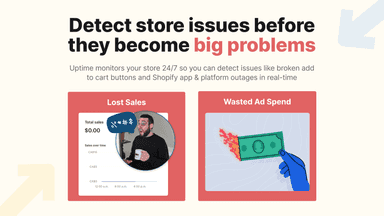
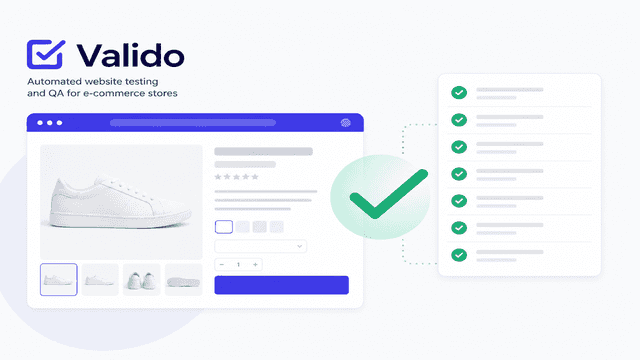
See every featureMonitor, detect, and resolve store issues. Our automated testing and downtime monitoring ensure you know the moment there's an issue that could impact your revenue. We’ve detected critical store issues, saving merchants' sales, protecting ad spend, and expediting resolution. Simple to set up, catch issues before your customers do, like broken add-to-cart/checkout, broken Shopify apps, and more.
Your store changes even when you don't touch it. Plugin updates, theme patches, and platform changes can silently break pricing, checkout, and translations without appearing in your deploy pipeline. Krito's AI agents browse your live storefront like real customers, testing buying flows for each market and language. Every run produces a report with screenshots, root cause attribution, and pass/fail verdicts.
- Save money by detecting store issues before your customers do
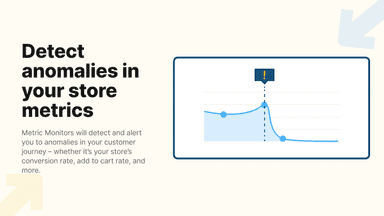
- 24/7 store monitoring with automated store testing
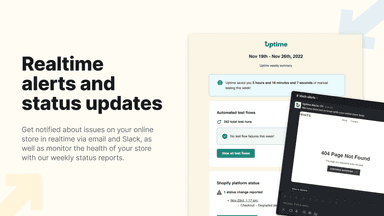
- React quickly and resolve issues in seconds with real-time alerts
- Quick and easy setup with dedicated customer support
- Automated site exploration that discovers testable user flows from your store
- Multi-viewport testing across desktop & mobile with step-by-step screen evidence
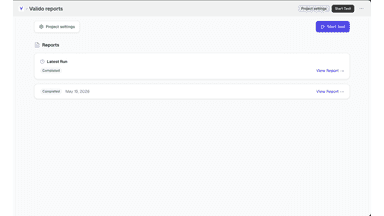
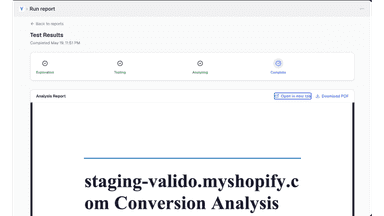
- AI-generated QA reports with pass/fail verdicts, issue details, and visual proof
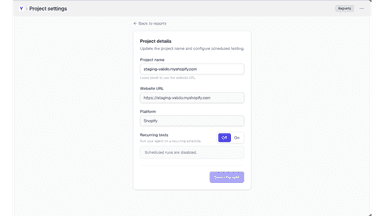
- Scheduled recurring test runs to catch regressions after theme or product change
All the numbers
Every figure, side by side
A green dot marks the app ahead on a measured figure. Estimates, gaps and apps that leave no storefront trace never take the lead.
Adoption
| Measure |  Uptime |  Krito |
|---|---|---|
| Detected stores | Not published | Not published |
| Net store change, 28 days | 0 | 0 |
| Stores added, 28 days | Not enough data | Not enough data |
| Big-brand share | Not enough data | Not enough data |
| Top store categories | Not published | Not published |
| Top store countries | Not published | Not published |
Reviews
| Measure | Uptime | Krito |
|---|---|---|
| App Store rating | 5.0 ★ | Not published |
| App Store reviews | 31 | Not published |
| New reviews, 28 days | 0 | Not enough data |
| Reviewers a year or more in | Not enough data | Not enough data |
FAQ
Uptime and Krito: common questions
- Is Uptime or Krito cheaper?
- Only Krito lists a free plan. Paid plans start at $29/month for Uptime and $299/month for Krito. Shoplist compares base prices only between monthly plans in the same currency; usage charges and annual plans vary, so check each plan’s limits.
- What features does each app list that the other doesn’t?
- Krito lists 1 the others don’t mention, such as Custom reports. A feature missing from a listing may still be supported; this compares what each App Store listing says.
- Where does this comparison’s data come from?
- Shoplist crawls Shopify storefronts to detect which apps each store runs, and reads each app’s Shopify App Store listing for reviews, pricing, features and integrations. Store counts are as of Oct 13, 2026; estimated figures are labeled.
How Shoplist compares apps
Store counts come from Shoplist’s crawl of Shopify storefronts, which detects the apps each store runs; they are as of Oct 13, 2026. Reviews, ratings, plans, features and integrations come from each app’s Shopify App Store listing. 28-day figures are labeled when estimated, and a figure that is missing or estimated never decides who leads. Read the methodology.