

TermForge: Deposits & Terms vs TermStack: Net Terms for B2B
Two Shopify apps, side by side: detected stores, momentum, reviews, plans, listed features and who runs each. Store counts as of Oct 13, 2026.
The short answer
- Both list a free plan. Paid plans start at $39/month for TermForge and $99/month for TermStack.
Head to head


Free
Pro
Studio
Free on dev stores
- · Full access to build and test.
Core
- · 1 rollback (emergency undo)
- · 30-day audit log
- · All B2B conditions
- · All payment term outcomes
- · Priority in-app chat support
- · Simulator: live & draft rules
Growth
- · 180-day audit log
- · 20 rollback versions
- · All B2B conditions
- · All payment term outcomes
- · Priority in-app chat support
- · Simulator: current, live & history
Scale
- · 365-day audit log
- · 90 rollback versions
- · All B2B conditions
- · All payment term outcomes
- · Priority chat support & onboarding
- · Simulator: current, live & history
Coverage counts what each App Store listing names. Every feature, checked off app by app, is in Shoplist.
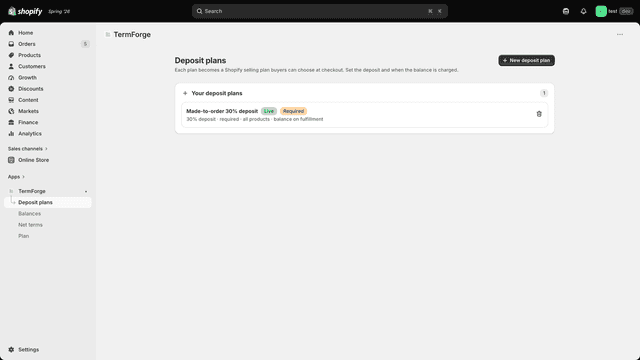
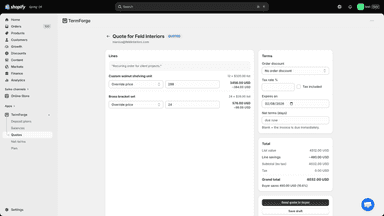
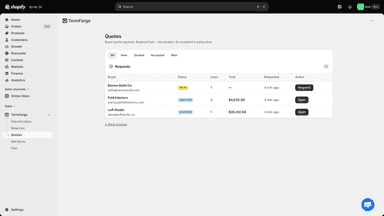
See every featureTermForge turns any product into a deposit sale — and now takes B2B quote requests. Set a percentage or fixed deposit; the buyer secures it and TermForge captures the balance automatically when you fulfill — no chasing, no manual invoices. Add a Request a Quote button: requests land in your inbox, price them in one screen and send the buyer a checkout.
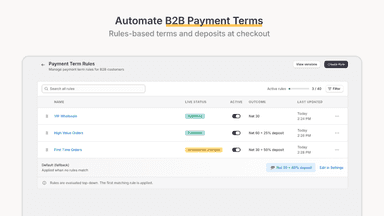
Shopify Plus B2B merchants often rely on manual invoices or draft orders when payment terms vary across wholesale buyers. TermStack applies Net 15, Net 30, Net 60, and Net 90 terms dynamically based on company, customer tags, locations, collections, order value, first-time orders, or total order count.
- Percentage or fixed deposit at checkout, on any product or collection
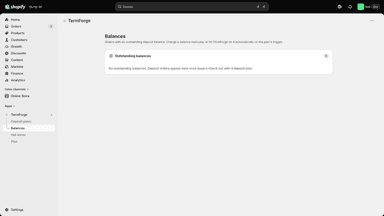
- Balance captured automatically on fulfillment — no manual invoicing
- Built-in dunning: retries and reminders recover failed balance charges
- Request a Quote — buyers ask, you price it in one screen and send a checkout
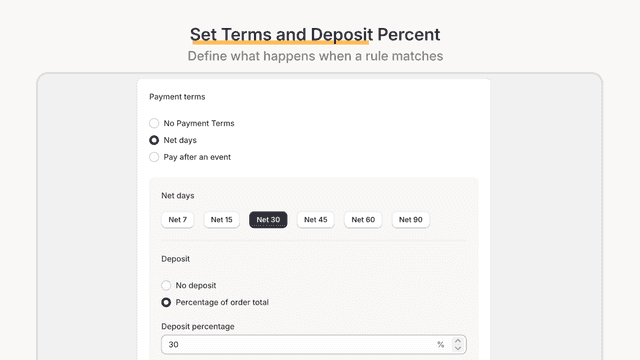
- Automate B2B net payment terms and deposits at checkout
- Rule-based Net-7 to Net-90 terms & deposits with priority ordering
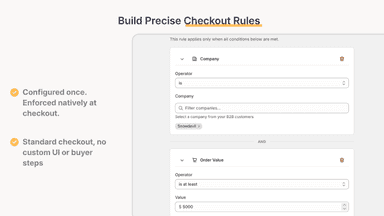
- Set rules by company, location, tags, order value, first order, and order count
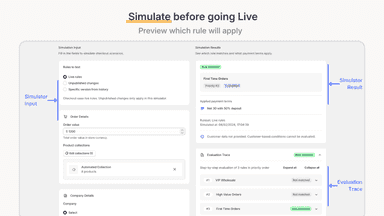
- Use a simulator to preview scenarios before publishing changes
All the numbers
Every figure, side by side
A green dot marks the app ahead on a measured figure. Estimates, gaps and apps that leave no storefront trace never take the lead.
Adoption
| Measure |  TermForge |  TermStack |
|---|---|---|
| Detected stores | Not published | Not published |
| Net store change, 28 days | 0 | 0 |
| Stores added, 28 days | Not enough data | Not enough data |
| Big-brand share | Not enough data | Not enough data |
| Top store categories | Not published | Not published |
| Top store countries | Not published | Not published |
Reviews
| Measure | TermForge | TermStack |
|---|---|---|
| App Store rating | Not published | 5.0 ★ |
| App Store reviews | Not published | 1 |
| New reviews, 28 days | Not enough data | Not enough data |
| Reviewers a year or more in | Not enough data | Not enough data |
FAQ
TermForge and TermStack: common questions
- Is TermForge or TermStack cheaper?
- Both list a free plan. Paid plans start at $39/month for TermForge and $99/month for TermStack. Shoplist compares base prices only between monthly plans in the same currency; usage charges and annual plans vary, so check each plan’s limits.
- Where does this comparison’s data come from?
- Shoplist crawls Shopify storefronts to detect which apps each store runs, and reads each app’s Shopify App Store listing for reviews, pricing, features and integrations. Store counts are as of Oct 13, 2026; estimated figures are labeled.
How Shoplist compares apps
Store counts come from Shoplist’s crawl of Shopify storefronts, which detects the apps each store runs; they are as of Oct 13, 2026. Reviews, ratings, plans, features and integrations come from each app’s Shopify App Store listing. 28-day figures are labeled when estimated, and a figure that is missing or estimated never decides who leads. Read the methodology.