

TaxLocus vs Zamp ‑ Sales Tax Dashboard
Two Shopify apps, side by side: detected stores, momentum, reviews, plans, listed features and who runs each. Store counts as of Nov 6, 2026 for TaxLocus, Nov 5, 2026 for Zamp.
The short answer
- Only TaxLocus lists a free plan.
- Zamp lists 2 features TaxLocus’s listing doesn’t mention, including Multi-currency, Rate management.
Head to head


Free to install
- · Approaching/met status
- · Nexus tracking from your orders
- · Up to 50 orders/mo
Indie
- · All 50 states + DC
- · Reports & filing-form exports
- · Threshold alerts
- · Up to 1,000 orders/mo
Pro
- · AI taxability classification
- · Everything in Indie
- · Exemption certificates
- · Up to 10,000 orders/mo
- · Webhooks
Scale
- · Bulk Parquet export
- · Everything in Pro
- · Priority support
- · Slack alerts
- · Up to 100,000 orders/mo
Coverage counts what each App Store listing names. Every feature, checked off app by app, is in Shoplist.
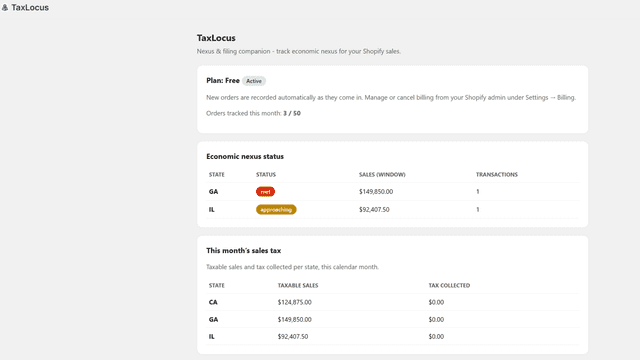
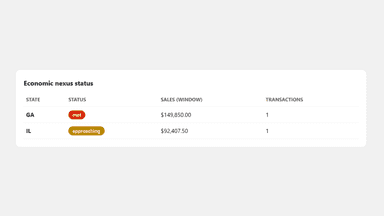
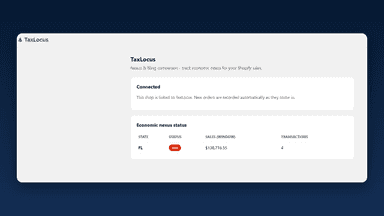
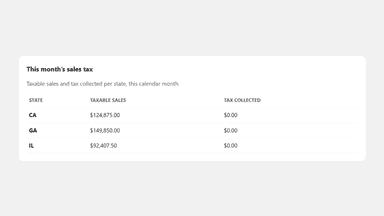
See every featureTaxLocus tracks US sales-tax economic nexus automatically from your Shopify orders and gives you state-return worksheets for all 50 states + DC. Every order is attributed to its destination state and counted toward that state's rolling 12-month threshold, so you see where you're clear, approaching, or need to register and collect.
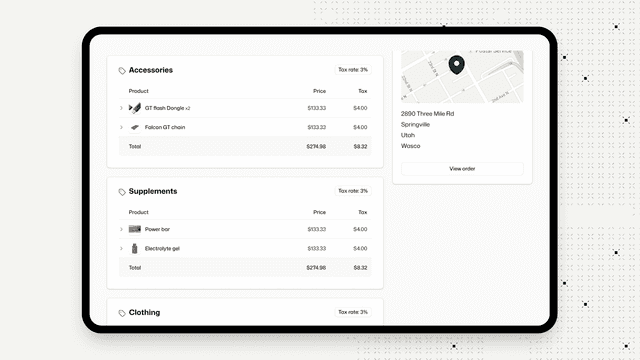
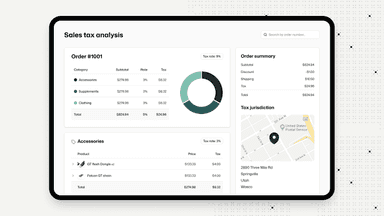
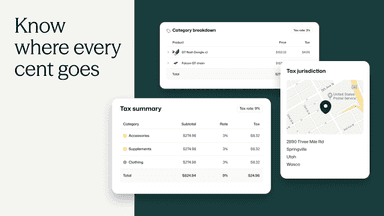
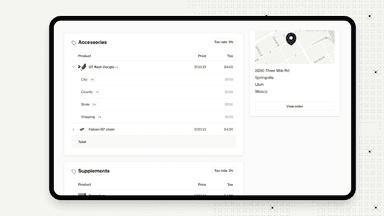
See exactly how sales tax is calculated. Zamp breaks down every order by category and product, maps the tax jurisdiction, and lets you search by order number for instant answers. Built for merchants who need to know, not guess. Need more than calculations? Zamp's full-service solution removes sales tax from your plate entirely. Visit Zamp.com to schedule a free nexus assessment today.
- Automatic order sync — orders arrive by webhook, attributed to destination state
- Economic-nexus tracking across all 50 states + DC
- Clear per-state status: clear · approaching · threshold met
- Thresholds backed by TaxLocus's continuously-updated tax corpus
- View tax totals by product category with visual charts
- Expand any product to see jurisdiction breakdowns
- Search orders by order number
- View shipping tax calculated separately
All the numbers
Every figure, side by side
A green dot marks the app ahead on a measured figure. Estimates, gaps and apps that leave no storefront trace never take the lead.
Adoption
| Measure |  TaxLocus |  Zamp |
|---|---|---|
| Detected stores | Not published | Not published |
| Net store change, 28 days | 0 | 0 |
| Stores added, 28 days | Not enough data | Not enough data |
| Big-brand share | Not enough data | Not enough data |
| Top store categories | Not published | Not published |
| Top store countries | Not published | Not published |
Reviews
| Measure | TaxLocus | Zamp |
|---|---|---|
| App Store rating | Not published | 5.0 ★ |
| App Store reviews | Not published | 2 |
| New reviews, 28 days | Not enough data | Not enough data |
| Reviewers a year or more in | Not enough data | Not enough data |
FAQ
TaxLocus and Zamp: common questions
- Is TaxLocus or Zamp cheaper?
- Only TaxLocus lists a free plan. Shoplist compares base prices only between monthly plans in the same currency; usage charges and annual plans vary, so check each plan’s limits.
- What features does each app list that the other doesn’t?
- TaxLocus lists 1 the others don’t mention, such as Liability calculation. Zamp lists 2 the others don’t mention, such as Multi-currency, Rate management. A feature missing from a listing may still be supported; this compares what each App Store listing says.
- Where does this comparison’s data come from?
- Shoplist crawls Shopify storefronts to detect which apps each store runs, and reads each app’s Shopify App Store listing for reviews, pricing, features and integrations. Store counts are as of Nov 6, 2026 for TaxLocus, Nov 5, 2026 for Zamp; estimated figures are labeled.
How Shoplist compares apps
Store counts come from Shoplist’s crawl of Shopify storefronts, which detects the apps each store runs; they are as of Nov 6, 2026 for TaxLocus, Nov 5, 2026 for Zamp. Reviews, ratings, plans, features and integrations come from each app’s Shopify App Store listing. 28-day figures are labeled when estimated, and a figure that is missing or estimated never decides who leads. Read the methodology.