
Store Sync vs Synkro: Inventory Sync
Two Shopify apps, side by side: detected stores, momentum, reviews, plans, listed features and who runs each. Store counts as of Oct 20, 2026 for Store Sync, Oct 29, 2026 for Synkro.
The short answer
- On the Shopify App Store: Store Sync 5.0 from 1 reviews and Synkro 5.0 from 109 reviews.
- Paid plans start at $8.99/month for Store Sync and $10/month for Synkro.
- Synkro lists 14 features Store Sync’s listing doesn’t mention, including Automatic, Barcodes, Bulk.
Head to head


Sync unlimited product inventory levels between stores
Momentum
New reviews each month
Review pace is the clearest public read on how fast an app is winning new merchants.
Starter Plan
- · 3-day free trial
- · Collections, media & variant sync
- · Priority support
- · Real-time progress tracking
- · Unlimited child stores
- · Up to 1,000 products per sync
Pro Plan
- · 3-day free trial
- · Collections, media & variant sync
- · Priority support
- · Real-time progress tracking
- · Unlimited child stores
- · Up to 3,000 products per sync
Unlimited Plan
- · 3-day free trial
- · Collections, media & variant sync
- · Priority support
- · Real-time progress tracking
- · Unlimited child stores
- · Unlimited products
Synkro Basic
- · 7 day free trial
- · Clone unlimited products between stores
- · Email support
- · Sync up to 1,000 products
- · Unlimited real-time inventory syncing
Synkro Plus
- · Collection cloning & syncing
- · Metafield syncing
- · Price rule automatic price conversions
- · Same-store inventory location syncing
- · Sync up to 10,000 products
- · Tag-based app automations
Synkro Business
- · Everything in Synkro Plus
- · Externally-hosted product video syncing
- · Order routing
- · Priority support
- · Sales channel publication syncing
- · Schedule inventory adjustments
Synkro Pro
- · Custom feature support
- · Dedicated support
- · Everything in Synkro Business
- · Made-to-order master inventory system
- · Sync unlimited products
- · White-gloves onboarding
Coverage counts what each App Store listing names. Every feature, checked off app by app, is in Shoplist.
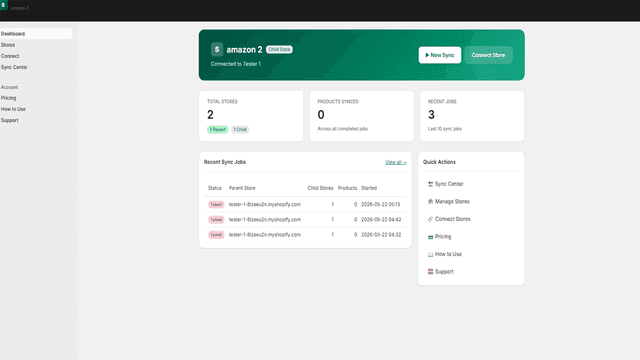
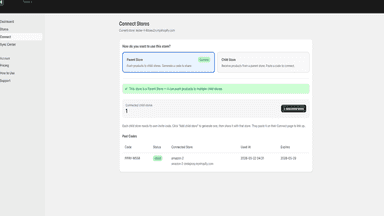
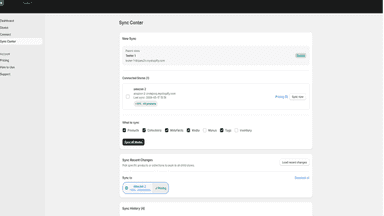
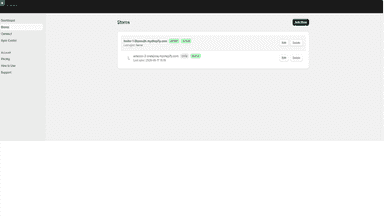
See every featureStore Sync lets merchants running multiple Shopify stores keep their product catalogs in sync automatically. Designate one store as the parent and connect unlimited child stores. Trigger a full sync or select specific products updated in the last 7 days. Apply per-store pricing rules to adjust prices on child stores by a fixed amount or percentage. Track sync progress in real time and stop any job instantly.
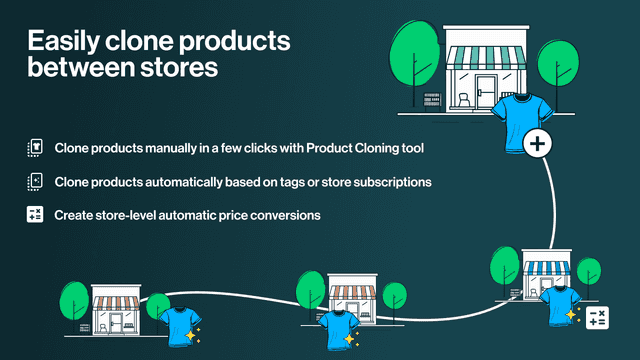
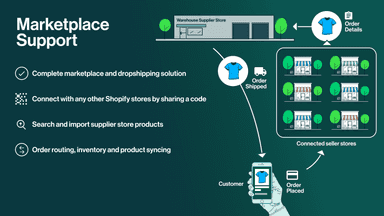
Highly configurable, real-time syncing, Synkro makes managing multiple stores a breeze. Clone your products to multiple connected stores and let Synkro keep everything in sync, saving you time and effort. Custom price rules allow you to automatically adjust product prices, enabling dynamic pricing strategies. Route orders placed in child stores back to the parent and sync tracking information.
- Sync products, variants, and images from one parent store to many child stores
- Apply custom rules per child store — percentage or fixed adjustments
- Real-time sync progress tracking with the ability to stop any job instantly
- Real-time inventory levels and product property syncing works within seconds!
- Clone products between stores in one click or use Synkro tag-based auto-clone!
- Custom price rules allow automatic product price adjustments!


All the numbers
Every figure, side by side
A green dot marks the app ahead on a measured figure. Estimates, gaps and apps that leave no storefront trace never take the lead.
Adoption
| Measure |  Store Sync |  Synkro |
|---|---|---|
| Detected stores | Not published | Not published |
| Net store change, 28 days | 0 | 0 |
| Stores added, 28 days | Not enough data | Not enough data |
| Big-brand share | Not enough data | Not enough data |
| Top store categories | Not published | Not published |
| Top store countries | Not published | Not published |
Reviews
| Measure | Store Sync | Synkro |
|---|---|---|
| App Store rating | 5.0 ★ | 5.0 ★ |
| App Store reviews | 1 | 109(ahead) |
| New reviews, 28 days | Not enough data | 2 |
| Reviewers a year or more in | Not enough data | Not enough data |
Pricing
| Measure | Store Sync | Synkro |
|---|---|---|
| Free plan | Not listed | Not listed |
| Lowest paid monthly plan | $8.99/month(ahead) | $10/month |
| Longest free trial | 3 days | 7 days |
| Plans listed | 3 | 4 |
Listing
| Measure | Store Sync | Synkro |
|---|---|---|
| Shopify category rank | #86 | #46 |
| Shopify App Charts | Not on this week’s charts | Not on this week’s charts |
| Built for Shopify | No | No |
| Launched | May 26, 2026 | Nov 11, 2019 |
| Languages | 1 | 1 |
| Developer | Star Apps | Tech vom Fass |
FAQ
Store Sync and Synkro: common questions
- Is Store Sync or Synkro cheaper?
- Paid plans start at $8.99/month for Store Sync and $10/month for Synkro. Shoplist compares base prices only between monthly plans in the same currency; usage charges and annual plans vary, so check each plan’s limits.
- Which has better reviews, Store Sync or Synkro?
- On the Shopify App Store: Store Sync 5.0 from 1 reviews and Synkro 5.0 from 109 reviews.
- What features does each app list that the other doesn’t?
- Store Sync lists 2 the others don’t mention, such as Inventory levels, Real-time sync. Synkro lists 14 the others don’t mention, such as Automatic, Barcodes, Bulk, Custom. A feature missing from a listing may still be supported; this compares what each App Store listing says.
- Where does this comparison’s data come from?
- Shoplist crawls Shopify storefronts to detect which apps each store runs, and reads each app’s Shopify App Store listing for reviews, pricing, features and integrations. Store counts are as of Oct 20, 2026 for Store Sync, Oct 29, 2026 for Synkro; estimated figures are labeled.
How Shoplist compares apps
Store counts come from Shoplist’s crawl of Shopify storefronts, which detects the apps each store runs; they are as of Oct 20, 2026 for Store Sync, Oct 29, 2026 for Synkro. Reviews, ratings, plans, features and integrations come from each app’s Shopify App Store listing. 28-day figures are labeled when estimated, and a figure that is missing or estimated never decides who leads. Read the methodology.