

StockFlow: Purchase Orders vs Stockra ‑ Inventory Management
Two Shopify apps, side by side: detected stores, momentum, reviews, plans, listed features and who runs each. Store counts as of Nov 9, 2026 for StockFlow, Oct 14, 2026 for Stockra.
The short answer
Head to head


Starter
- · 1 alert recipient
- · 1 location
- · Inventory reports & CSV exports
- · Low-stock alerts & reorder points
- · Purchase orders & suppliers
Growth
- · Bundles, kits & stocktake
- · Demand forecasting
- · Everything in Starter
- · Sales & profit reports
- · Suggested POs from forecasts
- · Up to 3 alert recipients
Pro
- · Auto-draft POs & dead-stock alerts
- · Everything in Growth
- · Export all app data
- · Priority email support
- · Slack / webhook notifications
- · Unlimited locations
Coverage counts what each App Store listing names. Every feature, checked off app by app, is in Shoplist.
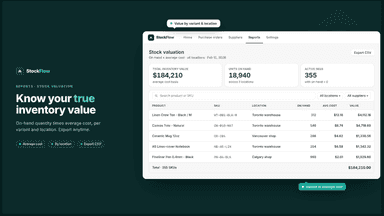
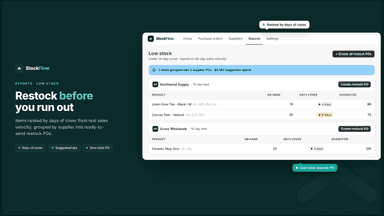
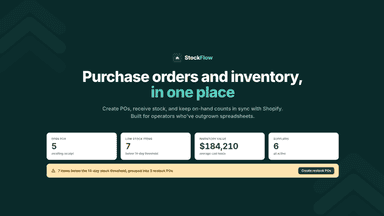
See every featureStockFlow helps retailers manage purchasing and inventory inside Shopify admin. Create purchase orders and generate branded PDFs for suppliers. Receive full or partial shipments, log rejections, and sync received quantities to the correct Shopify location so on-hand counts stay accurate. StockFlow updates landed cost per unit as you receive stock and suggests reorder quantities from your sales history.
Stockra helps merchants manage inventory, suppliers, purchase orders, and reports from one place. Set reorder points, monitor low stock, forecast stockouts, and create purchase orders based on current inventory needs. Receive items and update stock back to Shopify so inventory stays organized across your business.
- Create purchase orders and generate branded PDFs for your suppliers
- Receive full or partial shipments and log rejections with reasons
- Sync received quantities to the correct Shopify location automatically
- Track landed cost per unit and COGS as you receive stock
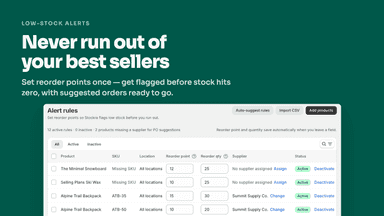
- Set low-stock alerts and reorder points for every product variant
- Create, send, receive, and track purchase orders in one place
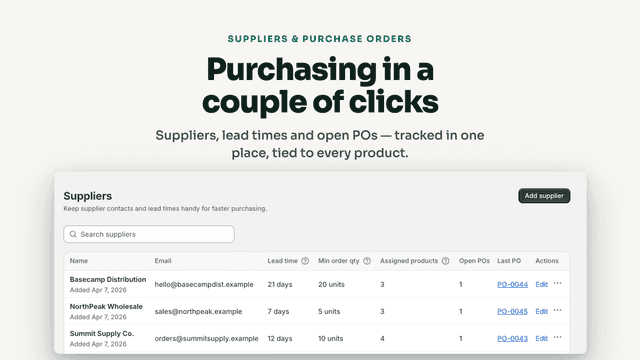
- Manage suppliers, lead times, minimum orders, and open POs
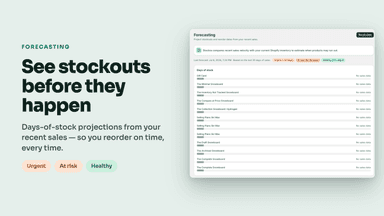
- Forecast stockouts and see when each product needs reordering


All the numbers
Every figure, side by side
A green dot marks the app ahead on a measured figure. Estimates, gaps and apps that leave no storefront trace never take the lead.
Adoption
| Measure |  StockFlow |  Stockra |
|---|---|---|
| Detected stores | Not published | Not published |
| Net store change, 28 days | 0 | 0 |
| Stores added, 28 days | Not enough data | Not enough data |
| Big-brand share | Not enough data | Not enough data |
| Top store categories | Not published | Not published |
| Top store countries | Not published | Not published |
Reviews
| Measure | StockFlow | Stockra |
|---|---|---|
| App Store rating | Not published | Not published |
| App Store reviews | Not published | Not published |
| New reviews, 28 days | Not enough data | Not enough data |
| Reviewers a year or more in | Not enough data | Not enough data |
FAQ
StockFlow and Stockra: common questions
- Where does this comparison’s data come from?
- Shoplist crawls Shopify storefronts to detect which apps each store runs, and reads each app’s Shopify App Store listing for reviews, pricing, features and integrations. Store counts are as of Nov 9, 2026 for StockFlow, Oct 14, 2026 for Stockra; estimated figures are labeled.
How Shoplist compares apps
Store counts come from Shoplist’s crawl of Shopify storefronts, which detects the apps each store runs; they are as of Nov 9, 2026 for StockFlow, Oct 14, 2026 for Stockra. Reviews, ratings, plans, features and integrations come from each app’s Shopify App Store listing. 28-day figures are labeled when estimated, and a figure that is missing or estimated never decides who leads. Read the methodology.