

SpeedFix vs StoreFix
Two Shopify apps, side by side: detected stores, momentum, reviews, plans, listed features and who runs each. Store counts as of May 26, 2026 for SpeedFix, Oct 13, 2026 for StoreFix.
The short answer
- StoreFix lists 10 features SpeedFix’s listing doesn’t mention, including 404 pages, AI generation, Broken links.
Head to head


Pro
- · AI-written SEO titles
- · Email support
- · Meta descriptions and image alt text
- · One-click automatic repair with undo
- · Unlimited audits
- · Weekly monitoring with re-scan
Plus
- · Daily monitoring with auto-repair
- · Everything in Pro
- · Full fix history export
- · Priority support
Coverage counts what each App Store listing names. Every feature, checked off app by app, is in Shoplist.
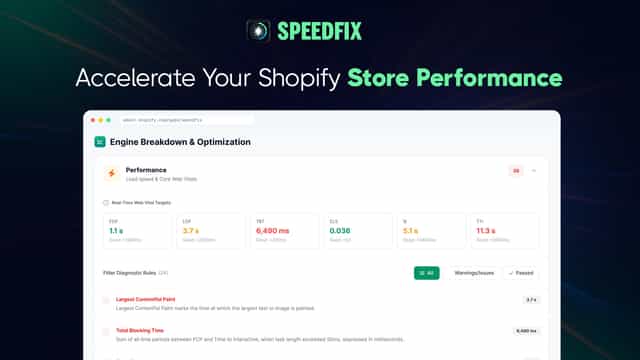
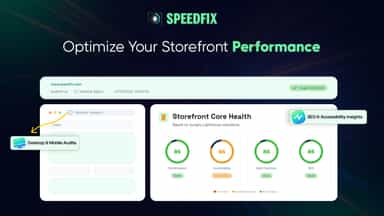
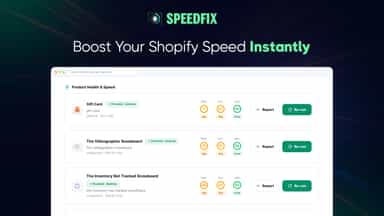
See every featureSpeedFix helps you optimize your store's performance with automated, deep-dive audits. Quickly identify technical bottlenecks that slow down your site and get clear steps to improve loading times. The app allows you to monitor your entire product catalog through individual reports, helping you maintain high standards as you scale.
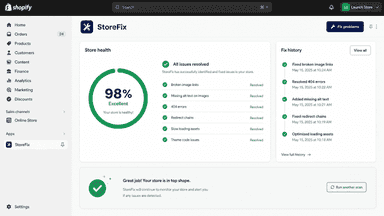
StoreFix reads your Shopify products, collections, pages and live storefront to find missing meta titles, descriptions, alt text, broken links, speed issues, structured data problems. It repairs safe changes automatically while keeping a snapshot of every original value, so you can undo edits. Unsafe or low-confidence issues are flagged for approval instead of being changed.
- » Speed Check for both mobile and desktop
- » Per-product Each product listing generates its own separate audit report
- » Built for Shopify (no code)
- One-click automatic repair of SEO titles, meta descriptions and image alt text.
- Real-time store health score with category breakdowns and issue tracking.
- Full undo history for every change without touching prices, inventory or orders.
- Weekly or daily monitoring that rescans and reports new issues automatically.




All the numbers
Every figure, side by side
A green dot marks the app ahead on a measured figure. Estimates, gaps and apps that leave no storefront trace never take the lead.
Adoption
| Measure |  SpeedFix |  StoreFix |
|---|---|---|
| Detected stores | Not published | Not published |
| Net store change, 28 days | 0 | 0 |
| Stores added, 28 days | Not enough data | Not enough data |
| Big-brand share | Not enough data | Not enough data |
| Top store categories | Not published | Not published |
| Top store countries | Not published | Not published |
Reviews
| Measure | SpeedFix | StoreFix |
|---|---|---|
| App Store rating | Not published | Not published |
| App Store reviews | Not published | Not published |
| New reviews, 28 days | Not enough data | Not enough data |
| Reviewers a year or more in | Not enough data | Not enough data |
FAQ
SpeedFix and StoreFix: common questions
- What features does each app list that the other doesn’t?
- SpeedFix lists 6 the others don’t mention, such as A/B testing, Analytics, Local SEO, Reporting. StoreFix lists 10 the others don’t mention, such as 404 pages, AI generation, Broken links, Competitor analysis. A feature missing from a listing may still be supported; this compares what each App Store listing says.
- Where does this comparison’s data come from?
- Shoplist crawls Shopify storefronts to detect which apps each store runs, and reads each app’s Shopify App Store listing for reviews, pricing, features and integrations. Store counts are as of May 26, 2026 for SpeedFix, Oct 13, 2026 for StoreFix; estimated figures are labeled.
How Shoplist compares apps
Store counts come from Shoplist’s crawl of Shopify storefronts, which detects the apps each store runs; they are as of May 26, 2026 for SpeedFix, Oct 13, 2026 for StoreFix. Reviews, ratings, plans, features and integrations come from each app’s Shopify App Store listing. 28-day figures are labeled when estimated, and a figure that is missing or estimated never decides who leads. Read the methodology.