

Skumo ‑ Purchase Order Manager vs TallyUp – Forecasting & POs
Two Shopify apps, side by side: detected stores, momentum, reviews, plans, listed features and who runs each. Store counts as of Oct 13, 2026 for Skumo, Oct 14, 2026 for TallyUp.
The short answer
- Only TallyUp lists a free plan. Paid plans start at $9.99/month for Skumo and $29/month for TallyUp.
- Skumo lists 7 features TallyUp’s listing doesn’t mention, including Auto-processing, Backorders, Barcodes.
Head to head


Standard
- · 1 store location
- · Inventory forecasting
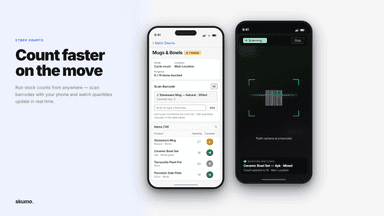
- · Rapid stock counts
- · Special orders
- · Standard support
- · Unlimited SKUs
Growth
- · Priority support
- · Rapid stock counts
- · Special orders
- · Unlimited SKUs
- · Unlimited purchase orders
- · Up to 5 locations
Pro
- · Dedicated account manager
- · Everything in Growth
- · Unlimited SKUs
- · Unlimited locations
Free
- · 1 supplier
- · 25 intelligence SKUs · 1 location
- · Basic inventory dashboard
- · Insights for top 3 products
- · Purchase orders + PDF generation
- · Shopify sync + POS
Starter
- · 10 suppliers
- · 500 intelligence SKUs · 2 locations
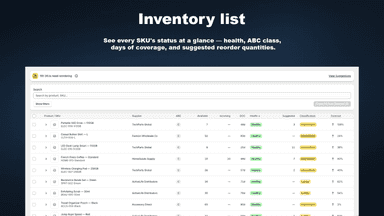
- · ABC + Days of Cover + Stock Health
- · All Free features
- · Auto demand forecasting
- · Email PO to supplier (PDF attachment)
Growth
- · All Starter features
- · Drift alerts + email digest
- · ML demand forecasting
- · Multi-location forecasting
- · One-click auto reorder
- · Overstock detection (4 states)
Coverage counts what each App Store listing names. Every feature, checked off app by app, is in Shoplist.
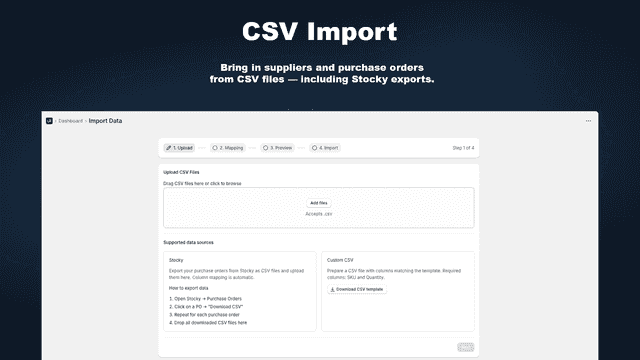
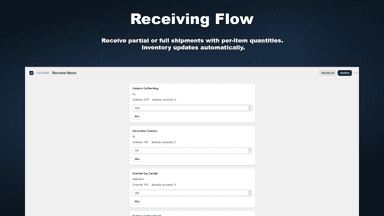
See every featureManaging retail purchasing without dedicated tools means relying on spreadsheets and guesswork. Skumo brings the full buying cycle into your store admin. Sales history drives suggested order quantities per supplier, so buying decisions reflect real demand. Orders are sent to suppliers by email from the app and inventory updates automatically on receipt.
Merchants often track reorders in spreadsheets and rely on gut feeling to decide when to replenish stock. This app combines demand forecasting with purchase order management to remove that guesswork. It analyzes sales history to predict future demand and calculates optimal reorder timing and quantities. When stock runs low, actionable suggestions show what to order and from which supplier.
- Demand-led purchasing analysis - suggested quantities from sales history.
- Full order lifecycle - create, send, receive, and update inventory.
- Supplier management - contacts, lead times, and vendor mappings.
- Special customer orders - track individual orders for items not in stock.
- Demand forecasting predicts how much stock you need and when to reorder
- Manage purchase orders from draft to delivery with email and PDF export
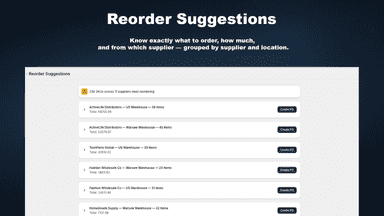
- Reorder suggestions show what to order, how much, and from which supplier
- Track stock health, days of coverage, and ABC classification per product



All the numbers
Every figure, side by side
A green dot marks the app ahead on a measured figure. Estimates, gaps and apps that leave no storefront trace never take the lead.
Adoption
| Measure |  Skumo |  TallyUp |
|---|---|---|
| Detected stores | Not published | Not published |
| Net store change, 28 days | 0 | 0 |
| Stores added, 28 days | Not enough data | Not enough data |
| Big-brand share | Not enough data | Not enough data |
| Top store categories | Not published | Not published |
| Top store countries | Not published | Not published |
Reviews
| Measure | Skumo | TallyUp |
|---|---|---|
| App Store rating | Not published | Not published |
| App Store reviews | Not published | Not published |
| New reviews, 28 days | Not enough data | Not enough data |
| Reviewers a year or more in | Not enough data | Not enough data |
FAQ
Skumo and TallyUp: common questions
- Is Skumo or TallyUp cheaper?
- Only TallyUp lists a free plan. Paid plans start at $9.99/month for Skumo and $29/month for TallyUp. Shoplist compares base prices only between monthly plans in the same currency; usage charges and annual plans vary, so check each plan’s limits.
- What features does each app list that the other doesn’t?
- Skumo lists 7 the others don’t mention, such as Auto-processing, Backorders, Barcodes, Bulk processing. TallyUp lists 4 the others don’t mention, such as Email notifications, Import and export, Real-time updates, Threshold alerts. A feature missing from a listing may still be supported; this compares what each App Store listing says.
- Where does this comparison’s data come from?
- Shoplist crawls Shopify storefronts to detect which apps each store runs, and reads each app’s Shopify App Store listing for reviews, pricing, features and integrations. Store counts are as of Oct 13, 2026 for Skumo, Oct 14, 2026 for TallyUp; estimated figures are labeled.
How Shoplist compares apps
Store counts come from Shoplist’s crawl of Shopify storefronts, which detects the apps each store runs; they are as of Oct 13, 2026 for Skumo, Oct 14, 2026 for TallyUp. Reviews, ratings, plans, features and integrations come from each app’s Shopify App Store listing. 28-day figures are labeled when estimated, and a figure that is missing or estimated never decides who leads. Read the methodology.