
Singleton | Advanced Discounts vs Unit Threshold Discounts
Two Shopify apps, side by side: detected stores, momentum, reviews, plans, listed features and who runs each. Store counts as of Nov 9, 2026 for Singleton, Oct 13, 2026 for Unit Threshold Discounts.
The short answer
- Only Singleton lists a free plan. Paid plans start at $9.99/month for Singleton and $9.90/month for Unit Threshold Discounts.
- Singleton lists 18 features Unit Threshold Discounts’s listing doesn’t mention, including Automations, Bulk discounts, Bulk editing.
Head to head


- United States
- Australia
- United Kingdom
Momentum
New reviews each month
Review pace is the clearest public read on how fast an app is winning new merchants.
Free
- · 0 - 30 online store orders per month
- · Advanced discount conditions
- · Automatic or code-based discounts
- · Live chat & email support
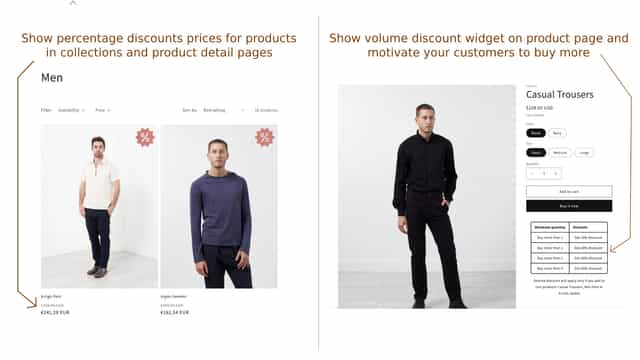
- · Show discount price on product listings
- · Target products/customers/markets
Starter
- · 31 - 100 online store orders per month
- · Advanced discount conditions
- · Automatic or code-based discounts
- · Live chat & email support
- · Show discount price on product listings
- · Target products/customers/markets
Advanced
- · 101 - 500 online store orders per month
- · Advanced discount conditions
- · Automatic or code-based discounts
- · Live chat & email support
- · Show discount price on product listings
- · Target products/customers/markets
Enterprise
- · Advanced discount conditions
- · Automatic or code-based discounts
- · Live chat & email support
- · Show discount price on product listings
- · Target products/customers/markets
- · Unlimited online store orders per month
Starter
- · Apply to selected products only
- · Automatic discounts, no codes needed
- · Counts pack size, not just items
- · Custom discount label at checkout
- · Edit discount rules anytime
- · Works with packs, cases, and bundles
Coverage counts what each App Store listing names. Every feature, checked off app by app, is in Shoplist.
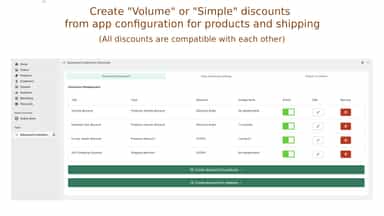
See every featureAutomatically apply discounts for selected customers, products, or cart values. Boost AOV with volume discounts, B2B wholesale pricing, shipping discounts, and countdown timers. Discounts apply automatically or via code, visible in cart drawer, page, and checkout. Target everyone or specific wholesale and B2B customer groups. Set advanced conditions, and highlight deals with discount widgets and timers.
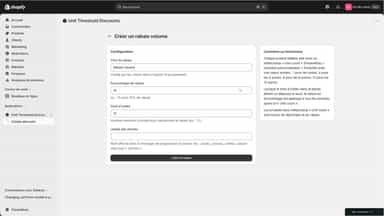
This app creates an automatic discount when the cart reaches a weighted unit threshold. Each product can have a custom unit value via a metafield, and the total is calculated across eligible line items. The merchant configures the discount title, percentage, threshold, and label in the interface, and the rule applies automatically at checkout.
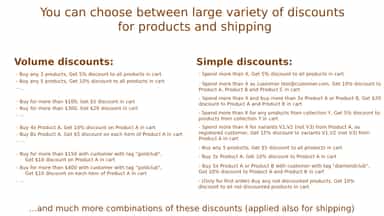
- Create discounts for selected customers, selected products, with selected rules
- Create discounts also for everyone who visit your store with lot of options
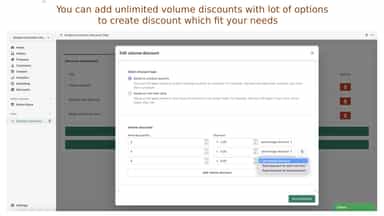
- Create volume discounts based on products quantity, or based on cart total value
- Customers will see discounts in all types of cart drawers, cart and checkout
- Automatic discounts triggered by a custom unit threshold
- Supports packs, cases, and mixed product formats
- Configure and edit discount rules in the app
- Discount applies only to eligible products




All the numbers
Every figure, side by side
A green dot marks the app ahead on a measured figure. Estimates, gaps and apps that leave no storefront trace never take the lead.
Adoption
| Measure |  Singleton |  Unit Threshold Discounts |
|---|---|---|
| Detected stores | 104 | Not published |
| Net store change, 28 days | −1 | 0 |
| Stores added, 28 days | 1 | Not enough data |
| Big-brand share | Not enough data | Not enough data |
| Top store categories | Apparel & Accessories, Home & Garden, Health & Beauty | Not published |
| Top store countries | United States, Australia, United Kingdom | Not published |
Reviews
| Measure | Singleton | Unit Threshold Discounts |
|---|---|---|
| App Store rating | 5.0 ★ | Not published |
| App Store reviews | 35 | Not published |
| New reviews, 28 days | 0 | Not enough data |
| Reviewers a year or more in | Not enough data | Not enough data |
Pricing
| Measure | Singleton | Unit Threshold Discounts |
|---|---|---|
| Free plan | Yes | Not listed |
| Lowest paid monthly plan | $9.99/month | $9.90/month(ahead) |
| Longest free trial | 14 days | 14 days |
| Plans listed | 4 | 1 |
Listing
| Measure | Singleton | Unit Threshold Discounts |
|---|---|---|
| Shopify category rank | #205(ahead) | #1007 |
| Shopify App Charts | Not on this week’s charts | Not on this week’s charts |
| Built for Shopify | Yes | No |
| Launched | Feb 2, 2023 | Apr 20, 2026 |
| Languages | 1 | 2 |
| Developer | Singleton software | tom & tom |
FAQ
Singleton and Unit Threshold Discounts: common questions
- Is Singleton or Unit Threshold Discounts cheaper?
- Only Singleton lists a free plan. Paid plans start at $9.99/month for Singleton and $9.90/month for Unit Threshold Discounts. Shoplist compares base prices only between monthly plans in the same currency; usage charges and annual plans vary, so check each plan’s limits.
- What features does each app list that the other doesn’t?
- Singleton lists 18 the others don’t mention, such as Automations, Bulk discounts, Bulk editing, Cross-sell discounts. Unit Threshold Discounts lists 2 the others don’t mention, such as Discount codes, Quantity breaks. A feature missing from a listing may still be supported; this compares what each App Store listing says.
- Where does this comparison’s data come from?
- Shoplist crawls Shopify storefronts to detect which apps each store runs, and reads each app’s Shopify App Store listing for reviews, pricing, features and integrations. Store counts are as of Nov 9, 2026 for Singleton, Oct 13, 2026 for Unit Threshold Discounts; estimated figures are labeled.
How Shoplist compares apps
Store counts come from Shoplist’s crawl of Shopify storefronts, which detects the apps each store runs; they are as of Nov 9, 2026 for Singleton, Oct 13, 2026 for Unit Threshold Discounts. Reviews, ratings, plans, features and integrations come from each app’s Shopify App Store listing. 28-day figures are labeled when estimated, and a figure that is missing or estimated never decides who leads. Read the methodology.