

ShipGate ‑ Shipping rules vs ShipStar: Hide Shipping Rates
Two Shopify apps, side by side: detected stores, momentum, reviews, plans, listed features and who runs each. Store counts as of Oct 14, 2026.
The short answer
- Only ShipStar lists a free plan. Paid plans start at $7.99/month for ShipGate and $6.99/month for ShipStar.
- ShipStar lists 5 features ShipGate’s listing doesn’t mention, including Carrier-based, Customer-based, Product-based.
Head to head


Unlimited
- · 3-day free trial
- · 30 condition types
- · Hide shipping methods
- · Priority-based evaluation
- · Real-time checkout sync
- · Rename shipping methods
Free
- · 1 active rule
- · Cart total condition
- · Email support
- · Free forever, no card needed
- · Hide delivery options at checkout
Starter
- · 7-day free trial
- · AI rule suggestions,Email notifications
- · Country & region conditions
- · Email support
- · Hide, rename & reorder options
- · Product, collection & tag rules
Growth
- · 14-day free trial
- · AND/OR rule logic
- · Everything in Starter
- · Priority email support
- · Priority-based rule ordering
- · SKU & zip/postal conditions
Pro
- · 14-day free trial
- · Day of week & date ranges
- · Everything in Growth
- · Priority support
- · Unlimited active rules
- · Vendor & market conditions
Coverage counts what each App Store listing names. Every feature, checked off app by app, is in Shoplist.
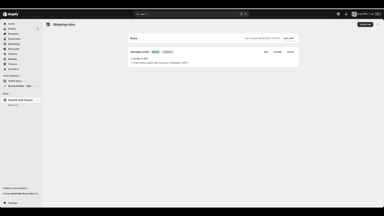
See every featureShipping Rules gives merchants full control over checkout shipping options. Create rules that hide, rename, show only, or reorder shipping methods based on cart contents, address, order value, product tags, customer tags, collections, and more. Set conditions using AND/OR logic across 30+ types. Rules apply instantly at checkout through Shopify Functions.
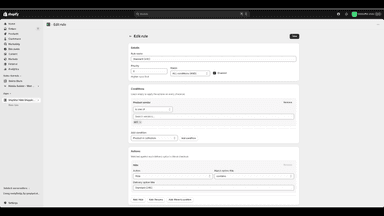
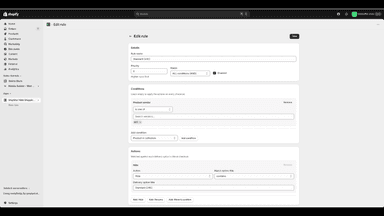
ShipStar gives you control over the shipping methods customers see at checkout. Hide, rename, and reorder options using simple conditional rules - no coding and no Shopify Plus required. Set rules by cart total, weight, country, product, collection, vendor, SKU, zip code, customer tag, B2B company, market, or discount code. Combine conditions with AND and OR logic.
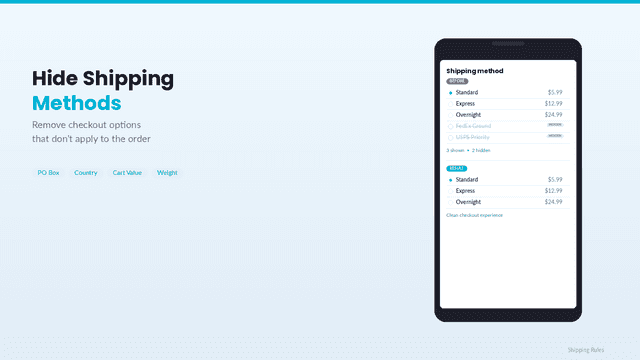
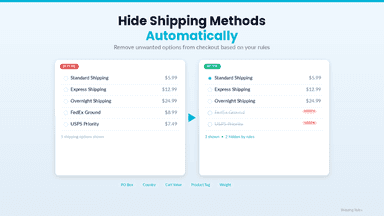
- Hide shipping methods by PO Box, country, cart value, product, or weight
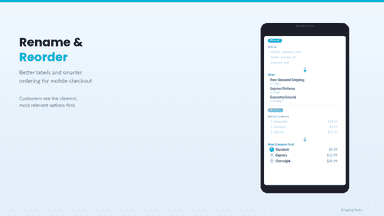
- Rename methods with custom labels, delivery estimates, or brand voice
- 30+ condition types across cart, address, customer, and product categories
- Reorder shipping methods by price, name, or custom drag-and-drop order
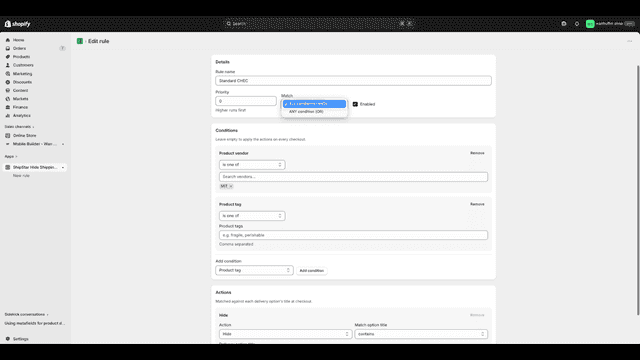
- Hide shipping or delivery methods for products from specific vendor or type
- Rename or reorder delivery options shown to customers at checkout Trigger rule
- Match products by collection, tag, SKU, or vendor Combine multiple conditions

All the numbers
Every figure, side by side
A green dot marks the app ahead on a measured figure. Estimates, gaps and apps that leave no storefront trace never take the lead.
Adoption
| Measure |  ShipGate |  ShipStar |
|---|---|---|
| Detected stores | Not published | Not published |
| Net store change, 28 days | 0 | 0 |
| Stores added, 28 days | Not enough data | Not enough data |
| Big-brand share | Not enough data | Not enough data |
| Top store categories | Not published | Not published |
| Top store countries | Not published | Not published |
Reviews
| Measure | ShipGate | ShipStar |
|---|---|---|
| App Store rating | Not published | Not published |
| App Store reviews | Not published | Not published |
| New reviews, 28 days | Not enough data | Not enough data |
| Reviewers a year or more in | Not enough data | Not enough data |
FAQ
ShipGate and ShipStar: common questions
- Is ShipGate or ShipStar cheaper?
- Only ShipStar lists a free plan. Paid plans start at $7.99/month for ShipGate and $6.99/month for ShipStar. Shoplist compares base prices only between monthly plans in the same currency; usage charges and annual plans vary, so check each plan’s limits.
- What features does each app list that the other doesn’t?
- ShipGate lists 2 the others don’t mention, such as Hide rates, PO Box restrictions. ShipStar lists 5 the others don’t mention, such as Carrier-based, Customer-based, Product-based, Weight-based. A feature missing from a listing may still be supported; this compares what each App Store listing says.
- Where does this comparison’s data come from?
- Shoplist crawls Shopify storefronts to detect which apps each store runs, and reads each app’s Shopify App Store listing for reviews, pricing, features and integrations. Store counts are as of Oct 14, 2026; estimated figures are labeled.
How Shoplist compares apps
Store counts come from Shoplist’s crawl of Shopify storefronts, which detects the apps each store runs; they are as of Oct 14, 2026. Reviews, ratings, plans, features and integrations come from each app’s Shopify App Store listing. 28-day figures are labeled when estimated, and a figure that is missing or estimated never decides who leads. Read the methodology.