

ShelfUp Collection Sorter vs Sortbot | Collection
Two Shopify apps, side by side: detected stores, momentum, reviews, plans, listed features and who runs each. Store counts as of Oct 14, 2026 for ShelfUp Collection Sorter, Oct 13, 2026 for Sortbot.
The short answer
- Both list a free plan. Paid plans start at $14/month for ShelfUp Collection Sorter and $9.99/month for Sortbot.
- ShelfUp Collection Sorter lists 12 features Sortbot’s listing doesn’t mention, including Analytics, Analytics dashboard, Automated.
Head to head


Momentum
New reviews each month
Review pace is the clearest public read on how fast an app is winning new merchants.
Free
- · 15 live sort units per month
- · Collection analytics dashboard
- · Preview rankings before publishing
- · Sort manual collections by revenue
- · Track up to 300 products
- · Upto 2 collections
Starter
- · 100 live sort units per month
- · Collection analytics dashboard
- · Daily or weekly auto-sorts
- · Preview rankings before publishing
- · Sold-out placement controls
- · Sort manual collections by revenue
Growth
- · 500 live sort units per month
- · Collection health and conflicts
- · Feature, boost, and bury rules
- · High stocks + Customer Intent sorting
- · Rollback for completed sorts
- · Track up to 3,000 products
Pro
- · 1,500 live sort units per month
- · Advanced movement insights
- · All Growth features included
- · Autopilot suggestions
- · Every 8 hours auto-sort
- · Strategy learning mode
FREE
- · 14-day free trial
- · Includes all STARTER plan features
STARTER
- · Daily ordering
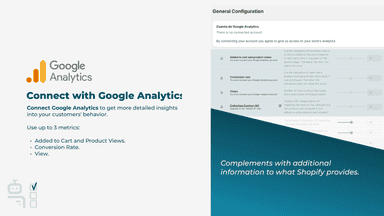
- · Google Analytics integration
- · Pin up to 8 products
- · Sort by sales, inventory, or tags
- · Up to 10 collections
GROWTH AI
- · Daily ordering
- · Gemini AI
- · Google Analytics integration
- · Pin up to 8 products
- · Sort by sales, inventory, or tags
- · Up to 100 collections
Coverage counts what each App Store listing names. Every feature, checked off app by app, is in Shoplist.
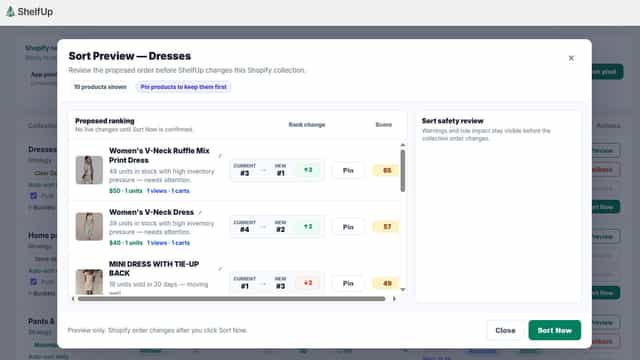
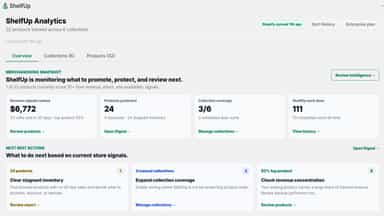
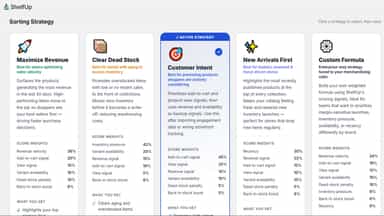
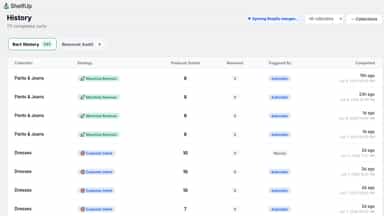
See every featureManual collection sorting can hide best sellers and create extra merchandising work. ShelfUp automatically organise manual collections using sales, inventory, product views, add-to-carts, and custom merchandising rules. Preview changes before they go live, understand every product movement, and roll back previous sorts when needed. Schedule updates to keep collections fresh and aligned with shopper demand.
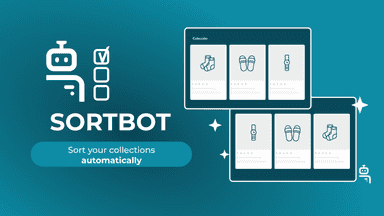
Sortbot is an app that will help you sort your collections daily based on 10+ parameters relevant to each collection or your overall business. Why sort collections? By generating dynamism in your collection pages, you'll help your customers easily find different products according to your preferences and positively impact conversion.
- Sort manual collections by sales, inventory, views, and carts.
- Preview product rankings before publishing a live sort.
- Track collection health, conflicts, movement, and rollback.
- Create rules to automatically feature, boost, bury, or remove products.
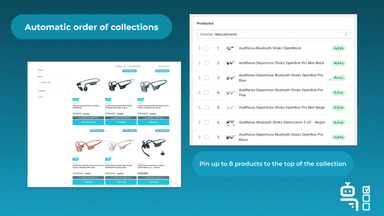
- You can manually pin up to 8 products at the top of the collection.
- Sort by sales, total $, quantity, discount %, or average price
- Order by inventory levels, quantity on hand, or weeks of supply based on sales
- Order by product tags and set priorities for each collection

All the numbers
Every figure, side by side
A green dot marks the app ahead on a measured figure. Estimates, gaps and apps that leave no storefront trace never take the lead.
Adoption
| Measure |  ShelfUp Collection Sorter |  Sortbot |
|---|---|---|
| Detected stores | Not published | Not published |
| Net store change, 28 days | 0 | 0 |
| Stores added, 28 days | Not enough data | Not enough data |
| Big-brand share | Not enough data | Not enough data |
| Top store categories | Not published | Not published |
| Top store countries | Not published | Not published |
Reviews
| Measure | ShelfUp Collection Sorter | Sortbot |
|---|---|---|
| App Store rating | Not published | 1.9 ★ |
| App Store reviews | Not published | 2 |
| New reviews, 28 days | Not enough data | Not enough data |
| Reviewers a year or more in | Not enough data | Not enough data |
Pricing
| Measure | ShelfUp Collection Sorter | Sortbot |
|---|---|---|
| Free plan | Yes | Yes |
| Lowest paid monthly plan | $14/month | $9.99/month(ahead) |
| Longest free trial | Not listed | Not listed |
| Plans listed | 4 | 3 |
Listing
| Measure | ShelfUp Collection Sorter | Sortbot |
|---|---|---|
| Shopify category rank | #162 | #945 |
| Shopify App Charts | Not on this week’s charts | Not on this week’s charts |
| Built for Shopify | No | No |
| Launched | Jun 10, 2026 | Jul 19, 2024 |
| Languages | 1 | 2 |
| Developer | Shelfup | Pivot Technology |
FAQ
ShelfUp Collection Sorter and Sortbot: common questions
- Is ShelfUp Collection Sorter or Sortbot cheaper?
- Both list a free plan. Paid plans start at $14/month for ShelfUp Collection Sorter and $9.99/month for Sortbot. Shoplist compares base prices only between monthly plans in the same currency; usage charges and annual plans vary, so check each plan’s limits.
- What features does each app list that the other doesn’t?
- ShelfUp Collection Sorter lists 12 the others don’t mention, such as Analytics, Analytics dashboard, Automated, Bulk editing. Sortbot lists 4 the others don’t mention, such as Cohort analysis, Historical analysis, Marketing attribution, Page views. A feature missing from a listing may still be supported; this compares what each App Store listing says.
- Where does this comparison’s data come from?
- Shoplist crawls Shopify storefronts to detect which apps each store runs, and reads each app’s Shopify App Store listing for reviews, pricing, features and integrations. Store counts are as of Oct 14, 2026 for ShelfUp Collection Sorter, Oct 13, 2026 for Sortbot; estimated figures are labeled.
How Shoplist compares apps
Store counts come from Shoplist’s crawl of Shopify storefronts, which detects the apps each store runs; they are as of Oct 14, 2026 for ShelfUp Collection Sorter, Oct 13, 2026 for Sortbot. Reviews, ratings, plans, features and integrations come from each app’s Shopify App Store listing. 28-day figures are labeled when estimated, and a figure that is missing or estimated never decides who leads. Read the methodology.