
Sellify ‑ Free CRO Audit vs URLAudit: SEO, AEO, GEO, LLMO
Two Shopify apps, side by side: detected stores, momentum, reviews, plans, listed features and who runs each. Store counts as of Oct 14, 2026 for Sellify, Nov 6, 2026 for URLAudit.
The short answer
- Both list a free plan. Paid plans start at $9/month for Sellify and $29.99/month for URLAudit.
- URLAudit lists 11 features Sellify’s listing doesn’t mention, including 404 pages, Breadcrumbs, Broken links.
Head to head


Momentum
New reviews each month
Review pace is the clearest public read on how fast an app is winning new merchants.
Basic Plan
- · 1 CRO audit every 7 days
- · 4 credits/month
- · Automatic CRO Monitoring - Not included
- · Basic CRO score and statuses
- · Basic recommendations
- · Homepage CRO audit
Growth
- · 25 credits/month
- · 90-day audit history
- · Automatic CRO Monitoring - Not included
- · Everything in Free
- · Export reports
- · Full evidence-based checklist
Pro
- · 100 credits/month
- · 90-day audit history
- · Advanced analytics and comparisons
- · Automatic CRO Monitoring - Included
- · Critical issue alerts in your dashboard
- · Custom URL CRO audits
Free Sample
- · 50 product pages per scan
Growth Package
- · 400 product pages per scan
Enterprise Package
- · 3,000 product pages per scan
Coverage counts what each App Store listing names. Every feature, checked off app by app, is in Shoplist.
See every featureSellify CRO helps merchants identify conversion rate and SEO issues across their Shopify store with page level audits for home, product, collection, cart, store, and custom pages. It analyzes storefront content and structure, highlights high-impact issues, prioritizes recommended fixes, tracks audit history, and provides actionable insights to help merchants improve user experience, store quality, and conversion…
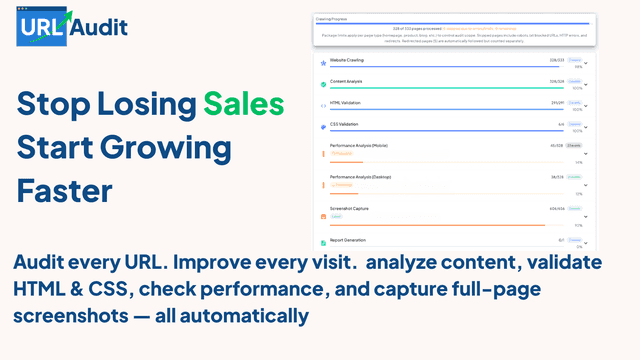
URLAudit runs a complete health check on your Shopify store. It crawls your storefront, runs Lighthouse audits on mobile and desktop, and reviews SEO, page speed, content, accessibility,and e-commerce signals — then ranks every issue by impact and effort so you always know what to fix first. No setup or coding required.
- Run CRO audits across your Shopify store
- Detect SEO issues with actionable recommendations
- Prioritize fixes by impact and severity
- Automated store performance analysis with comprehensive performance and scoring
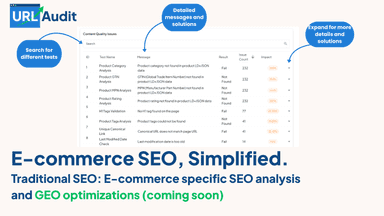
- E-commerce specific audits including checkout flow and conversion optimization
- SEO health checks with actionable recommendations to improve search rankings
- HTML validation and technical compliance checks for standards and accessibility




All the numbers
Every figure, side by side
A green dot marks the app ahead on a measured figure. Estimates, gaps and apps that leave no storefront trace never take the lead.
Adoption
| Measure |  Sellify |  URLAudit |
|---|---|---|
| Detected stores | Not published | Not published |
| Net store change, 28 days | 0 | 0 |
| Stores added, 28 days | Not enough data | Not enough data |
| Big-brand share | Not enough data | Not enough data |
| Top store categories | Not published | Not published |
| Top store countries | Not published | Not published |
Reviews
| Measure | Sellify | URLAudit |
|---|---|---|
| App Store rating | Not published | 5.0 ★ |
| App Store reviews | Not published | 8 |
| New reviews, 28 days | Not enough data | Not enough data |
| Reviewers a year or more in | Not enough data | Not enough data |
FAQ
Sellify and URLAudit: common questions
- Is Sellify or URLAudit cheaper?
- Both list a free plan. Paid plans start at $9/month for Sellify and $29.99/month for URLAudit. Shoplist compares base prices only between monthly plans in the same currency; usage charges and annual plans vary, so check each plan’s limits.
- What features does each app list that the other doesn’t?
- Sellify lists 4 the others don’t mention, such as Reporting, Rich snippets, Schemas, SEO score. URLAudit lists 11 the others don’t mention, such as 404 pages, Breadcrumbs, Broken links, Duplicate content. A feature missing from a listing may still be supported; this compares what each App Store listing says.
- Where does this comparison’s data come from?
- Shoplist crawls Shopify storefronts to detect which apps each store runs, and reads each app’s Shopify App Store listing for reviews, pricing, features and integrations. Store counts are as of Oct 14, 2026 for Sellify, Nov 6, 2026 for URLAudit; estimated figures are labeled.
How Shoplist compares apps
Store counts come from Shoplist’s crawl of Shopify storefronts, which detects the apps each store runs; they are as of Oct 14, 2026 for Sellify, Nov 6, 2026 for URLAudit. Reviews, ratings, plans, features and integrations come from each app’s Shopify App Store listing. 28-day figures are labeled when estimated, and a figure that is missing or estimated never decides who leads. Read the methodology.