
Sellcast: Inventory Planning vs StoreCast
Two Shopify apps, side by side: detected stores, momentum, reviews, plans, listed features and who runs each. Store counts as of Oct 14, 2026 for Sellcast, Feb 19, 2026 for StoreCast.
The short answer
- StoreCast lists 6 features Sellcast’s listing doesn’t mention, including Analytics dashboard, Data export, Forecasting.
Head to head


Starter
Growth
Pro
Ultra
Coverage counts what each App Store listing names. Every feature, checked off app by app, is in Shoplist.
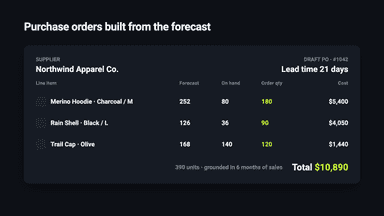
See every featureSellcast is an inventory planning and demand forecasting tool. It reads your products, orders, inventory, and locations, then forecasts demand for every variant and turns it into reorder and transfer recommendations with quantities and timing. See stock coverage for each product to catch what will run out, and spot overstock and dead stock to up cash.
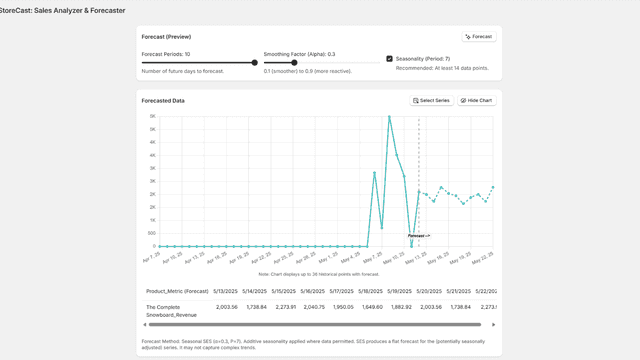
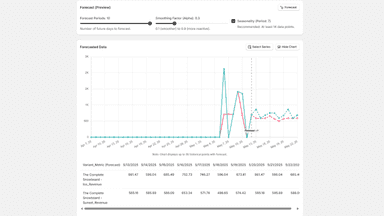
StoreCast helps merchants understand product sales performance and generate basic demand forecasts within the Shopify Admin. The application calculates key metrics such as revenue, cost of goods sold, and discounts, presenting these financial figures using only USD transaction data for consistent analysis. Merchants can view historical trends through integrated data tables and charts.
- Forecast demand for every product and variant from your real sales history
- Get reorder and transfer suggestions with recommended quantities and timing
- See stock coverage per product and catch stockouts before they happen
- Spot overstock and dead stock so you can up cash and clear it
- Visualize sales/revenue by product, variant, or total over time and export data.
- Generate demand forecasts from historical sales data with optional seasonality.
- Export aggregated sales reports to CSV files for analysis or external use.




All the numbers
Every figure, side by side
A green dot marks the app ahead on a measured figure. Estimates, gaps and apps that leave no storefront trace never take the lead.
Adoption
| Measure |  Sellcast |  StoreCast |
|---|---|---|
| Detected stores | Not published | Not published |
| Net store change, 28 days | 0 | 0 |
| Stores added, 28 days | Not enough data | Not enough data |
| Big-brand share | Not enough data | Not enough data |
| Top store categories | Not published | Not published |
| Top store countries | Not published | Not published |
Reviews
| Measure | Sellcast | StoreCast |
|---|---|---|
| App Store rating | Not published | Not published |
| App Store reviews | Not published | Not published |
| New reviews, 28 days | Not enough data | Not enough data |
| Reviewers a year or more in | Not enough data | Not enough data |
FAQ
Sellcast and StoreCast: common questions
- What features does each app list that the other doesn’t?
- StoreCast lists 6 the others don’t mention, such as Analytics dashboard, Data export, Forecasting, Historical analysis. A feature missing from a listing may still be supported; this compares what each App Store listing says.
- Where does this comparison’s data come from?
- Shoplist crawls Shopify storefronts to detect which apps each store runs, and reads each app’s Shopify App Store listing for reviews, pricing, features and integrations. Store counts are as of Oct 14, 2026 for Sellcast, Feb 19, 2026 for StoreCast; estimated figures are labeled.
How Shoplist compares apps
Store counts come from Shoplist’s crawl of Shopify storefronts, which detects the apps each store runs; they are as of Oct 14, 2026 for Sellcast, Feb 19, 2026 for StoreCast. Reviews, ratings, plans, features and integrations come from each app’s Shopify App Store listing. 28-day figures are labeled when estimated, and a figure that is missing or estimated never decides who leads. Read the methodology.