

Ripplux vs TrueROAS ‑ AI Ad Attribution
Two Shopify apps, side by side: detected stores, momentum, reviews, plans, listed features and who runs each. Store counts as of Oct 14, 2026 for Ripplux, Nov 8, 2026 for TrueROAS.
The short answer
- Paid plans start at $149/month for Ripplux and $199/month for TrueROAS.
- TrueROAS lists 11 features Ripplux’s listing doesn’t mention, including Event tracking, Funnel analysis, GDPR compliance.
Head to head


- United States
- United Kingdom
- Australia
Momentum
New reviews each month
Review pace is the clearest public read on how fast an app is winning new merchants.
Pro
- · 1 incrementality experiment per month
- · Creative fatigue detection
- · Full ad waste audit on your own orders
- · Weekly waste digest email
Growth
- · Custom digest schedule
- · Everything in Pro
- · Historical trend tracking
- · Unlimited experiments
Free
Pro
Pro
Pro
Coverage counts what each App Store listing names. Every feature, checked off app by app, is in Shoplist.
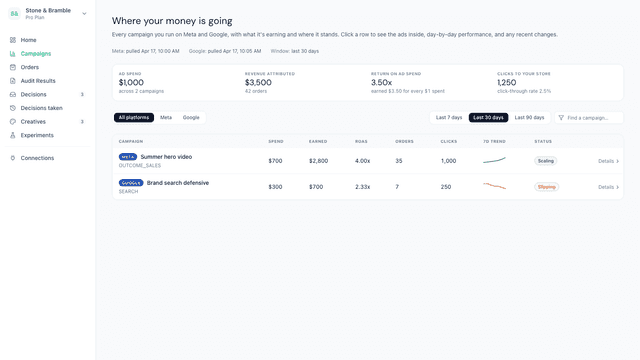
See every featureMeta says one ROAS. Google says another. Your bank account disagrees. Ripplux audits your ad spend against your real Shopify orders and shows you what is working and what is wasted: fatigued creatives still burning budget, brand-search clicks you would have gotten free, and orders both platforms claim. Then it helps you prove it with holdout experiments.
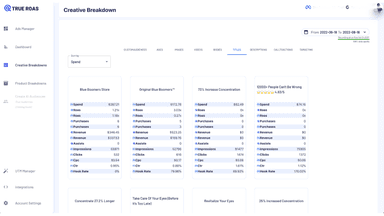
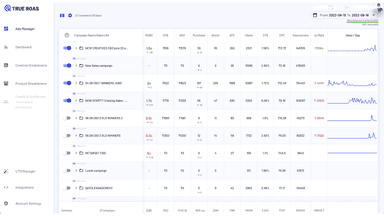
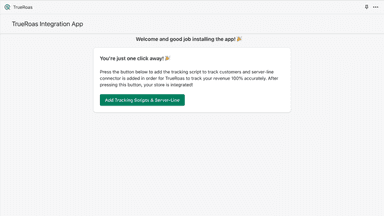
Never miss an order again. Know exactly where your revenue came from. Leverage True Data to save ad spend and gain an extreme competitive advantage. Data updates frequently so you can scale fast and predictably while being GDPR compliant, then track your profits for your ads and send the data back via conversion api and enhanced conversions to optimize ads passively.
- Full audit of your Meta and Google ad spend, refreshed weekly.
- Pause underperforming ads directly from the dashboard.
- Run incrementality experiments to prove which ads actually drive sales.
- Detects creative fatigue before it eats your CAC.
- AI Ad Tracking & Attribution
- Customer Journeys for each order
- Creative Breakdown
- Product Analysis




All the numbers
Every figure, side by side
A green dot marks the app ahead on a measured figure. Estimates, gaps and apps that leave no storefront trace never take the lead.
Adoption
| Measure |  Ripplux |  TrueROAS |
|---|---|---|
| Detected stores | Not published | 309 |
| Net store change, 28 days | 0 | +1 |
| Stores added, 28 days | Not enough data | 5 |
| Big-brand share | Not enough data | 13% |
| Top store categories | Not published | Apparel & Accessories, Health & Beauty, Home & Garden |
| Top store countries | Not published | United States, United Kingdom, Australia |
Reviews
| Measure | Ripplux | TrueROAS |
|---|---|---|
| App Store rating | Not published | 4.7 ★ |
| App Store reviews | Not published | 97 |
| New reviews, 28 days | Not enough data | 3 |
| Reviewers a year or more in | Not enough data | 5% |
FAQ
Ripplux and TrueROAS: common questions
- Is Ripplux or TrueROAS cheaper?
- Paid plans start at $149/month for Ripplux and $199/month for TrueROAS. Shoplist compares base prices only between monthly plans in the same currency; usage charges and annual plans vary, so check each plan’s limits.
- What features does each app list that the other doesn’t?
- Ripplux lists 3 the others don’t mention, such as A/B testing, Ad spend, Performance tracking. TrueROAS lists 11 the others don’t mention, such as Event tracking, Funnel analysis, GDPR compliance, Historical analysis. A feature missing from a listing may still be supported; this compares what each App Store listing says.
- Where does this comparison’s data come from?
- Shoplist crawls Shopify storefronts to detect which apps each store runs, and reads each app’s Shopify App Store listing for reviews, pricing, features and integrations. Store counts are as of Oct 14, 2026 for Ripplux, Nov 8, 2026 for TrueROAS; estimated figures are labeled.
How Shoplist compares apps
Store counts come from Shoplist’s crawl of Shopify storefronts, which detects the apps each store runs; they are as of Oct 14, 2026 for Ripplux, Nov 8, 2026 for TrueROAS. Reviews, ratings, plans, features and integrations come from each app’s Shopify App Store listing. 28-day figures are labeled when estimated, and a figure that is missing or estimated never decides who leads. Read the methodology.