

Rio Ai ‑ Shopping Assistant vs Sigma ‑ AI Shopping Assistant
Two Shopify apps, side by side: detected stores, momentum, reviews, plans, listed features and who runs each. Store counts as of Oct 13, 2026 for Rio Ai, Sep 3, 2026 for Sigma.
The short answer
- Only Rio Ai lists a free plan.
- Sigma lists 5 features Rio Ai’s listing doesn’t mention, including Agent analytics, Agent avatar, Chat flows.
Head to head


Free
- · AI product recommendations
- · Unlimited AI chat & voice interactions
- · Up to 30 products
Starter
- · Add-to-cart from chat
- · Basic analytics dashboard
- · Up to 250 products
Growth
- · Advanced analytics
- · Up to 1,500 products
Pro
- · Priority support
- · Up to 22,000 products
Coverage counts what each App Store listing names. Every feature, checked off app by app, is in Shoplist.
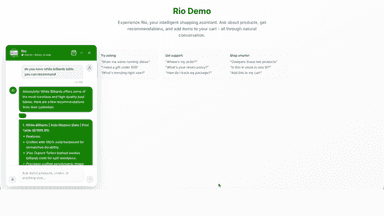
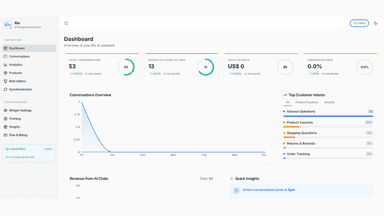
See every featureRio adds an AI chat assistant to your storefront that helps customers find products, answer questions, and complete purchases without any merchant involvement. Customers get instant product recommendations, order tracking, and guided checkout through natural conversation. Rio remembers shopper preferences across visits to personalise every interaction.
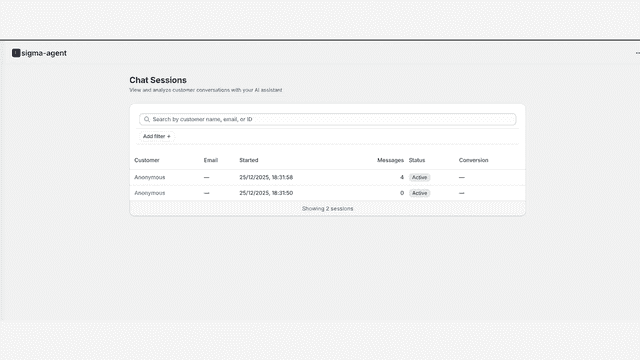
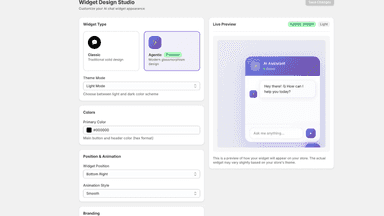
Sigma AI is your always-on AI shopping assistant that helps customers find products, track orders, and checkout faster. Unlike basic chatbots, it understands your entire product catalog and delivers personalized recommendations through natural conversation. Customers ask questions like "show me gifts under $50" and get instant product cards with images, prices, and one-click add-to-cart.
- Conversational product discovery powered by AI and voice search
- Personalised recommendations that improve with every shopper visit
- Instant order tracking via chat — no support tickets needed
- Smart upsells and bundle suggestions triggered by purchase intent
- Smart product discovery - customers find products using natural language
- 24/7 automated support - answers questions about products and policies
- Conversation analytics and revenue attribution dashboard



All the numbers
Every figure, side by side
A green dot marks the app ahead on a measured figure. Estimates, gaps and apps that leave no storefront trace never take the lead.
Adoption
| Measure |  Rio Ai |  Sigma |
|---|---|---|
| Detected stores | Not published | Not published |
| Net store change, 28 days | 0 | 0 |
| Stores added, 28 days | Not enough data | Not enough data |
| Big-brand share | Not enough data | Not enough data |
| Top store categories | Not published | Not published |
| Top store countries | Not published | Not published |
Reviews
| Measure | Rio Ai | Sigma |
|---|---|---|
| App Store rating | Not published | Not published |
| App Store reviews | Not published | Not published |
| New reviews, 28 days | Not enough data | Not enough data |
| Reviewers a year or more in | Not enough data | Not enough data |
FAQ
Rio Ai and Sigma: common questions
- Is Rio Ai or Sigma cheaper?
- Only Rio Ai lists a free plan. Shoplist compares base prices only between monthly plans in the same currency; usage charges and annual plans vary, so check each plan’s limits.
- What features does each app list that the other doesn’t?
- Rio Ai lists 2 the others don’t mention, such as Order updates, Quick replies. Sigma lists 5 the others don’t mention, such as Agent analytics, Agent avatar, Chat flows, Cross-sell. A feature missing from a listing may still be supported; this compares what each App Store listing says.
- Where does this comparison’s data come from?
- Shoplist crawls Shopify storefronts to detect which apps each store runs, and reads each app’s Shopify App Store listing for reviews, pricing, features and integrations. Store counts are as of Oct 13, 2026 for Rio Ai, Sep 3, 2026 for Sigma; estimated figures are labeled.
How Shoplist compares apps
Store counts come from Shoplist’s crawl of Shopify storefronts, which detects the apps each store runs; they are as of Oct 13, 2026 for Rio Ai, Sep 3, 2026 for Sigma. Reviews, ratings, plans, features and integrations come from each app’s Shopify App Store listing. 28-day figures are labeled when estimated, and a figure that is missing or estimated never decides who leads. Read the methodology.