
Reorderly: B2B Quick Reorder vs Repeatly — Wholesale Reorders
Two Shopify apps, side by side: detected stores, momentum, reviews, plans, listed features and who runs each. Store counts as of Nov 16, 2026 for Reorderly, Oct 14, 2026 for Repeatly.
The short answer
- Both list a free plan. Paid plans start at $9.99/month for Reorderly and $149/month for Repeatly.
- Repeatly lists 3 features Reorderly’s listing doesn’t mention, including Draft orders, Manual orders, Order form.
Head to head

Free
Starter
Pro
Free
- · Reorder dashboard + due dates
- · Rep mode + buyer self-serve reorder
- · Up to 5 reorder nudges/month
Pro
- · AI timing on irregular accounts
- · Autopilot at the AI-timed moment
- · Recovered-revenue analytics
- · Unlimited reorder nudges
Coverage counts what each App Store listing names. Every feature, checked off app by app, is in Shoplist.
See every featureBuilt for repeat ordering. Buyers get a Reorder page in new customer accounts: they search past orders by SKU, product, PO or order number, reorder frequent items, paste a SKU list or reorder a saved list. You see reorder revenue and repeat buyer revenue on your Home page. It works alongside Shopify B2B and wholesale apps, with no theme code edits.
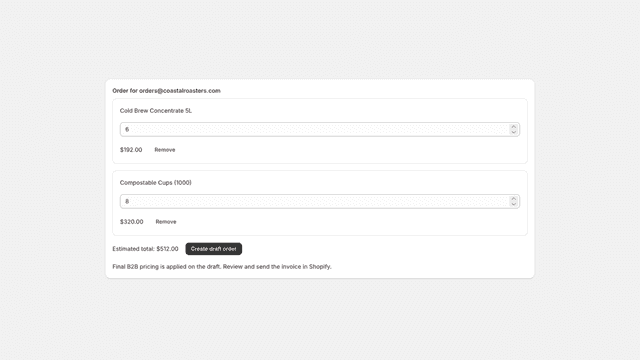
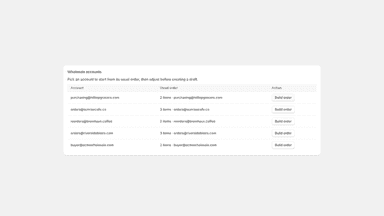
Repeatly uses paid Shopify order history to identify wholesale buyers due to reorder and reconstruct their usual basket. Review the basket, then send a draft order and Shopify invoice. Pro can automate follow-up timing. Best for stores with several wholesale accounts that each have at least two paid orders. Supports native Shopify B2B companies and price lists. Track later orders attributed to each nudge.
- Search past orders by SKU, product, PO or order number
- Reorder lines or whole orders, or paste a SKU list
- Saved lists and Due soon reminders for regular buyers
- Invoice PDFs with your logo and tax ID
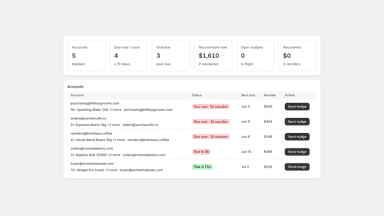
- Reorder dashboard: see who's due to reorder and who's overdue
- One-click reorder of each account's usual order, as a draft + invoice
- Autopilot auto-sends each nudge at the AI-predicted reorder moment
All the numbers
Every figure, side by side
A green dot marks the app ahead on a measured figure. Estimates, gaps and apps that leave no storefront trace never take the lead.
Adoption
| Measure |  Repeatly | |
|---|---|---|
| Detected stores | Not published | Not published |
| Net store change, 28 days | 0 | 0 |
| Stores added, 28 days | Not enough data | Not enough data |
| Big-brand share | Not enough data | Not enough data |
| Top store categories | Not published | Not published |
| Top store countries | Not published | Not published |
Reviews
| Measure | Repeatly | |
|---|---|---|
| App Store rating | Not published | Not published |
| App Store reviews | Not published | Not published |
| New reviews, 28 days | Not enough data | Not enough data |
| Reviewers a year or more in | Not enough data | Not enough data |
FAQ
Reorderly and Repeatly: common questions
- Is Reorderly or Repeatly cheaper?
- Both list a free plan. Paid plans start at $9.99/month for Reorderly and $149/month for Repeatly. Shoplist compares base prices only between monthly plans in the same currency; usage charges and annual plans vary, so check each plan’s limits.
- What features does each app list that the other doesn’t?
- Repeatly lists 3 the others don’t mention, such as Draft orders, Manual orders, Order form. A feature missing from a listing may still be supported; this compares what each App Store listing says.
- Where does this comparison’s data come from?
- Shoplist crawls Shopify storefronts to detect which apps each store runs, and reads each app’s Shopify App Store listing for reviews, pricing, features and integrations. Store counts are as of Nov 16, 2026 for Reorderly, Oct 14, 2026 for Repeatly; estimated figures are labeled.
How Shoplist compares apps
Store counts come from Shoplist’s crawl of Shopify storefronts, which detects the apps each store runs; they are as of Nov 16, 2026 for Reorderly, Oct 14, 2026 for Repeatly. Reviews, ratings, plans, features and integrations come from each app’s Shopify App Store listing. 28-day figures are labeled when estimated, and a figure that is missing or estimated never decides who leads. Read the methodology.