
RankHouse vs RankPine ‑ SEO on autopilot
Two Shopify apps, side by side: detected stores, momentum, reviews, plans, listed features and who runs each. Store counts as of Nov 12, 2026 for RankHouse, Oct 13, 2026 for RankPine.
The short answer
- RankHouse lists 2 features RankPine’s listing doesn’t mention, including Meta tags, Metadata optimization.
Head to head

Standard
Coverage counts what each App Store listing names. Every feature, checked off app by app, is in Shoplist.
See every featureWrite blog posts in Markdown and publish them to your store, or save them as drafts. Import finished posts from a Markdown file or a CSV of up to 50, with a preview before anything is saved. Edit the SEO title and meta description of every product, collection and page in one place, with character counts. Posts land as normal blog posts in your store, ready to edit in your admin.
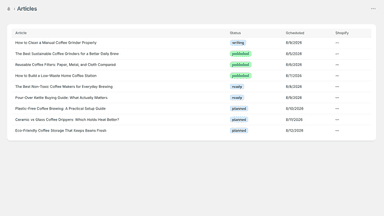
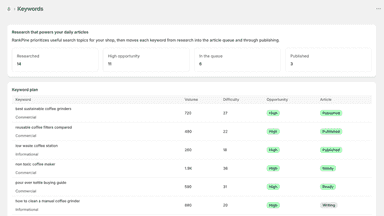
RankPine turns your store blog into a consistent organic growth channel. Choose a blog, describe your niche and audience, and select draft, scheduled, or automatic publishing. RankPine researches each topic, writes and edits the article, adds relevant sources and internal links, creates a featured image, and publishes it to your blog. It adds no storefront scripts or theme extensions.
- Write posts in Markdown and publish them or save as drafts
- Import posts from a Markdown file or a CSV, with a preview first
- Edit SEO titles and meta descriptions of products, collections and pages
- Set the blog, tags and SEO fields of each post as you publish
- Research and create one SEO article for your store every day
- Save articles as drafts, schedule them, or publish automatically
- Generate featured images, citations, and useful internal links
- Research of keywords that will actually help you rank

All the numbers
Every figure, side by side
A green dot marks the app ahead on a measured figure. Estimates, gaps and apps that leave no storefront trace never take the lead.
Adoption
| Measure |  RankPine | |
|---|---|---|
| Detected stores | Not published | Not published |
| Net store change, 28 days | Not enough data | 0 |
| Stores added, 28 days | Not enough data | Not enough data |
| Big-brand share | Not enough data | Not enough data |
| Top store categories | Not published | Not published |
| Top store countries | Not published | Not published |
Reviews
| Measure | RankPine | |
|---|---|---|
| App Store rating | Not published | Not published |
| App Store reviews | Not published | Not published |
| New reviews, 28 days | Not enough data | Not enough data |
| Reviewers a year or more in | Not enough data | Not enough data |
FAQ
RankHouse and RankPine: common questions
- What features does each app list that the other doesn’t?
- RankHouse lists 2 the others don’t mention, such as Meta tags, Metadata optimization. RankPine lists 2 the others don’t mention, such as AI generation, URL optimization. A feature missing from a listing may still be supported; this compares what each App Store listing says.
- Where does this comparison’s data come from?
- Shoplist crawls Shopify storefronts to detect which apps each store runs, and reads each app’s Shopify App Store listing for reviews, pricing, features and integrations. Store counts are as of Nov 12, 2026 for RankHouse, Oct 13, 2026 for RankPine; estimated figures are labeled.
How Shoplist compares apps
Store counts come from Shoplist’s crawl of Shopify storefronts, which detects the apps each store runs; they are as of Nov 12, 2026 for RankHouse, Oct 13, 2026 for RankPine. Reviews, ratings, plans, features and integrations come from each app’s Shopify App Store listing. 28-day figures are labeled when estimated, and a figure that is missing or estimated never decides who leads. Read the methodology.