

Webgility ‑ QuickBooks Online vs Trusync
Two Shopify apps, side by side: detected stores, momentum, reviews, plans, listed features and who runs each. Store counts as of Nov 19, 2026 for Webgility, Oct 13, 2026 for Trusync.
The short answer
- Paid plans start at $79/month for Webgility and $25/month for Trusync.
- Webgility lists 25 features Trusync’s listing doesn’t mention, including Cash flow, COGS tracking, Custom reports.
Head to head


Automate bookkeeping, track payouts, & sync inventory.
Momentum
New reviews each month
Review pace is the clearest public read on how fast an app is winning new merchants.
Pro
- · 2 sales channels
- · 3 months historical data
- · 300 orders per month
Advanced
- · 2 Sales Channels
- · 800 orders per month
- · Ecommerce reconciliation audit
- · Findings report w/ recommendations
- · Quarterly review by, accounting partner
- · Sync wholesale orders with PO#s
Complete
- · 1,500 orders per month
- · 3 Months Historic Data
- · 3 sales channels
- · Guaranteed Monthly Reconciliation
- · Monthly Accountant Review
- · Monthly Ecommerce Report
CompleteEnterprise
- · 3 months historical data
- · 5 sales channels
- · 5,000 orders per month
- · Intuit Enterprise Suite support
- · Multi-entity ecommerce accounting
Starter
- · 10,000 orders per year
Growth
- · 25,000 orders per year
Professional
- · 100,000 orders per year
Enterprise
- · 1,000,000 orders per year
Coverage counts what each App Store listing names. Every feature, checked off app by app, is in Shoplist.
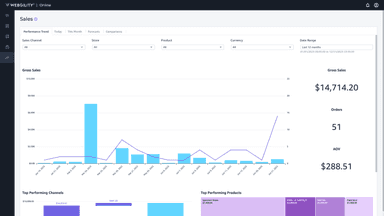
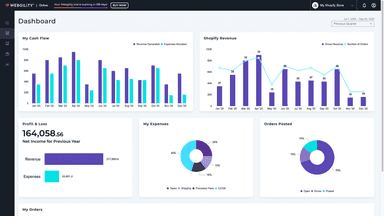
See every featureAutomates ecommerce accounting with a breeze by syncing Shopify to QuickBooks Online, Xero and 30+ marketplaces. Eliminate manual data entry by syncing orders, taxes, inventory, refunds and payouts in real time. Simplify reconciliation by matching sales, deposits, and fees automatically. Avoid errors, scale with confidence, and gain insights into profitability, expenses, and sales trends.
TruSync syncs Shopify orders to QuickBooks Online as sales receipts or invoices. All orders map to one QBO customer per store, keeping your customer list compact. Inventory updates flow from QBO to Shopify whenever on-hand quantities change, so storefront stock reflects your books. A setup wizard guides you through connecting QBO, mapping products, and configuring accounts. Track every sync from Shopify admin.
- Accounting automation downloads and posts orders to QuickBooks in real time.
- Shopify reconciliation matches bank deposits and payouts quickly and accurately.
- Post Shopify payouts and order updates to QuickBooks to reconcile sales quickly.
- Multichannel inventory sync updates product availability with each sale.
- Automatic order sync — every Shopify order flows to QBO in real time
- Clean customer list — all orders map to one QBO customer, not one per buyer
- Real-time inventory sync — QBO as source of truth, no surprise stockouts
- Product and account mapping — guided setup wizard in under five minutes



All the numbers
Every figure, side by side
A green dot marks the app ahead on a measured figure. Estimates, gaps and apps that leave no storefront trace never take the lead.
Adoption
| Measure |  Webgility |  Trusync |
|---|---|---|
| Detected stores | Not published | Not published |
| Net store change, 28 days | 0 | 0 |
| Stores added, 28 days | Not enough data | Not enough data |
| Big-brand share | Not enough data | Not enough data |
| Top store categories | Not published | Not published |
| Top store countries | Not published | Not published |
Reviews
| Measure | Webgility | Trusync |
|---|---|---|
| App Store rating | 4.9 ★ | Not published |
| App Store reviews | 924 | Not published |
| New reviews, 28 days | 5 | Not enough data |
| Reviewers a year or more in | 14% | Not enough data |
FAQ
Webgility and Trusync: common questions
- Is Webgility or Trusync cheaper?
- Paid plans start at $79/month for Webgility and $25/month for Trusync. Shoplist compares base prices only between monthly plans in the same currency; usage charges and annual plans vary, so check each plan’s limits.
- What features does each app list that the other doesn’t?
- Webgility lists 25 the others don’t mention, such as Cash flow, COGS tracking, Custom reports, Customers. Trusync lists 7 the others don’t mention, such as Accounts receivable, Bank reconciliation, Billing and invoicing, Detailed logs. A feature missing from a listing may still be supported; this compares what each App Store listing says.
- Where does this comparison’s data come from?
- Shoplist crawls Shopify storefronts to detect which apps each store runs, and reads each app’s Shopify App Store listing for reviews, pricing, features and integrations. Store counts are as of Nov 19, 2026 for Webgility, Oct 13, 2026 for Trusync; estimated figures are labeled.
How Shoplist compares apps
Store counts come from Shoplist’s crawl of Shopify storefronts, which detects the apps each store runs; they are as of Nov 19, 2026 for Webgility, Oct 13, 2026 for Trusync. Reviews, ratings, plans, features and integrations come from each app’s Shopify App Store listing. 28-day figures are labeled when estimated, and a figure that is missing or estimated never decides who leads. Read the methodology.