

PostRules vs ShipWeaver Hide Shipping Rules
Two Shopify apps, side by side: detected stores, momentum, reviews, plans, listed features and who runs each. Store counts as of Nov 7, 2026 for PostRules, Sep 4, 2026 for ShipWeaver Hide Shipping Rules.
The short answer
Head to head


Momentum
New reviews each month
Review pace is the clearest public read on how fast an app is winning new merchants.
All Access
- · Everything included
- · Unlimited Rules
Coverage counts what each App Store listing names. Every feature, checked off app by app, is in Shoplist.
See every featurePostRules lets merchants create rules that filter shipping rates at checkout based on a customer's postcode. Show mode restricts postcodes to specific shipping methods. E.g. Only show rural delivery options to rural postcodes or block mode prevents customers placing orders from postcodes you can't deliver to. Everything is configured within the app's dashboard.
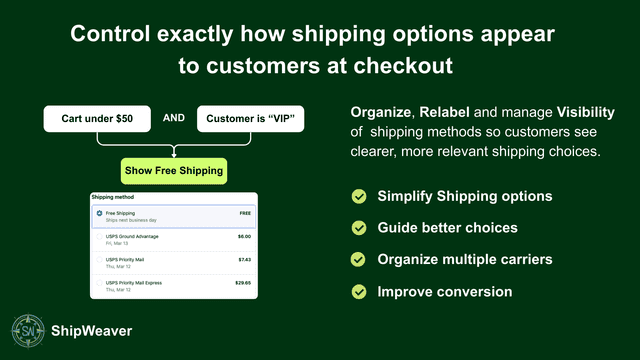
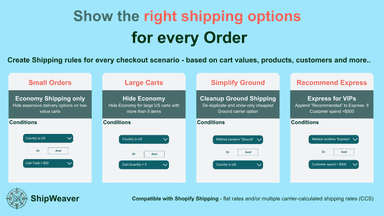
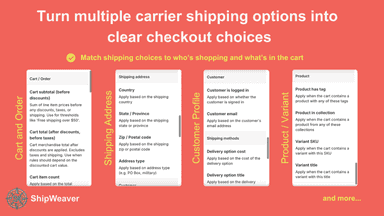
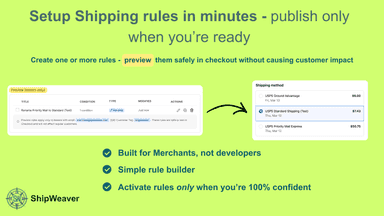
Hide, rename, reorder, sort, and de-duplicate shipping methods so checkout shows the rates that actually apply. Build rules from cart value, products, customer tags, and destination - wholesale vs retail, pickup vs shipping, or a rate that should not appear in a given place. Preview a rule on a tester checkout before it goes live. Ask Sidekick what is hidden, renamed, or preview-only, then open the rule.
- Filter shipping rates by postcode; show or block at checkout.
- Built-in postcode presets for common regions like NZ rural areas
- Draft and active states let you prepare rules before going live.
- Stale rate detection alerts you when Shopify shipping rates change.
- Turn multiple carrier shipping options into clear checkout choices for customers
- Add multiple rules with condition groups to express complex shipping preferences
- De-duplicate same service level from carriers and keep only lowest-priced option


All the numbers
Every figure, side by side
A green dot marks the app ahead on a measured figure. Estimates, gaps and apps that leave no storefront trace never take the lead.
Adoption
| Measure |  PostRules |  ShipWeaver Hide Shipping Rules |
|---|---|---|
| Detected stores | Not published | Not published |
| Net store change, 28 days | 0 | 0 |
| Stores added, 28 days | Not enough data | Not enough data |
| Big-brand share | Not enough data | Not enough data |
| Top store categories | Not published | Not published |
| Top store countries | Not published | Not published |
Reviews
| Measure | PostRules | ShipWeaver Hide Shipping Rules |
|---|---|---|
| App Store rating | 5.0 ★ | Not published |
| App Store reviews | 3 | Not published |
| New reviews, 28 days | Not enough data | Not enough data |
| Reviewers a year or more in | Not enough data | Not enough data |
Pricing
| Measure | PostRules | ShipWeaver Hide Shipping Rules |
|---|---|---|
| Free plan | Not listed | Not listed |
| Lowest paid monthly plan | $15/month | No monthly plan listed |
| Longest free trial | 7 days | Not listed |
| Plans listed | 1 | Not published |
Listing
| Measure | PostRules | ShipWeaver Hide Shipping Rules |
|---|---|---|
| Shopify category rank | #65(ahead) | #79 |
| Shopify App Charts | Not on this week’s charts | Not on this week’s charts |
| Built for Shopify | No | No |
| Launched | May 1, 2026 | Apr 20, 2026 |
| Languages | 1 | 1 |
| Developer | Subject Matter | TradeFlow |
FAQ
PostRules and ShipWeaver Hide Shipping Rules: common questions
- Where does this comparison’s data come from?
- Shoplist crawls Shopify storefronts to detect which apps each store runs, and reads each app’s Shopify App Store listing for reviews, pricing, features and integrations. Store counts are as of Nov 7, 2026 for PostRules, Sep 4, 2026 for ShipWeaver Hide Shipping Rules; estimated figures are labeled.
How Shoplist compares apps
Store counts come from Shoplist’s crawl of Shopify storefronts, which detects the apps each store runs; they are as of Nov 7, 2026 for PostRules, Sep 4, 2026 for ShipWeaver Hide Shipping Rules. Reviews, ratings, plans, features and integrations come from each app’s Shopify App Store listing. 28-day figures are labeled when estimated, and a figure that is missing or estimated never decides who leads. Read the methodology.