
PO Pilot ‑ Purchase Orders vs PO Sync
Two Shopify apps, side by side: detected stores, momentum, reviews, plans, listed features and who runs each. Store counts as of Jul 17, 2026 for PO Pilot, Nov 4, 2026 for PO Sync.
The short answer
- PO Pilot lists 8 features PO Sync’s listing doesn’t mention, including Forecasting, Inventory planning, Inventory sync.
Head to head

Standard
- · Automatic purchase order mismatch detect
- · One-click draft transfer syncing
- · Quantity and product updates
- · Review changes before syncing
- · Transfer sync history
Coverage counts what each App Store listing names. Every feature, checked off app by app, is in Shoplist.
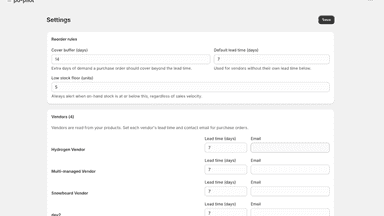
See every featureStop guessing what to reorder. PO Pilot watches every variant's stock level and 30-day sales velocity, alerts you before you run out, and drafts purchase orders per vendor in one click — quantities sized to cover your lead time plus a safety buffer. Edit quantities and costs, then export each PO to CSV for your supplier. Set per-vendor lead times and contact emails.
When you change a purchase order, Shopify doesn't automatically update its linked inventory transfer. PO Sync detects these differences so you don't have to compare them manually. Review the changes and sync eligible draft transfers with one click. PO Sync updates quantities and products to match the purchase order, checks the results, and flags transfers that need manual attention.
- Variant-level low stock alerts based on real 30-day sales velocity
- One-click purchase order drafts grouped by vendor with suggested quantities
- Per-vendor lead times and supplier emails, auto-imported from products
- Track POs from draft to sent to received, with CSV export for suppliers
- Automatically detect purchase order and inventory transfer mismatches.
- Sync eligible draft transfers with one approval.
- Update transfer quantities to match purchase orders.
- Add or remove transfer products when purchase orders change.


All the numbers
Every figure, side by side
A green dot marks the app ahead on a measured figure. Estimates, gaps and apps that leave no storefront trace never take the lead.
Adoption
| Measure |  PO Pilot | |
|---|---|---|
| Detected stores | Not published | Not published |
| Net store change, 28 days | 0 | 0 |
| Stores added, 28 days | Not enough data | Not enough data |
| Big-brand share | Not enough data | Not enough data |
| Top store categories | Not published | Not published |
| Top store countries | Not published | Not published |
Reviews
| Measure | PO Pilot | |
|---|---|---|
| App Store rating | Not published | Not published |
| App Store reviews | Not published | Not published |
| New reviews, 28 days | Not enough data | Not enough data |
| Reviewers a year or more in | Not enough data | Not enough data |
FAQ
PO Pilot and PO Sync: common questions
- What features does each app list that the other doesn’t?
- PO Pilot lists 8 the others don’t mention, such as Forecasting, Inventory planning, Inventory sync, Inventory tracking. PO Sync lists 1 the others don’t mention, such as Stock transfer. A feature missing from a listing may still be supported; this compares what each App Store listing says.
- Where does this comparison’s data come from?
- Shoplist crawls Shopify storefronts to detect which apps each store runs, and reads each app’s Shopify App Store listing for reviews, pricing, features and integrations. Store counts are as of Jul 17, 2026 for PO Pilot, Nov 4, 2026 for PO Sync; estimated figures are labeled.
How Shoplist compares apps
Store counts come from Shoplist’s crawl of Shopify storefronts, which detects the apps each store runs; they are as of Jul 17, 2026 for PO Pilot, Nov 4, 2026 for PO Sync. Reviews, ratings, plans, features and integrations come from each app’s Shopify App Store listing. 28-day figures are labeled when estimated, and a figure that is missing or estimated never decides who leads. Read the methodology.