

PictifyAI vs Pikstage
Two Shopify apps, side by side: detected stores, momentum, reviews, plans, listed features and who runs each. Store counts as of Oct 13, 2026.
The short answer
- Both list a free plan.
- PictifyAI lists 5 features Pikstage’s listing doesn’t mention, including AI generation, Custom backgrounds, Download.
Head to head


Momentum
New reviews each month
Review pace is the clearest public read on how fast an app is winning new merchants.
3 credits
- · Attach photos to product
- · Credits never expire
- · Use prompt or reference image
20 credits
- · Attach photos to product
- · Credits never expire
- · Use prompt or reference image
80 credits
- · Attach photos to product
- · Credits never expire
- · Use prompt or reference image
Free
- · 20 AI photos, one-time trial
- · All 5 scene styles
- · No credit card required
Lite
- · 150 AI photos per month
- · Prompt Studio - 1 custom scene per month
Starter
- · 275 AI photos per month
- · Prompt Studio - 5 custom scenes/month
Annual
- · 1,500 AI photos for the whole year
- · All 5 scene styles
- · No monthly cap - use anytime
- · Prompt Studio - 60 custom scenes
Coverage counts what each App Store listing names. Every feature, checked off app by app, is in Shoplist.
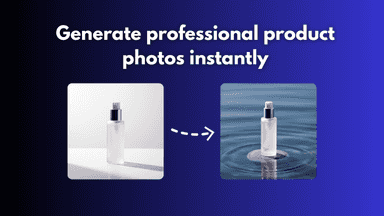
See every featurePictifyAI helps you create professional product photos directly from your existing images. Use prompts or a reference photo to generate lifestyle‑quality visuals that match your brand. You can edit, download, and upload new AI‑generated images directly to your Shopify products. No photo studio or design skills required.
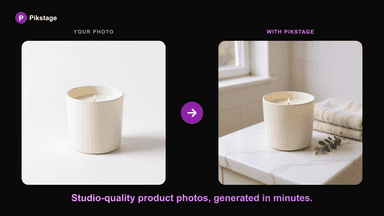
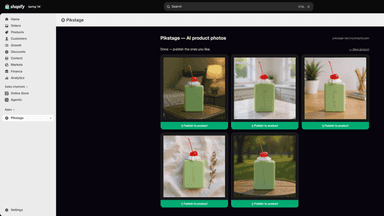
Pikstage turns your product photos into studio-quality marketing images, no photographer, studio, or props needed. Upload a product shot, pick a scene, and Pikstage generates on-brand photos that keep your product looking consistent everywhere, then publishes them straight to your product gallery.
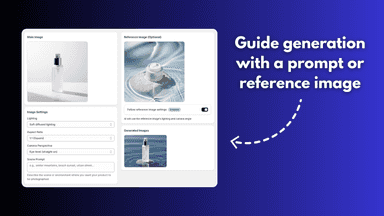
- Generate new product photos using prompts or reference images.
- Edit lighting, aspect ratio, and perspective before exporting images.
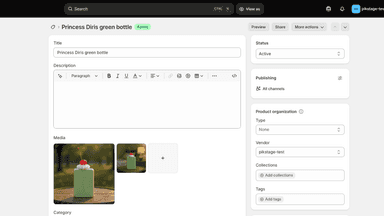
- Upload generated photos directly to your Shopify products.
- Create multiple product image variations in one session.
- Generate studio-style product photos from one reference upload
- Keep your product looking consistent across every generated scene
- Publish full-resolution photos straight to a product's gallery
- Choose from multiple scene styles for each product



All the numbers
Every figure, side by side
A green dot marks the app ahead on a measured figure. Estimates, gaps and apps that leave no storefront trace never take the lead.
Adoption
| Measure |  PictifyAI |  Pikstage |
|---|---|---|
| Detected stores | Not published | Not published |
| Net store change, 28 days | 0 | 0 |
| Stores added, 28 days | Not enough data | Not enough data |
| Big-brand share | Not enough data | Not enough data |
| Top store categories | Not published | Not published |
| Top store countries | Not published | Not published |
Reviews
| Measure | PictifyAI | Pikstage |
|---|---|---|
| App Store rating | 5.0 ★ | Not published |
| App Store reviews | 2 | Not published |
| New reviews, 28 days | Not enough data | Not enough data |
| Reviewers a year or more in | Not enough data | Not enough data |
FAQ
PictifyAI and Pikstage: common questions
- Is PictifyAI or Pikstage cheaper?
- Both list a free plan. Shoplist compares base prices only between monthly plans in the same currency; usage charges and annual plans vary, so check each plan’s limits.
- What features does each app list that the other doesn’t?
- PictifyAI lists 5 the others don’t mention, such as AI generation, Custom backgrounds, Download, File upload. A feature missing from a listing may still be supported; this compares what each App Store listing says.
- Where does this comparison’s data come from?
- Shoplist crawls Shopify storefronts to detect which apps each store runs, and reads each app’s Shopify App Store listing for reviews, pricing, features and integrations. Store counts are as of Oct 13, 2026; estimated figures are labeled.
How Shoplist compares apps
Store counts come from Shoplist’s crawl of Shopify storefronts, which detects the apps each store runs; they are as of Oct 13, 2026. Reviews, ratings, plans, features and integrations come from each app’s Shopify App Store listing. 28-day figures are labeled when estimated, and a figure that is missing or estimated never decides who leads. Read the methodology.