Outify vs Shelfback
Two Shopify apps, side by side: detected stores, momentum, reviews, plans, listed features and who runs each. Store counts as of Oct 14, 2026 for Outify, Sep 10, 2026 for Shelfback.
The short answer
- Only Outify lists a free plan.
Head to head


Bronze Plan (Free)
- · Auto-hide out-of-stock products
- · Basic store analytics
- · Custom visibility settings
- · Daily inventory checks
- · Email support
- · Manual visibility control
Silver Plan
- · Advanced analytics dashboard
- · Auto-hide out-of-stock products
- · Auto-unhide on restock
- · Daily inventory checks
- · Manual visibility control
- · Priority email support
Gold Plan
- · 12-hour inventory checks
- · Auto-hide out-of-stock products
- · Auto-unhide on restock
- · Custom notification settings
- · Manual visibility control
- · Priority support
Platinum Plan
- · Advanced inventory insights
- · Auto-hide out-of-stock products
- · Auto-unhide on restock
- · Hourly inventory checks
- · Manual visibility control
- · Unlimited products
Coverage counts what each App Store listing names. Every feature, checked off app by app, is in Shoplist.
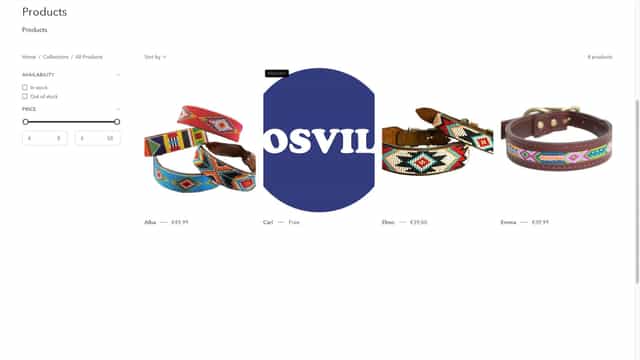
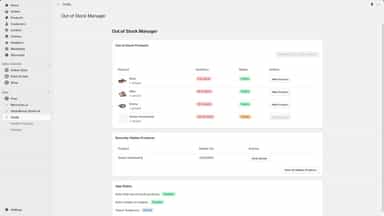
See every featureOutify automatically hides your out-of-stock products from your Shopify store and brings them back when inventory is restored. This improves your customer experience and prevents lost sales from unavailable items.
Sold-out products push shoppers away, and they are easy to miss. Shelfback watches your inventory and keeps out-of-stock products from cluttering your collections, so shoppers see what they can buy. It never drafts, hides, or deletes products, so your product pages and URLs stay intact.
- Automatic Product Hiding: Automatically hide products when stock is depleted.
- Auto-Unhide on Restock: Instantly restore product visibility when restocked.
- Bulk Management: Effortlessly manage visibility for multiple products at once.
- Automatically move out-of-stock products to the bottom of your collections
- Email alerts when a product sells out, plus an optional daily summary
- See which top-sellers are low or out of stock, ranked by restock priority
- Exclude any product, tag, vendor, or product type so it is never moved


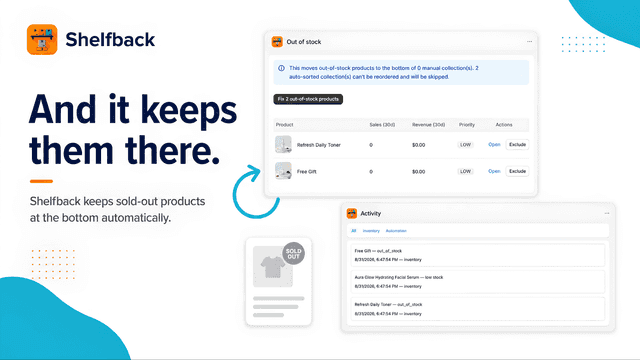
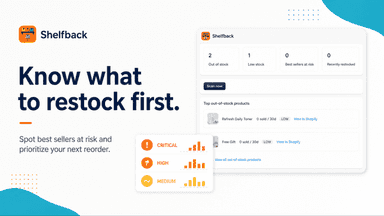
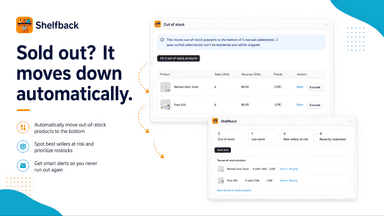
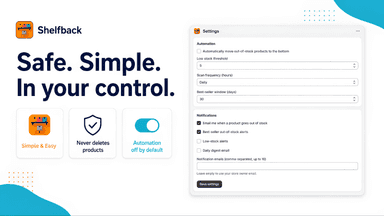
All the numbers
Every figure, side by side
A green dot marks the app ahead on a measured figure. Estimates, gaps and apps that leave no storefront trace never take the lead.
Adoption
| Measure |  Outify |  Shelfback |
|---|---|---|
| Detected stores | Not published | Not published |
| Net store change, 28 days | 0 | 0 |
| Stores added, 28 days | Not enough data | Not enough data |
| Big-brand share | Not enough data | Not enough data |
| Top store categories | Not published | Not published |
| Top store countries | Not published | Not published |
Reviews
| Measure | Outify | Shelfback |
|---|---|---|
| App Store rating | Not published | Not published |
| App Store reviews | Not published | Not published |
| New reviews, 28 days | Not enough data | Not enough data |
| Reviewers a year or more in | Not enough data | Not enough data |
FAQ
Outify and Shelfback: common questions
- Is Outify or Shelfback cheaper?
- Only Outify lists a free plan. Shoplist compares base prices only between monthly plans in the same currency; usage charges and annual plans vary, so check each plan’s limits.
- Where does this comparison’s data come from?
- Shoplist crawls Shopify storefronts to detect which apps each store runs, and reads each app’s Shopify App Store listing for reviews, pricing, features and integrations. Store counts are as of Oct 14, 2026 for Outify, Sep 10, 2026 for Shelfback; estimated figures are labeled.
How Shoplist compares apps
Store counts come from Shoplist’s crawl of Shopify storefronts, which detects the apps each store runs; they are as of Oct 14, 2026 for Outify, Sep 10, 2026 for Shelfback. Reviews, ratings, plans, features and integrations come from each app’s Shopify App Store listing. 28-day figures are labeled when estimated, and a figure that is missing or estimated never decides who leads. Read the methodology.