

OptizenAI ‑ SEO & AI Tools vs Rubick AI
Two Shopify apps, side by side: detected stores, momentum, reviews, plans, listed features and who runs each. Store counts as of Nov 3, 2026 for OptizenAI, Jun 18, 2026 for Rubick AI.
The short answer
- On the Shopify App Store: OptizenAI 4.7 from 11 reviews and Rubick AI 1.0 from 2 reviews.
- Only OptizenAI lists a free plan.
- OptizenAI lists 29 features Rubick AI’s listing doesn’t mention, including AI generation, Alt text, ALT text.
Head to head


Momentum
New reviews each month
Review pace is the clearest public read on how fast an app is winning new merchants.
Optizen AI FREE
- · - 2000 free words;
- · - AI update all product SEO meta data
- · - Full control & restore;
- · - then PAYG
Pro
- · - 125K AI words then PAYG
- · - All in OptizenAI
- · - collections/tags page AI
- · - import/export collections & tags
- · - smart tag filter
- · - tag page SEO
Enterprise
- · - 250,000 AI words then PAYG
- · - variant image thumbnail matcher
- · - variant tagger
- · All in OptizenAI PRO +
Coverage counts what each App Store listing names. Every feature, checked off app by app, is in Shoplist.
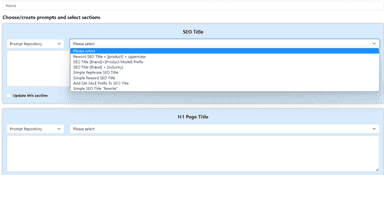
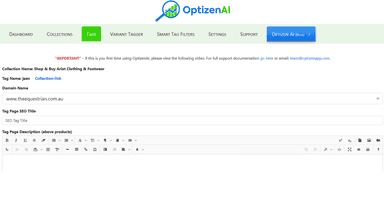
See every featureTransform your store's SEO at scale with AI-powered optimization. Automatically generate SEO titles, descriptions, H1 tags, image alt text, and internal links for products, collections, and tag pages. Create true sub-collections with parent-child hierarchies. Control collection filters with Smart Faceted Navigation. Export and import collections via CSV for easy backups.
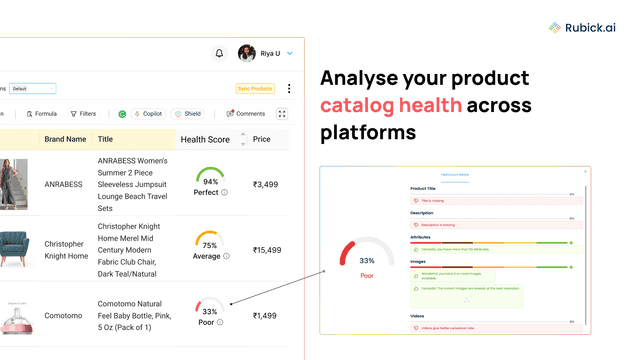
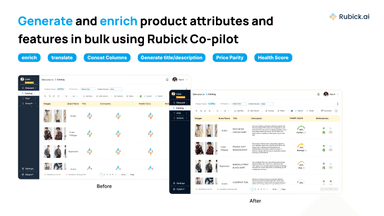
Sync your Shopify store with Rubick OS, the next-gen AI-powered eCommerce Operating System. Manage, publish, and control all your product information from one intuitive interface. Automate cataloging, enhance content, list across marketplaces, perform quality audits, and monitor competitors—all in one place. Harness generative AI to streamline operations and accelerate your go-to-market across channels effortlessly.
- Update products, collections & tags with AI. SEO meta, content & image alt text
- Export & Import collections & tags via .csv. Build fully optimized SEO tag pages
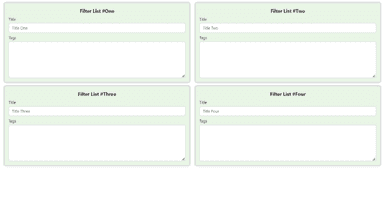
- Add variants as tags, and build color or size pages - Unlock 100s of pages
- Unified Dashboard - Manage all product data from a single interface
- Automated Cataloging - Eliminate manual work with smart automation
- Content Enrichment - Enhance product details for better visibility and sales.
- Multichannel Listing - Publish products seamlessly across marketplaces.



All the numbers
Every figure, side by side
A green dot marks the app ahead on a measured figure. Estimates, gaps and apps that leave no storefront trace never take the lead.
Adoption
| Measure |  OptizenAI |  Rubick AI |
|---|---|---|
| Detected stores | Not published | Not published |
| Net store change, 28 days | 0 | 0 |
| Stores added, 28 days | Not enough data | Not enough data |
| Big-brand share | Not enough data | Not enough data |
| Top store categories | Not published | Not published |
| Top store countries | Not published | Not published |
Reviews
| Measure | OptizenAI | Rubick AI |
|---|---|---|
| App Store rating | 4.7 ★(ahead) | 1.0 ★ |
| App Store reviews | 11(ahead) | 2 |
| New reviews, 28 days | 0 | Not enough data |
| Reviewers a year or more in | Not enough data | Not enough data |
FAQ
OptizenAI and Rubick AI: common questions
- Is OptizenAI or Rubick AI cheaper?
- Only OptizenAI lists a free plan. Shoplist compares base prices only between monthly plans in the same currency; usage charges and annual plans vary, so check each plan’s limits.
- Which has better reviews, OptizenAI or Rubick AI?
- On the Shopify App Store: OptizenAI 4.7 from 11 reviews and Rubick AI 1.0 from 2 reviews.
- What features does each app list that the other doesn’t?
- OptizenAI lists 29 the others don’t mention, such as AI generation, Alt text, ALT text, Analytics. Rubick AI lists 25 the others don’t mention, such as A/B testing, AI generation, AI recommendations, Analytics. A feature missing from a listing may still be supported; this compares what each App Store listing says.
- Where does this comparison’s data come from?
- Shoplist crawls Shopify storefronts to detect which apps each store runs, and reads each app’s Shopify App Store listing for reviews, pricing, features and integrations. Store counts are as of Nov 3, 2026 for OptizenAI, Jun 18, 2026 for Rubick AI; estimated figures are labeled.
How Shoplist compares apps
Store counts come from Shoplist’s crawl of Shopify storefronts, which detects the apps each store runs; they are as of Nov 3, 2026 for OptizenAI, Jun 18, 2026 for Rubick AI. Reviews, ratings, plans, features and integrations come from each app’s Shopify App Store listing. 28-day figures are labeled when estimated, and a figure that is missing or estimated never decides who leads. Read the methodology.