
syncX: A/B Testing vs TestLift: A/B Testing
Two Shopify apps, side by side: detected stores, momentum, reviews, plans, listed features and who runs each. Store counts as of Nov 13, 2026 for syncX, Nov 12, 2026 for TestLift.
The short answer
- Both list a free plan. Paid plans start at $10.99/month for syncX and $29/month for TestLift.
- syncX lists 18 features TestLift’s listing doesn’t mention, including A/B testing, Activity tracking, Analytics.
Head to head


- United States
- Netherlands
- Germany
Momentum
New reviews each month
Review pace is the clearest public read on how fast an app is winning new merchants.
Free
- · 1 A/B test at a time
- · 2 variants per test
- · Customer support
- · Detailed Analytics
Basic
- · 5 A/B tests at a time
- · Customer support
- · Detailed Analytics
- · Up to 3 variants per test
Premium
- · Custom Parameters
- · Customer support
- · Detailed Analytics
- · Unlimited A/B tests
- · Up to 6 variants per test
Enterprise
- · Advanced Analytics (by traffic source)
- · Advanced customer support
- · All Premium features
Free
- · 3 active tests
- · Bayesian results
- · Buy-button and slideshow campaigns
- · Email support
- · Guardrails
Pro
- · 7-day free trial
- · All Free features
- · Priority email support
- · Unlimited active tests
Coverage counts what each App Store listing names. Every feature, checked off app by app, is in Shoplist.
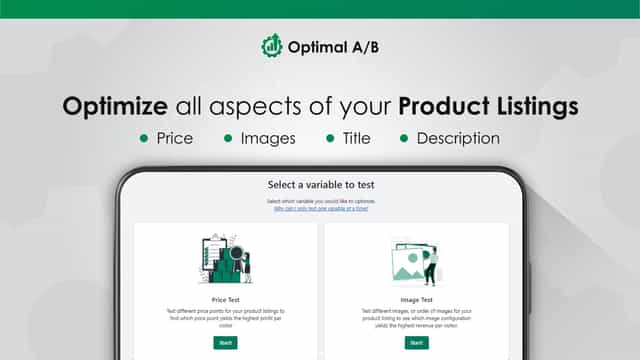
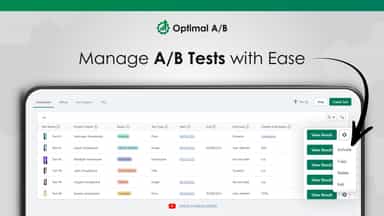
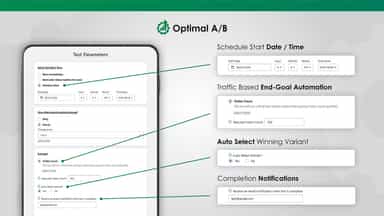
See every featureRun automated A/B tests on Shopify product pages, pricing, titles, images, and descriptions to increase conversion rates and sales. Use “set and forget” experiments with real-time analytics to find what works best. Optimize listings using existing traffic with no impact on site speed. Built natively for Shopify to ensure fast performance and seamless testing without complexity.
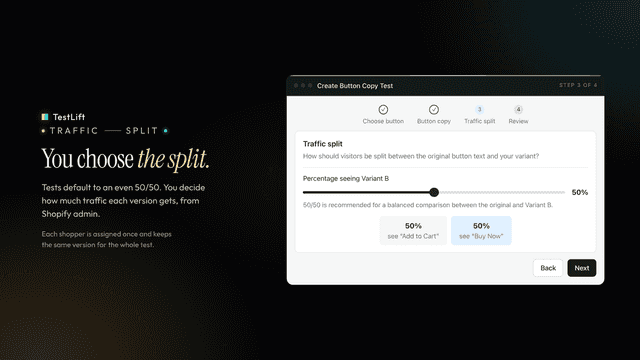
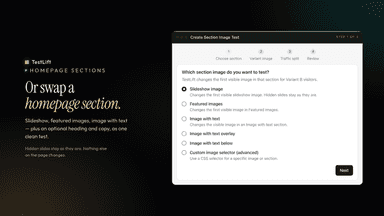
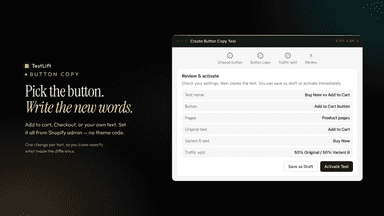
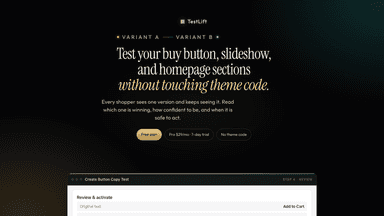
TestLift is the Shopify A/B testing app for buy-button copy and homepage slideshows. Test Add to cart and Checkout. Test the homepage slideshow shoppers see first — a new image plus optional heading and copy, as one campaign. See which version wins. No theme rewrite. Test buy-button copy from Shopify admin with no theme code edits. Test a homepage slideshow image plus optional heading and copy as one campaign.
- Optimize Sales & Profitability: A/B test pricing strategies, media, and copy
- User-Friendly: No coding, quick setup, and helpful resources
- Automation: End of test determination, alerts, and winner selection
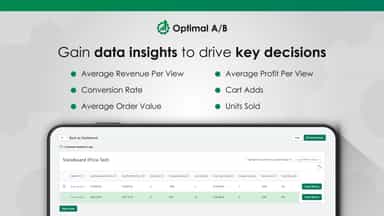
- Real Time Analytics: Gain data insights to further capitalize on site traffic
- Test Add to cart and Checkout copy without editing theme code
- Test the homepage slideshow with a new image plus optional heading and copy
- See which version wins with Bayesian winner signals
- Protect revenue with built-in guardrails


All the numbers
Every figure, side by side
A green dot marks the app ahead on a measured figure. Estimates, gaps and apps that leave no storefront trace never take the lead.
Adoption
| Measure |  syncX |  TestLift |
|---|---|---|
| Detected stores | 55 | Not published |
| Net store change, 28 days | 0 | 0 |
| Stores added, 28 days | Not enough data | Not enough data |
| Big-brand share | Not enough data | Not enough data |
| Top store categories | Apparel & Accessories, Home & Garden, Health & Beauty | Not published |
| Top store countries | United States, Netherlands, Germany | Not published |
Reviews
| Measure | syncX | TestLift |
|---|---|---|
| App Store rating | 5.0 ★ | Not published |
| App Store reviews | 5 | Not published |
| New reviews, 28 days | 0 | Not enough data |
| Reviewers a year or more in | Not enough data | Not enough data |
FAQ
syncX and TestLift: common questions
- Is syncX or TestLift cheaper?
- Both list a free plan. Paid plans start at $10.99/month for syncX and $29/month for TestLift. Shoplist compares base prices only between monthly plans in the same currency; usage charges and annual plans vary, so check each plan’s limits.
- What features does each app list that the other doesn’t?
- syncX lists 18 the others don’t mention, such as A/B testing, Activity tracking, Analytics, Auto-repricing. TestLift lists 2 the others don’t mention, such as Custom dashboards, Marketing attribution. A feature missing from a listing may still be supported; this compares what each App Store listing says.
- Where does this comparison’s data come from?
- Shoplist crawls Shopify storefronts to detect which apps each store runs, and reads each app’s Shopify App Store listing for reviews, pricing, features and integrations. Store counts are as of Nov 13, 2026 for syncX, Nov 12, 2026 for TestLift; estimated figures are labeled.
How Shoplist compares apps
Store counts come from Shoplist’s crawl of Shopify storefronts, which detects the apps each store runs; they are as of Nov 13, 2026 for syncX, Nov 12, 2026 for TestLift. Reviews, ratings, plans, features and integrations come from each app’s Shopify App Store listing. 28-day figures are labeled when estimated, and a figure that is missing or estimated never decides who leads. Read the methodology.