

Optifeed: Ad Intelligence vs ParetoHub
Two Shopify apps, side by side: detected stores, momentum, reviews, plans, listed features and who runs each. Store counts as of Oct 13, 2026 for Optifeed, Nov 9, 2026 for ParetoHub.
The short answer
- Optifeed lists 13 features ParetoHub’s listing doesn’t mention, including Attribute filtering, Attribute mapping, Custom formulas.
Head to head


- Australia
Momentum
New reviews each month
Review pace is the clearest public read on how fast an app is winning new merchants.
Pro
- · Ad performance (Google Ads, Meta, TikTok
- · Audience sizing, personas, and segments
- · Creative Studio (AI-generated ad creativ
- · Revenue goals and action plans
Coverage counts what each App Store listing names. Every feature, checked off app by app, is in Shoplist.
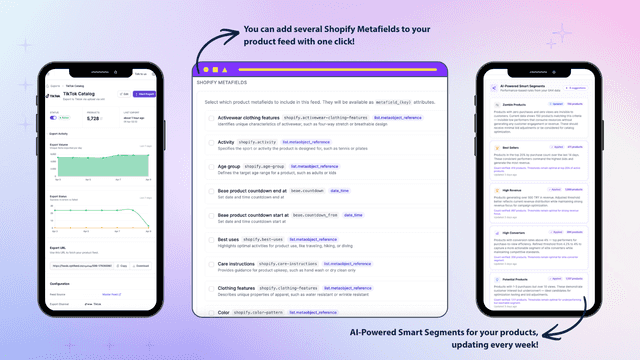
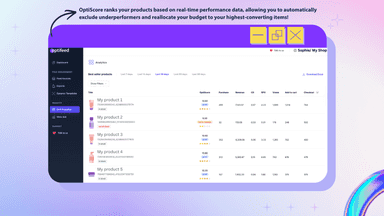
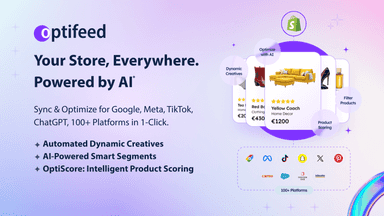
See every featureOptifeed is the marketing autopilot for ecommerce brands with large product catalogs. Optifeed enriches every product with AI and publishes it to 100+ channels where product data drives sales: ad platforms, price comparison sites, on-site marketing tools and AI assistants. It then creates, tests and optimizes product-level campaigns, shifting budget to winning products to drive higher ROAS.
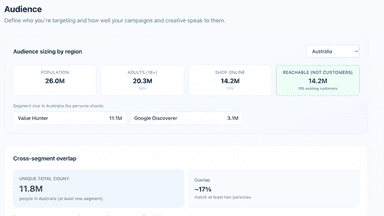
Pareto Hub connects your Shopify store with Facebook Ads, Google Ads, and TikTok Ads to surface key optimisations ranked by estimated revenue. It runs 18+ analysis modules targeting efficiency, budget reallocation, creative fatigue, customer segmentation, and more, then shows each opportunity with a dollar-value estimate so you know exactly where to focus.
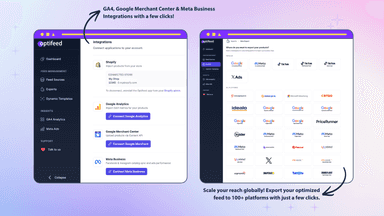
- Automatically generate feeds for 100+ platforms including Google, Meta & TikTok.
- Choose exactly which products, collections, or variants to include in your feed.
- Price or stock changes in Shopify? Optifeed syncs your product feed instantly.
- Feed Guard: Pre-validate data to fix Missing Attribute & Invalid Image errors.
- 18+ analysis modules across your store, Facebook, Google, and TikTok Ads
- Every suggestion ranked by estimated revenue impact with a dollar value
- AI Creative Studio to generate ad images, video, headlines, and copy
- Cross-channel Revenue Centre with attribution, media mix, and goal tracking



All the numbers
Every figure, side by side
A green dot marks the app ahead on a measured figure. Estimates, gaps and apps that leave no storefront trace never take the lead.
Adoption
| Measure |  Optifeed |  ParetoHub |
|---|---|---|
| Detected stores | Not published | 2 |
| Net store change, 28 days | 0 | 0 |
| Stores added, 28 days | Not enough data | Not enough data |
| Big-brand share | Not enough data | Not enough data |
| Top store categories | Not published | Apparel & Accessories, Health & Beauty |
| Top store countries | Not published | Australia |
Reviews
| Measure | Optifeed | ParetoHub |
|---|---|---|
| App Store rating | 5.0 ★ | Not published |
| App Store reviews | 10 | Not published |
| New reviews, 28 days | Not enough data | Not enough data |
| Reviewers a year or more in | Not enough data | Not enough data |
FAQ
Optifeed and ParetoHub: common questions
- What features does each app list that the other doesn’t?
- Optifeed lists 13 the others don’t mention, such as Attribute filtering, Attribute mapping, Custom formulas, Custom labels. ParetoHub lists 8 the others don’t mention, such as AI optimization, Analytics, Forecasting, Insights. A feature missing from a listing may still be supported; this compares what each App Store listing says.
- Where does this comparison’s data come from?
- Shoplist crawls Shopify storefronts to detect which apps each store runs, and reads each app’s Shopify App Store listing for reviews, pricing, features and integrations. Store counts are as of Oct 13, 2026 for Optifeed, Nov 9, 2026 for ParetoHub; estimated figures are labeled.
How Shoplist compares apps
Store counts come from Shoplist’s crawl of Shopify storefronts, which detects the apps each store runs; they are as of Oct 13, 2026 for Optifeed, Nov 9, 2026 for ParetoHub. Reviews, ratings, plans, features and integrations come from each app’s Shopify App Store listing. 28-day figures are labeled when estimated, and a figure that is missing or estimated never decides who leads. Read the methodology.