

OOSA: Low Stock Alerts vs Pi ‑ Inventory Stock Level
Two Shopify apps, side by side: detected stores, momentum, reviews, plans, listed features and who runs each. Store counts as of Feb 19, 2026 for OOSA, Oct 13, 2026 for Pi.
The short answer
- Pi lists 9 features OOSA’s listing doesn’t mention, including Alert settings, Auto-alerts, Inventory reports.
Head to head


Momentum
New reviews each month
Review pace is the clearest public read on how fast an app is winning new merchants.
Pro Plan
- · Advanced Customizations
- · All Languages
- · Multi-Location Support
- · Unlimited Page Views
Coverage counts what each App Store listing names. Every feature, checked off app by app, is in Shoplist.
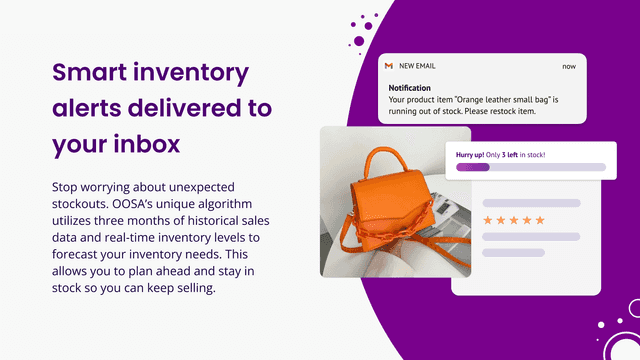
See every featureWhen you download OOSA, the app seamlessly integrates with your Shopify store, monitoring your inventory in real-time as customers place orders. You have the power to select inventory benchmarks for notifications, tailoring OOSA to suit your store’s individual needs. You are also able to select which additional metrics you would like to track, giving you access to valuable data that can help you grow your business.
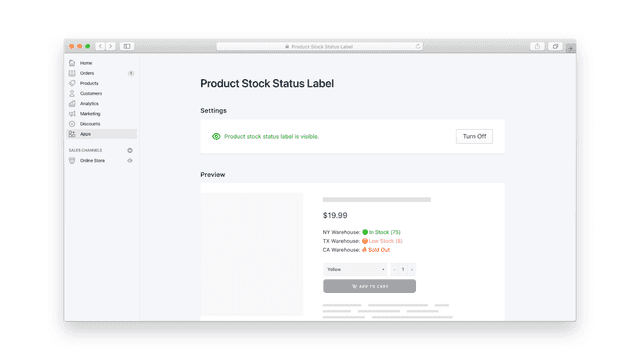
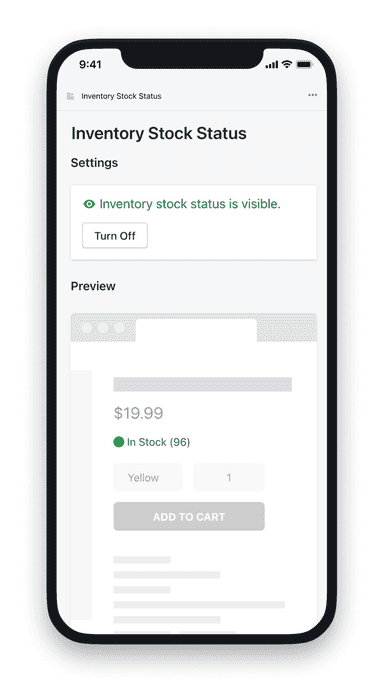
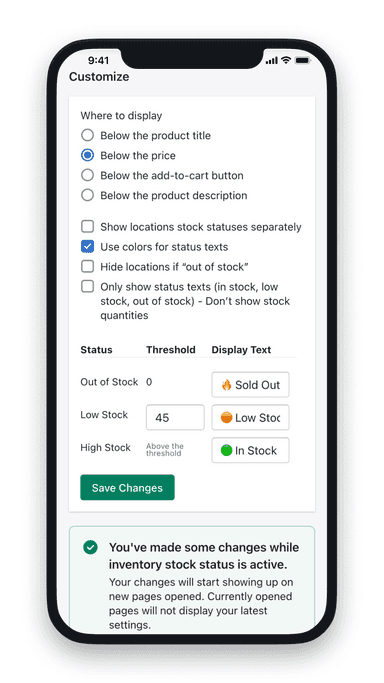
Display real-time inventory status to build trust and help customers shop confidently. Reduce cart abandonment, create urgency with low stock messaging, and offer a smoother shopping experience. Customize label text, color, and styling to match your store’s look and feel. Designed for flexibility—works with product variants, allows filtering by tags, multi-location and translation options.
- Track average sales and stock
- Monitor inventory in real time
- Get low stock alerts to your email
- Display In Stock, Low Stock, Out of stock statuses with customizable labels.
- Customize where to display stock status labels in your product detail page
- Add translations to your stock status labels for multi-language sites.


All the numbers
Every figure, side by side
A green dot marks the app ahead on a measured figure. Estimates, gaps and apps that leave no storefront trace never take the lead.
Adoption
| Measure |  OOSA |  Pi |
|---|---|---|
| Detected stores | Not published | Not published |
| Net store change, 28 days | 0 | 0 |
| Stores added, 28 days | Not enough data | Not enough data |
| Big-brand share | Not enough data | Not enough data |
| Top store categories | Not published | Not published |
| Top store countries | Not published | Not published |
Reviews
| Measure | OOSA | Pi |
|---|---|---|
| App Store rating | Not published | 4.9 ★ |
| App Store reviews | Not published | 8 |
| New reviews, 28 days | Not enough data | 0 |
| Reviewers a year or more in | Not enough data | Not enough data |
FAQ
OOSA and Pi: common questions
- What features does each app list that the other doesn’t?
- Pi lists 9 the others don’t mention, such as Alert settings, Auto-alerts, Inventory reports, Inventory tracking. A feature missing from a listing may still be supported; this compares what each App Store listing says.
- Where does this comparison’s data come from?
- Shoplist crawls Shopify storefronts to detect which apps each store runs, and reads each app’s Shopify App Store listing for reviews, pricing, features and integrations. Store counts are as of Feb 19, 2026 for OOSA, Oct 13, 2026 for Pi; estimated figures are labeled.
How Shoplist compares apps
Store counts come from Shoplist’s crawl of Shopify storefronts, which detects the apps each store runs; they are as of Feb 19, 2026 for OOSA, Oct 13, 2026 for Pi. Reviews, ratings, plans, features and integrations come from each app’s Shopify App Store listing. 28-day figures are labeled when estimated, and a figure that is missing or estimated never decides who leads. Read the methodology.