
OneCount: Shared Inventory vs yeSync
Two Shopify apps, side by side: detected stores, momentum, reviews, plans, listed features and who runs each. Store counts as of Nov 3, 2026 for OneCount, Oct 14, 2026 for yeSync.
The short answer
- Only OneCount lists a free plan. Paid plans start at $9.99/month for OneCount and $5/month for yeSync.
- yeSync lists 10 features OneCount’s listing doesn’t mention, including Automated alerts, Bulk, Custom.
Head to head

Free
- · 1 shared stock pool
- · Activity log
- · Multi-pack units per sale
- · Per-location syncing
Pro
- · Everything in Free
- · Unlimited shared stock pools
Basic
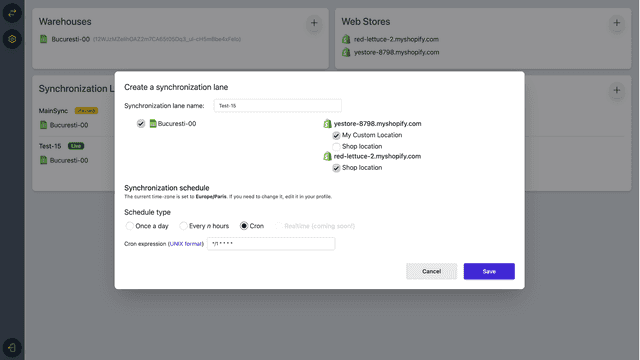
- · 1 synchronization lane
- · 1,000 SKUs
- · email support
Advanced
- · 10,000 SKUs
- · 3 synchronization lanes
- · chat support
Enterprise
- · 50,000 SKUs
- · chat support
- · unlimited synchronization lanes
Coverage counts what each App Store listing names. Every feature, checked off app by app, is in Shoplist.
See every featureSell the same item as several variants? Different colourway names, a single and a 3-pack, or one product listed twice? OneCount groups them into a pool with one shared stock count. When any of them sells, is refunded, or is edited, every other variant updates within seconds. Set how many units each variant uses, so a 3-pack sale takes 3 from the pool.
Sync inventory across multiple Shopify stores from one central platform. Keep everything aligned—no manual updates, fewer errors, and more time saved. Whether you run multiple brands or regional storefronts, maintain full control and consistency as you scale. Ideal for multi-store merchants, international operations, and agency-managed shops.
- Group any variants, across products, into one shared stock count
- Set units per sale, so a 3-pack sale takes 3 units from the pool
- Sales, refunds, restocks and manual edits sync within seconds
- Centralized multi-store inventory management
- Reduce errors with automated synchronization
- Handles large SKU inventories efficiently

All the numbers
Every figure, side by side
A green dot marks the app ahead on a measured figure. Estimates, gaps and apps that leave no storefront trace never take the lead.
Adoption
| Measure |  yeSync | |
|---|---|---|
| Detected stores | Not published | Not published |
| Net store change, 28 days | 0 | 0 |
| Stores added, 28 days | Not enough data | Not enough data |
| Big-brand share | Not enough data | Not enough data |
| Top store categories | Not published | Not published |
| Top store countries | Not published | Not published |
Reviews
| Measure | yeSync | |
|---|---|---|
| App Store rating | Not published | Not published |
| App Store reviews | Not published | Not published |
| New reviews, 28 days | Not enough data | Not enough data |
| Reviewers a year or more in | Not enough data | Not enough data |
FAQ
OneCount and yeSync: common questions
- Is OneCount or yeSync cheaper?
- Only OneCount lists a free plan. Paid plans start at $9.99/month for OneCount and $5/month for yeSync. Shoplist compares base prices only between monthly plans in the same currency; usage charges and annual plans vary, so check each plan’s limits.
- What features does each app list that the other doesn’t?
- OneCount lists 1 the others don’t mention, such as Detailed logs. yeSync lists 10 the others don’t mention, such as Automated alerts, Bulk, Custom, Email alerts. A feature missing from a listing may still be supported; this compares what each App Store listing says.
- Where does this comparison’s data come from?
- Shoplist crawls Shopify storefronts to detect which apps each store runs, and reads each app’s Shopify App Store listing for reviews, pricing, features and integrations. Store counts are as of Nov 3, 2026 for OneCount, Oct 14, 2026 for yeSync; estimated figures are labeled.
How Shoplist compares apps
Store counts come from Shoplist’s crawl of Shopify storefronts, which detects the apps each store runs; they are as of Nov 3, 2026 for OneCount, Oct 14, 2026 for yeSync. Reviews, ratings, plans, features and integrations come from each app’s Shopify App Store listing. 28-day figures are labeled when estimated, and a figure that is missing or estimated never decides who leads. Read the methodology.