

ONE: Variants Shared Inventory vs PoolSync: Shared Inventory
Two Shopify apps, side by side: detected stores, momentum, reviews, plans, listed features and who runs each. Store counts as of Nov 2, 2026 for ONE, Oct 13, 2026 for PoolSync.
The short answer
- Paid plans start at $2.99/month for ONE and $14.99/month for PoolSync.
- ONE lists 1 features PoolSync’s listing doesn’t mention, including Restock notifications.
Head to head


Momentum
New reviews each month
Review pace is the clearest public read on how fast an app is winning new merchants.
Super
PoolSync Pro
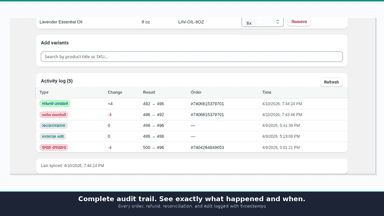
- · Activity logging & audit trail
- · Hourly reconciliation
- · Multi-location support
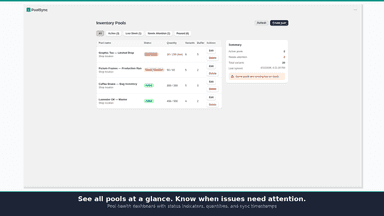
- · Pool health dashboard
- · Real-time webhook sync
- · Safety buffer & low-stock alerts
Coverage counts what each App Store listing names. Every feature, checked off app by app, is in Shoplist.
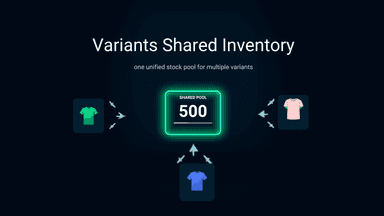
See every featureOur app allows merchants to combine and synchronize inventory across multiple product variants, helping manage stock more efficiently. Instead of tracking inventory separately for each variant, merchants can group selected variants to share the same stock quantity. This is especially useful for products that represent the same physical inventory but are sold under different options or listings.
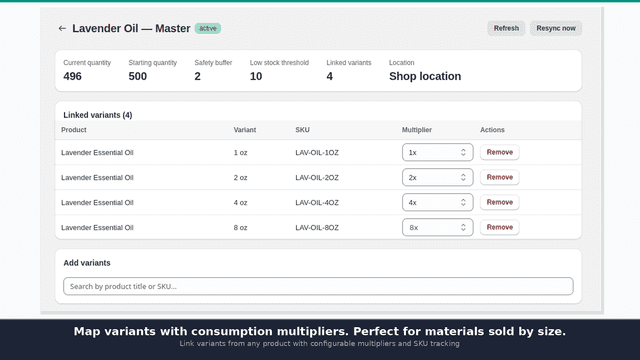
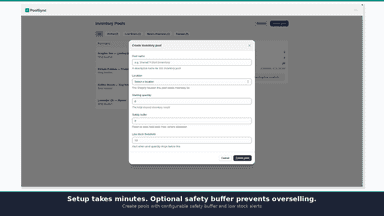
Shopify treats each variant as independent inventory. When variants share stock, you risk overselling and spend hours adjusting quantities manually. PoolSync creates inventory pools that sync to all linked variants automatically. Set consumption multipliers for different sizes (1oz = 1 unit, 4oz = 4 units). Orders deduct from the pool and update every variant. Refunds restore automatically.
- Create groups of multiple variants that share a common inventory stock
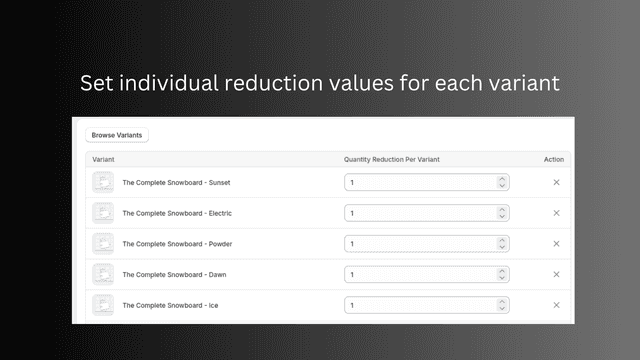
- Set different stock reduction values for each variant based on inventory usage
- Automatically mark linked variants as sold out when shared stock reaches zero
- Inventory pools with consumption multipliers for variants of different sizes
- Pool health dashboard showing sync status, quantities, and warnings at a glance
- Hourly reconciliation detects discrepancies and lets you fix them in one click
- Safety buffer reserves stock to prevent overselling during checkout delays

All the numbers
Every figure, side by side
A green dot marks the app ahead on a measured figure. Estimates, gaps and apps that leave no storefront trace never take the lead.
Adoption
| Measure |  ONE |  PoolSync |
|---|---|---|
| Detected stores | Not published | Not published |
| Net store change, 28 days | 0 | 0 |
| Stores added, 28 days | Not enough data | Not enough data |
| Big-brand share | Not enough data | Not enough data |
| Top store categories | Not published | Not published |
| Top store countries | Not published | Not published |
Reviews
| Measure | ONE | PoolSync |
|---|---|---|
| App Store rating | 5.0 ★ | Not published |
| App Store reviews | 6 | Not published |
| New reviews, 28 days | Not enough data | Not enough data |
| Reviewers a year or more in | Not enough data | Not enough data |
FAQ
ONE and PoolSync: common questions
- Is ONE or PoolSync cheaper?
- Paid plans start at $2.99/month for ONE and $14.99/month for PoolSync. Shoplist compares base prices only between monthly plans in the same currency; usage charges and annual plans vary, so check each plan’s limits.
- What features does each app list that the other doesn’t?
- ONE lists 1 the others don’t mention, such as Restock notifications. A feature missing from a listing may still be supported; this compares what each App Store listing says.
- Where does this comparison’s data come from?
- Shoplist crawls Shopify storefronts to detect which apps each store runs, and reads each app’s Shopify App Store listing for reviews, pricing, features and integrations. Store counts are as of Nov 2, 2026 for ONE, Oct 13, 2026 for PoolSync; estimated figures are labeled.
How Shoplist compares apps
Store counts come from Shoplist’s crawl of Shopify storefronts, which detects the apps each store runs; they are as of Nov 2, 2026 for ONE, Oct 13, 2026 for PoolSync. Reviews, ratings, plans, features and integrations come from each app’s Shopify App Store listing. 28-day figures are labeled when estimated, and a figure that is missing or estimated never decides who leads. Read the methodology.