
Mynah ‑ AI Visibility vs QueryGap
Two Shopify apps, side by side: detected stores, momentum, reviews, plans, listed features and who runs each. Store counts as of Oct 13, 2026.
The short answer
- Both list a free plan. Paid plans start at $29/month for Mynah and $29/month for QueryGap.
- Mynah lists 3 features QueryGap’s listing doesn’t mention, including AI insights, Benchmarking, Data export.
Head to head


Free
Solo
Growth
Free
- · 10 buyer-search checks per scan
- · Basic shelf-share and gaps
- · Competitor summary
- · Shareable visibility reports
Starter
- · 50 buyer-search checks per scan
- · Rank and competitor movement
- · Saved scan history
- · Shareable visibility reports
- · Weekly automated monitoring
Growth
- · 250 buyer-search checks per scan
- · Competitor gain tracking
- · Monitoring every 72 hours
- · Opportunity Intelligence
- · Priority gaps, wins, and declines
- · Recurring gap detection
Scale
- · 1,000 buyer-search checks per scan
- · CSV data exports
- · Competitor forensic analysis
- · Daily automated monitoring
- · Filter and sort every query
- · Full visibility forensics
Coverage counts what each App Store listing names. Every feature, checked off app by app, is in Shoplist.
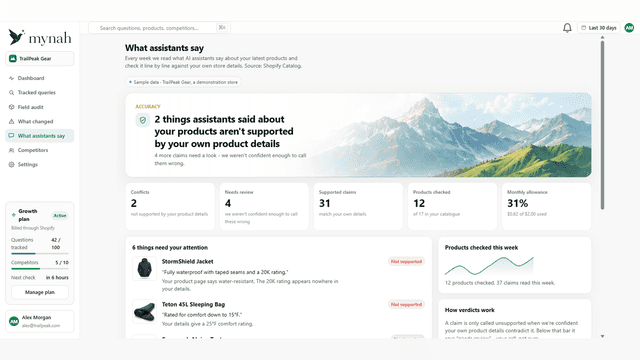
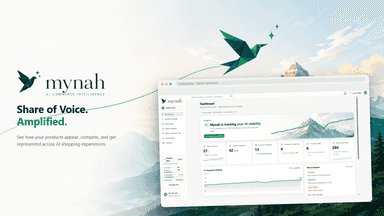
See every featureShoppers increasingly ask AI assistants instead of searching. Those assistants read your product data and answer from it. Mynah checks daily where your products appear for the buyer questions you track, alerts you when you drop out of an answer and who took your place, and shows the assistant's raw response as evidence.
QueryGap analyzes high-intent shopping searches to show where products appear, where they are missing, and which competing stores occupy the results. Measure shelf share, Top-3 visibility, and average position, then monitor changes over time. Growth adds prioritized Opportunity Intelligence; Scale adds query, competitor, and historical forensics with CSV exports. Share read-only reports with your team.
- Daily rank tracking across AI shopping assistants, with the raw answer saved
- Alerts when you drop out of an answer - and which store replaced you
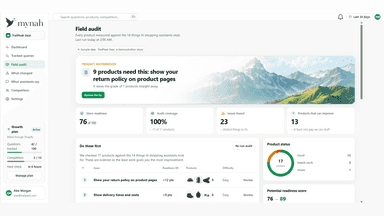
- Field audit: the 14 things assistants read, graded per product
- Drafted copy for missing fields, sourced only from your own product content
- Find buyer searches where your products do not appear
- See which competing stores occupy those results
- Track shelf share, rankings, and visibility changes over time
- Prioritize gaps, declines, wins, and competitor gains


All the numbers
Every figure, side by side
A green dot marks the app ahead on a measured figure. Estimates, gaps and apps that leave no storefront trace never take the lead.
Adoption
| Measure |  Mynah |  QueryGap |
|---|---|---|
| Detected stores | Not published | Not published |
| Net store change, 28 days | 0 | 0 |
| Stores added, 28 days | Not enough data | Not enough data |
| Big-brand share | Not enough data | Not enough data |
| Top store categories | Not published | Not published |
| Top store countries | Not published | Not published |
Reviews
| Measure | Mynah | QueryGap |
|---|---|---|
| App Store rating | Not published | Not published |
| App Store reviews | Not published | Not published |
| New reviews, 28 days | Not enough data | Not enough data |
| Reviewers a year or more in | Not enough data | Not enough data |
FAQ
Mynah and QueryGap: common questions
- Is Mynah or QueryGap cheaper?
- Both list a free plan. Paid plans start at $29/month for Mynah and $29/month for QueryGap. Shoplist compares base prices only between monthly plans in the same currency; usage charges and annual plans vary, so check each plan’s limits.
- What features does each app list that the other doesn’t?
- Mynah lists 3 the others don’t mention, such as AI insights, Benchmarking, Data export. QueryGap lists 1 the others don’t mention, such as Historical analysis. A feature missing from a listing may still be supported; this compares what each App Store listing says.
- Where does this comparison’s data come from?
- Shoplist crawls Shopify storefronts to detect which apps each store runs, and reads each app’s Shopify App Store listing for reviews, pricing, features and integrations. Store counts are as of Oct 13, 2026; estimated figures are labeled.
How Shoplist compares apps
Store counts come from Shoplist’s crawl of Shopify storefronts, which detects the apps each store runs; they are as of Oct 13, 2026. Reviews, ratings, plans, features and integrations come from each app’s Shopify App Store listing. 28-day figures are labeled when estimated, and a figure that is missing or estimated never decides who leads. Read the methodology.