

Minwin vs Voltr
Two Shopify apps, side by side: detected stores, momentum, reviews, plans, listed features and who runs each. Store counts as of Oct 13, 2026.
The short answer
- Paid plans start at $29/month for Minwin and $449/month for Voltr.
- Minwin lists 2 features Voltr’s listing doesn’t mention, including Automated rules, Maturation periods.
Head to head


Standard
Growth
- · 1 brand workspace
- · 1-3 user seats
- · Automated outreach and follow-ups
- · Creator discovery + CRM
- · GMV/ROAS/CAC analytics
- · One click TikTok and Meta Ads
Enterprise
- · 4-10 user seats
- · Automated email campaigns
- · Biweekly strategy calls
- · Dedicated success manager
- · Everything in Growth
- · Priority support and early feature acces
Coverage counts what each App Store listing names. Every feature, checked off app by app, is in Shoplist.
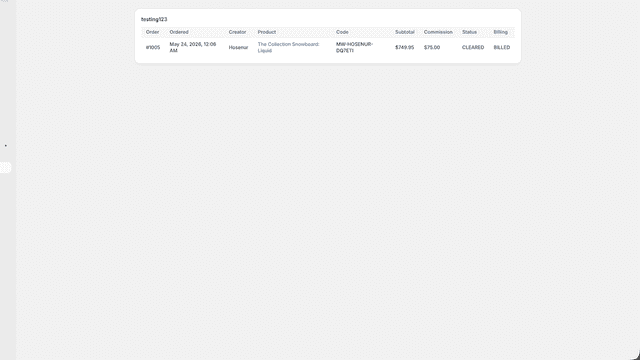
See every featureMinwin connects brands with creators who share product links with shoppers in the Minwin app. When shoppers buy through those links, Minwin tracks attributed orders, applies the brand’s return-window period, and calculates creator commissions after eligible orders clear that window. This helps merchants manage creator-attributed sales without manually matching orders to affiliate activity.
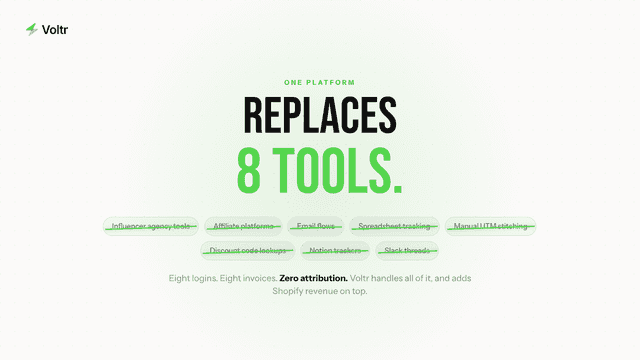
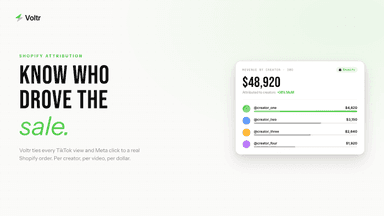
Voltr helps DTC brands find creators, automate outreach, manage partnerships, and track which creators drive real sales. Connect Shopify, TikTok Shop, Instagram, and Meta to attribute orders to codes, links, UTMs, and content. See revenue, ROI, content performance, creator P&L, payouts, and ad opportunities in one workspace.
- Track orders from creator affiliate links
- Apply return-window rules before commissions are billed
- Manage creator links, discount codes, and brand analytics
- Order-level attribution across TikTok Shop, Meta, and your Shopify store
- Live revenue, ROI, and content performance per creator and partnership
- Auto-track discount codes, affiliate links, and UTMs across every platform


All the numbers
Every figure, side by side
A green dot marks the app ahead on a measured figure. Estimates, gaps and apps that leave no storefront trace never take the lead.
Adoption
| Measure |  Minwin |  Voltr |
|---|---|---|
| Detected stores | Not published | Not published |
| Net store change, 28 days | 0 | 0 |
| Stores added, 28 days | Not enough data | Not enough data |
| Big-brand share | Not enough data | Not enough data |
| Top store categories | Not published | Not published |
| Top store countries | Not published | Not published |
Reviews
| Measure | Minwin | Voltr |
|---|---|---|
| App Store rating | Not published | 5.0 ★ |
| App Store reviews | Not published | 1 |
| New reviews, 28 days | Not enough data | Not enough data |
| Reviewers a year or more in | Not enough data | Not enough data |
FAQ
Minwin and Voltr: common questions
- Is Minwin or Voltr cheaper?
- Paid plans start at $29/month for Minwin and $449/month for Voltr. Shoplist compares base prices only between monthly plans in the same currency; usage charges and annual plans vary, so check each plan’s limits.
- What features does each app list that the other doesn’t?
- Minwin lists 2 the others don’t mention, such as Automated rules, Maturation periods. A feature missing from a listing may still be supported; this compares what each App Store listing says.
- Where does this comparison’s data come from?
- Shoplist crawls Shopify storefronts to detect which apps each store runs, and reads each app’s Shopify App Store listing for reviews, pricing, features and integrations. Store counts are as of Oct 13, 2026; estimated figures are labeled.
How Shoplist compares apps
Store counts come from Shoplist’s crawl of Shopify storefronts, which detects the apps each store runs; they are as of Oct 13, 2026. Reviews, ratings, plans, features and integrations come from each app’s Shopify App Store listing. 28-day figures are labeled when estimated, and a figure that is missing or estimated never decides who leads. Read the methodology.