
Metafill: Product Attributes vs Shelfmeadow: Category Ready
Two Shopify apps, side by side: detected stores, momentum, reviews, plans, listed features and who runs each. Store counts as of Oct 13, 2026 for Metafill, Nov 3, 2026 for Shelfmeadow.
The short answer
- Only Shelfmeadow lists a free plan. Paid plans start at $9.99/month for Metafill and $9/month for Shelfmeadow.
- Shelfmeadow lists 2 features Metafill’s listing doesn’t mention, including Rollback, Scheduled tasks.
Head to head

Pro
- · AI category and at
- · Bulk apply with one-click undo
- · Unlimited products
Free
- · Apply up to 50 category changes
- · Catalog-ready check and CSV export
- · Preview, confidence labels, undo
- · Unlimited scans
Starter
- · Unlimited category changes
- · Up to 2,000 products
- · Weekly re-check for new problem products
Pro
- · Auto-categorize new products, with undo
- · Everything in Starter
- · Unlimited products
Coverage counts what each App Store listing names. Every feature, checked off app by app, is in Shoplist.
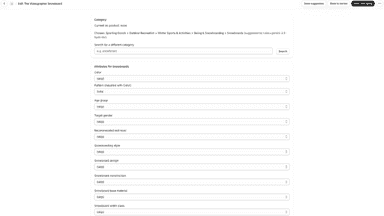
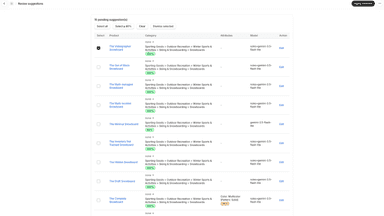
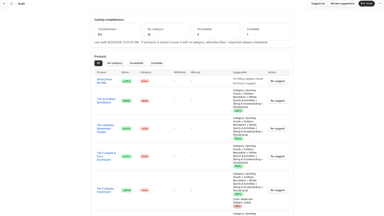
See every featureMetafill finds products with no Shopify product category or with empty category metafields like color, material and size. It scores your catalog, suggests a category and attribute values from Shopify's Standard Product Taxonomy, and lets you review and apply them in bulk. Every change is logged with the old values, so you can undo it with one click.
Shelfmeadow finds products with no category, plus missing images, titles, or prices, and shows which ones Shopify Catalog and AI shopping channels may leave out. AI suggests a category from Shopify's standard product taxonomy for each one, with a confidence label, and can read the photo when a title is thin. Preview each pick, apply in bulk, and undo from your change history.
- Audit every product for missing category and attributes
- AI suggestions limited to Shopify's official taxonomy values
- Review table with confidence scores and bulk apply
- One-click undo for every change
- Scan your catalog for products missing a product category or key details
- AI category suggestions from Shopify's standard product taxonomy
- Confidence label on every pick, with a filter to check low-confidence ones
- Apply categories in bulk, or every top-confidence pick in one click
All the numbers
Every figure, side by side
A green dot marks the app ahead on a measured figure. Estimates, gaps and apps that leave no storefront trace never take the lead.
Adoption
| Measure |  Metafill | |
|---|---|---|
| Detected stores | Not published | Not published |
| Net store change, 28 days | 0 | 0 |
| Stores added, 28 days | Not enough data | Not enough data |
| Big-brand share | Not enough data | Not enough data |
| Top store categories | Not published | Not published |
| Top store countries | Not published | Not published |
Reviews
| Measure | Metafill | |
|---|---|---|
| App Store rating | Not published | Not published |
| App Store reviews | Not published | Not published |
| New reviews, 28 days | Not enough data | Not enough data |
| Reviewers a year or more in | Not enough data | Not enough data |
Pricing
| Measure | Metafill | |
|---|---|---|
| Free plan | Not listed | Yes |
| Lowest paid monthly plan | $9.99/month | $9/month(ahead) |
| Longest free trial | 7 days | 14 days |
| Plans listed | 1 | 3 |
Listing
| Measure | Metafill | |
|---|---|---|
| Shopify category rank | #362 | Not enough data |
| Shopify App Charts | Not on this week’s charts | Not on this week’s charts |
| Built for Shopify | No | No |
| Launched | Oct 7, 2026 | Nov 2, 2026 |
| Languages | 1 | 1 |
| Developer | Ratan Group | Shelfmeadow |
FAQ
Metafill and Shelfmeadow: common questions
- Is Metafill or Shelfmeadow cheaper?
- Only Shelfmeadow lists a free plan. Paid plans start at $9.99/month for Metafill and $9/month for Shelfmeadow. Shoplist compares base prices only between monthly plans in the same currency; usage charges and annual plans vary, so check each plan’s limits.
- What features does each app list that the other doesn’t?
- Shelfmeadow lists 2 the others don’t mention, such as Rollback, Scheduled tasks. A feature missing from a listing may still be supported; this compares what each App Store listing says.
- Where does this comparison’s data come from?
- Shoplist crawls Shopify storefronts to detect which apps each store runs, and reads each app’s Shopify App Store listing for reviews, pricing, features and integrations. Store counts are as of Oct 13, 2026 for Metafill, Nov 3, 2026 for Shelfmeadow; estimated figures are labeled.
How Shoplist compares apps
Store counts come from Shoplist’s crawl of Shopify storefronts, which detects the apps each store runs; they are as of Oct 13, 2026 for Metafill, Nov 3, 2026 for Shelfmeadow. Reviews, ratings, plans, features and integrations come from each app’s Shopify App Store listing. 28-day figures are labeled when estimated, and a figure that is missing or estimated never decides who leads. Read the methodology.