

Fieldify vs Metaflow ‑ Dynamic Metafields
Two Shopify apps, side by side: detected stores, momentum, reviews, plans, listed features and who runs each. Store counts as of Oct 13, 2026 for Fieldify, Oct 14, 2026 for Metaflow.
The short answer
- Only Metaflow lists a free plan. Paid plans start at $5/month for Fieldify and $2.99/month for Metaflow.
- Fieldify lists 16 features Metaflow’s listing doesn’t mention, including Booleans, Bulk import and export, Collections.
Head to head


Momentum
New reviews each month
Review pace is the clearest public read on how fast an app is winning new merchants.
Basic Plan
- · 7-day Free Trial
- · Unlimited Import/Export Jobs
Free Plan
- · 1 fields per form
- · 7 form field types
- · Create up to 2 forms
- · Email support (48h response)
Starter Plan
- · 10 fields per form
- · 7 form field types
- · Conditional logic features
- · Create up to 10 forms
- · Data Export
- · Livechat & Email (Priority) support
Coverage counts what each App Store listing names. Every feature, checked off app by app, is in Shoplist.
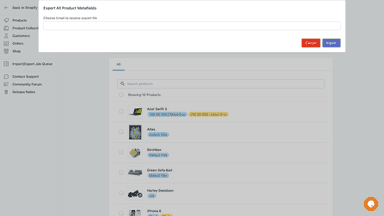
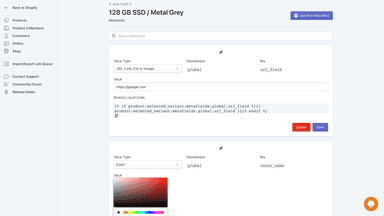
See every featureFieldify is the perfect app for Shopify store owners who want to add custom fields to their store. It allows you to add fields to products, product variants, product collections, store, and orders. You can choose from a variety of metafields, including single-line text fields, multi-line text fields, numbers, URLs, Booleans, colors, dates, ratings, dimensions, volumes, weights, and JSONs.
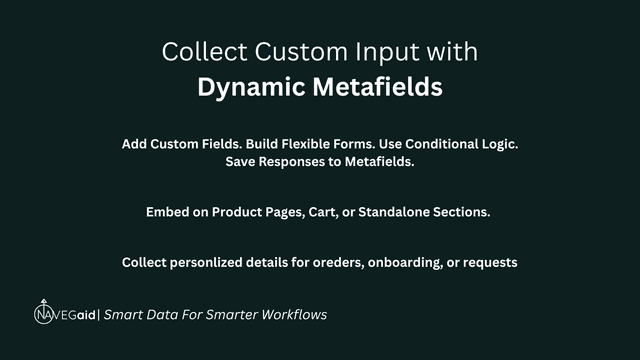
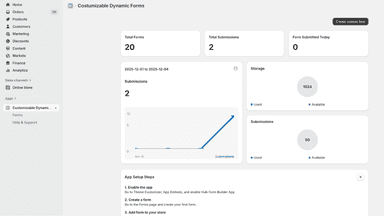
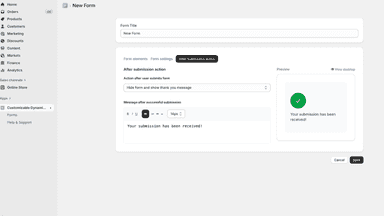
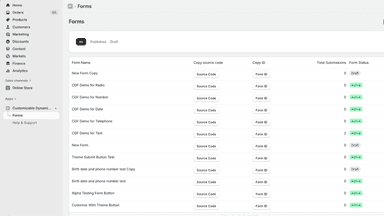
Collect custom fields and personalized inputs across your store and save everything directly to Shopify metafields. Metaflow helps you easily add custom fields to product pages, cart pages, and more, allowing customers to enter personalized details like custom text, order notes, or special requests.
- Supports new Online Store 2.0 metafields
- Bulk import/export Metafields to save time
- Show metafield values on your store-front
- Add custom fields and forms anywhere in your store.
- Save customer input directly to customer or order metafields.
- Use conditional logic to show fields based on customer choices.
- Embed fields on product pages, cart pages, or standalone sections.


All the numbers
Every figure, side by side
A green dot marks the app ahead on a measured figure. Estimates, gaps and apps that leave no storefront trace never take the lead.
Adoption
| Measure |  Fieldify |  Metaflow |
|---|---|---|
| Detected stores | Not published | Not published |
| Net store change, 28 days | 0 | 0 |
| Stores added, 28 days | Not enough data | Not enough data |
| Big-brand share | Not enough data | Not enough data |
| Top store categories | Not published | Not published |
| Top store countries | Not published | Not published |
Reviews
| Measure | Fieldify | Metaflow |
|---|---|---|
| App Store rating | 3.8 ★ | Not published |
| App Store reviews | 5 | Not published |
| New reviews, 28 days | 0 | Not enough data |
| Reviewers a year or more in | Not enough data | Not enough data |
FAQ
Fieldify and Metaflow: common questions
- Is Fieldify or Metaflow cheaper?
- Only Metaflow lists a free plan. Paid plans start at $5/month for Fieldify and $2.99/month for Metaflow. Shoplist compares base prices only between monthly plans in the same currency; usage charges and annual plans vary, so check each plan’s limits.
- What features does each app list that the other doesn’t?
- Fieldify lists 16 the others don’t mention, such as Booleans, Bulk import and export, Collections, Colors. A feature missing from a listing may still be supported; this compares what each App Store listing says.
- Where does this comparison’s data come from?
- Shoplist crawls Shopify storefronts to detect which apps each store runs, and reads each app’s Shopify App Store listing for reviews, pricing, features and integrations. Store counts are as of Oct 13, 2026 for Fieldify, Oct 14, 2026 for Metaflow; estimated figures are labeled.
How Shoplist compares apps
Store counts come from Shoplist’s crawl of Shopify storefronts, which detects the apps each store runs; they are as of Oct 13, 2026 for Fieldify, Oct 14, 2026 for Metaflow. Reviews, ratings, plans, features and integrations come from each app’s Shopify App Store listing. 28-day figures are labeled when estimated, and a figure that is missing or estimated never decides who leads. Read the methodology.