

MaxVFY vs OTPfy ‑ Whatsapp Confirmation
Two Shopify apps, side by side: detected stores, momentum, reviews, plans, listed features and who runs each. Store counts as of Oct 13, 2026.
The short answer
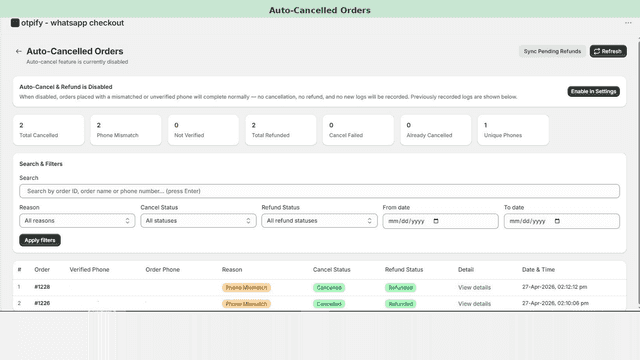
- OTPfy lists 7 features MaxVFY’s listing doesn’t mention, including Auto-cancel, COD validation, Fake accounts.
Head to head


Identity verified
Free Trial
- · Connect your own WhatsApp Account
- · Full access to all features
- · Unlimited OTP messages
- · Valid for 7 Days
Starter
- · Connect your own WhatsApp Account
- · Full access to all features
- · Unlimited OTP messages
- · Valid for 30 Days
Annual
- · Connect your own WhatsApp Account
- · Full access to all features
- · Unlimited OTP messages
- · Valid for 12 Months
Coverage counts what each App Store listing names. Every feature, checked off app by app, is in Shoplist.
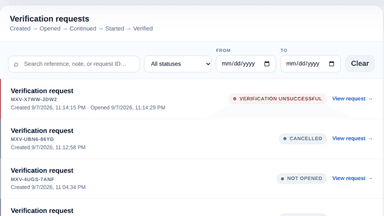
See every featureMaxVFY lets merchants create secure identity-verification requests, share a link or QR code, track progress, and review the final verification result inside Shopify. It is designed for simple, on-demand use without requiring access to Shopify customer or order records.
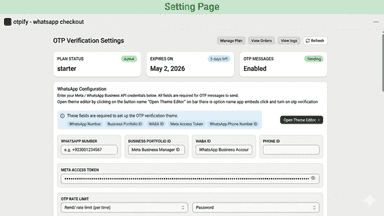
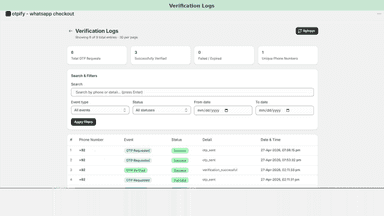
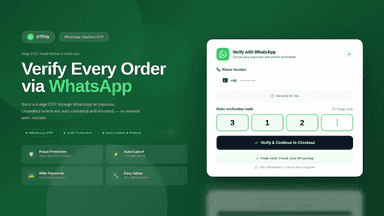
OTP Verification protects your store from fake and fraudulent orders by requiring customers to verify their phone number via WhatsApp OTP before completing checkout. Once a customer enters and verifies their OTP, payment methods are unlocked and they can proceed. Unverified customers cannot access payment options. The app works seamlessly with your existing checkout flow and requires no theme code changes.
- Create secure 24-hour identity verification links and QR codes
- Track requests from opened through verification result in real time
- Search, archive, and manage verification history with notes and references
- WhatsApp OTP verification before checkout payment
- Automatically hides payment methods until phone is verified
- Works with all themes — no code changes required
- Real-time verification status shown in merchant dashboard


All the numbers
Every figure, side by side
A green dot marks the app ahead on a measured figure. Estimates, gaps and apps that leave no storefront trace never take the lead.
Adoption
| Measure |  MaxVFY |  OTPfy |
|---|---|---|
| Detected stores | Not published | Not published |
| Net store change, 28 days | 0 | 0 |
| Stores added, 28 days | Not enough data | Not enough data |
| Big-brand share | Not enough data | Not enough data |
| Top store categories | Not published | Not published |
| Top store countries | Not published | Not published |
Reviews
| Measure | MaxVFY | OTPfy |
|---|---|---|
| App Store rating | Not published | 5.0 ★ |
| App Store reviews | Not published | 1 |
| New reviews, 28 days | Not enough data | Not enough data |
| Reviewers a year or more in | Not enough data | Not enough data |
FAQ
MaxVFY and OTPfy: common questions
- What features does each app list that the other doesn’t?
- MaxVFY lists 1 the others don’t mention, such as Identity verification. OTPfy lists 7 the others don’t mention, such as Auto-cancel, COD validation, Fake accounts, One-time password (OTP). A feature missing from a listing may still be supported; this compares what each App Store listing says.
- Where does this comparison’s data come from?
- Shoplist crawls Shopify storefronts to detect which apps each store runs, and reads each app’s Shopify App Store listing for reviews, pricing, features and integrations. Store counts are as of Oct 13, 2026; estimated figures are labeled.
How Shoplist compares apps
Store counts come from Shoplist’s crawl of Shopify storefronts, which detects the apps each store runs; they are as of Oct 13, 2026. Reviews, ratings, plans, features and integrations come from each app’s Shopify App Store listing. 28-day figures are labeled when estimated, and a figure that is missing or estimated never decides who leads. Read the methodology.