

Matat Otech ERP vs Uniconta Sync
Two Shopify apps, side by side: detected stores, momentum, reviews, plans, listed features and who runs each. Store counts as of Oct 14, 2026.
The short answer
- Paid plans start at $100/month for Matat Otech ERP and $29/month for Uniconta Sync.
- Matat Otech ERP lists 3 features Uniconta Sync’s listing doesn’t mention, including Customer accounts, Multi-location, Order editing.
Head to head


Professional Plan
- · 500 orders sent to Otech per month
- · Orders sent to Otech as invoices
- · PayPlus payment details on invoices
- · Separate customer for overseas orders
- · Stock updates up to 4 times a day
- · Update products and stock anytime
Premium Plan
- · Everything in Professional
- · Gift cards recorded on invoices
- · Invoices emailed to your customers
- · Priority support by chat and email
- · Stock updates as often as every 15 min
- · Unlimited orders sent to Otech
Starter
- · 50 orders/month
- · Up to 100 products
Pro
- · 500 orders/month
- · Up to 5,000 products
Enterprise
- · Unlimited orders
- · Unlimited products
Coverage counts what each App Store listing names. Every feature, checked off app by app, is in Shoplist.
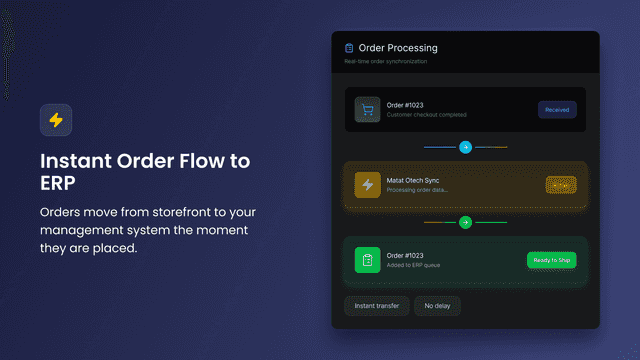
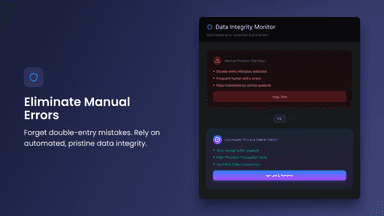
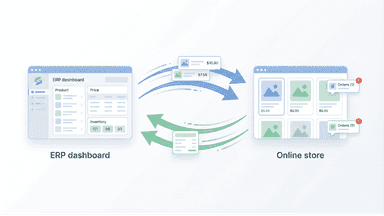
See every featureMatat Otech ERP connects Otech to your Shopify store, so you never enter the same data twice. Your products, prices, colors, sizes and barcodes copy from Otech automatically, and new items arrive as drafts for you to review. Stock from each Otech warehouse stays up to date, so you never sell what is out of stock. Every new order goes to Otech as an invoice with VAT, discounts, shipping and gift cards included.
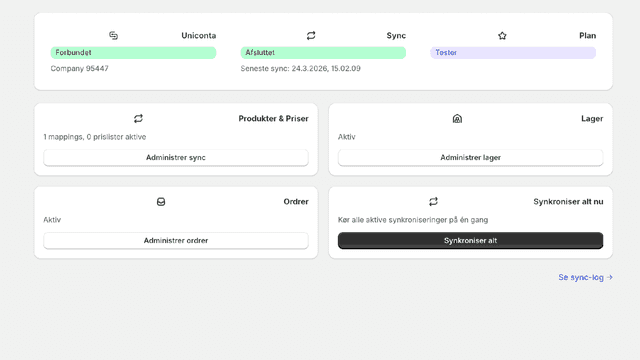
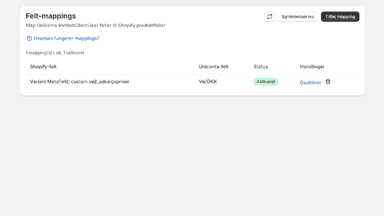
Uniconta Sync bridges your Uniconta ERP and your store. Map any Uniconta field to product attributes, variants, and metafields. Configure multiple price lists with discount support. Sync inventory across warehouses and locations every hour with low-stock alerts. Orders are automatically transferred to Uniconta with smart debtor matching.
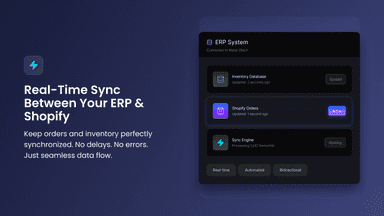
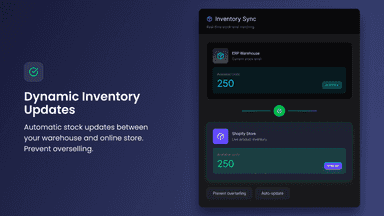
- Real-time inventory sync prevents overselling and keeps stock exact from ERP
- Automatic order transfer to Otech ERP eliminates manual data entry
- Easy setup wizard gets you syncing in under 5 minutes
- Bidirectional sync keeps product data consistent across systems
- Sync products, prices & custom field mappings from Uniconta to your store
- Automatic inventory sync across multiple warehouses and locations
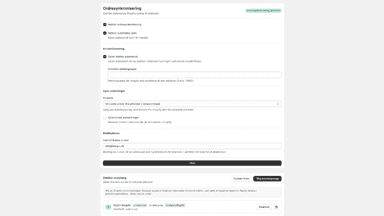
- Transfer orders to Uniconta with smart customer-to-debtor matching
- Bulk import Uniconta items with configurable defaults and conflict handling
All the numbers
Every figure, side by side
A green dot marks the app ahead on a measured figure. Estimates, gaps and apps that leave no storefront trace never take the lead.
Adoption
| Measure |  Matat Otech ERP |  Uniconta Sync |
|---|---|---|
| Detected stores | Not published | Not published |
| Net store change, 28 days | 0 | 0 |
| Stores added, 28 days | Not enough data | Not enough data |
| Big-brand share | Not enough data | Not enough data |
| Top store categories | Not published | Not published |
| Top store countries | Not published | Not published |
Reviews
| Measure | Matat Otech ERP | Uniconta Sync |
|---|---|---|
| App Store rating | 5.0 ★ | Not published |
| App Store reviews | 1 | Not published |
| New reviews, 28 days | Not enough data | Not enough data |
| Reviewers a year or more in | Not enough data | Not enough data |
Pricing
| Measure | Matat Otech ERP | Uniconta Sync |
|---|---|---|
| Free plan | Not listed | Not listed |
| Lowest paid monthly plan | $100/month | $29/month(ahead) |
| Longest free trial | Not listed | 7 days |
| Plans listed | 2 | 3 |
Listing
| Measure | Matat Otech ERP | Uniconta Sync |
|---|---|---|
| Shopify category rank | #132(ahead) | #152 |
| Shopify App Charts | Not on this week’s charts | Not on this week’s charts |
| Built for Shopify | No | No |
| Launched | Feb 17, 2026 | May 21, 2026 |
| Languages | 1 | 2 |
| Developer | Matat | KESGIN |
FAQ
Matat Otech ERP and Uniconta Sync: common questions
- Is Matat Otech ERP or Uniconta Sync cheaper?
- Paid plans start at $100/month for Matat Otech ERP and $29/month for Uniconta Sync. Shoplist compares base prices only between monthly plans in the same currency; usage charges and annual plans vary, so check each plan’s limits.
- What features does each app list that the other doesn’t?
- Matat Otech ERP lists 3 the others don’t mention, such as Customer accounts, Multi-location, Order editing. Uniconta Sync lists 1 the others don’t mention, such as Stock reservation. A feature missing from a listing may still be supported; this compares what each App Store listing says.
- Where does this comparison’s data come from?
- Shoplist crawls Shopify storefronts to detect which apps each store runs, and reads each app’s Shopify App Store listing for reviews, pricing, features and integrations. Store counts are as of Oct 14, 2026; estimated figures are labeled.
How Shoplist compares apps
Store counts come from Shoplist’s crawl of Shopify storefronts, which detects the apps each store runs; they are as of Oct 14, 2026. Reviews, ratings, plans, features and integrations come from each app’s Shopify App Store listing. 28-day figures are labeled when estimated, and a figure that is missing or estimated never decides who leads. Read the methodology.