
ManyMuse: Logistics Automated vs Stockitup
Two Shopify apps, side by side: detected stores, momentum, reviews, plans, listed features and who runs each. Store counts as of Nov 6, 2026 for ManyMuse, Apr 22, 2026 for Stockitup.
The short answer
- Stockitup lists 36 features ManyMuse’s listing doesn’t mention, including Address validation, Automatic, Barcode scanning.
Head to head

Starter
- · 1 store, 1 region
- · Every feature included
- · Up to 100 orders a month
Solo
- · 1 store, 1 region
- · Every feature included
- · Up to 500 orders a month
Ensemble
- · Every feature included
- · Up to 2,500 orders a month
- · Up to 3 stores, 2 regions
Symphony
- · Every feature included
- · Unlimited stores and regions
- · Up to 7,500 orders a month
Stockitup
Coverage counts what each App Store listing names. Every feature, checked off app by app, is in Shoplist.
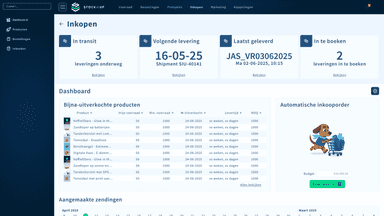
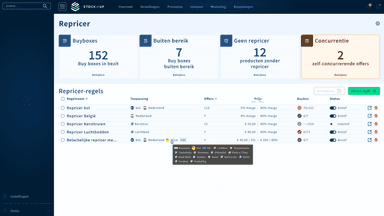
See every featureStop guessing what to buy. See stock days left, reorder dates and quantities from supplier production, shipping and your buffer. Sales rates skip out-of-stock days. Orders from channels such as Amazon and Etsy count once; bundles use component stock; incoming stock counts with arrival dates. Turn suggestions into carton-ready purchase orders your supplier signs.
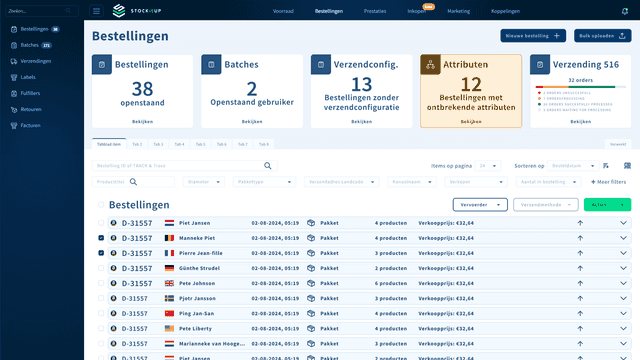
Stockitup centralizes all your Shopify operations: real-time inventory sync across every sales channel, a pick-and-pack flow that lets you ship orders 5× faster, a central returns portal with automatic refunds, email campaigns and funnels from a single dashboard, and purchasing advice based on total sales data. Everything in one platform that eliminates errors and saves time. (378 characters)
- Buy before stock runs low: see when to reorder and how much to buy.
- Send orders to the right warehouse with routing rules you preview first.
- Close the loop on returns: record receipt, then refund or replace.
- Turn buying plans into purchase orders your supplier signs and you approve.
- Inventory management – Real-time inventory across all your sales channels.
- Order processing – Ship more orders faster with shipping rules and pick routes.
- Performance – Exact insights into margins, revenue and returns down to the cent.
- Returns – All returns from multiple channels handled centrally.

All the numbers
Every figure, side by side
A green dot marks the app ahead on a measured figure. Estimates, gaps and apps that leave no storefront trace never take the lead.
Adoption
| Measure |  Stockitup | |
|---|---|---|
| Detected stores | Not published | Not published |
| Net store change, 28 days | 0 | 0 |
| Stores added, 28 days | Not enough data | Not enough data |
| Big-brand share | Not enough data | Not enough data |
| Top store categories | Not published | Not published |
| Top store countries | Not published | Not published |
Reviews
| Measure | Stockitup | |
|---|---|---|
| App Store rating | Not published | 5.0 ★ |
| App Store reviews | Not published | 2 |
| New reviews, 28 days | Not enough data | Not enough data |
| Reviewers a year or more in | Not enough data | Not enough data |
FAQ
ManyMuse and Stockitup: common questions
- What features does each app list that the other doesn’t?
- ManyMuse lists 2 the others don’t mention, such as Return reasons, Return tracking. Stockitup lists 36 the others don’t mention, such as Address validation, Automatic, Barcode scanning, Barcodes. A feature missing from a listing may still be supported; this compares what each App Store listing says.
- Where does this comparison’s data come from?
- Shoplist crawls Shopify storefronts to detect which apps each store runs, and reads each app’s Shopify App Store listing for reviews, pricing, features and integrations. Store counts are as of Nov 6, 2026 for ManyMuse, Apr 22, 2026 for Stockitup; estimated figures are labeled.
How Shoplist compares apps
Store counts come from Shoplist’s crawl of Shopify storefronts, which detects the apps each store runs; they are as of Nov 6, 2026 for ManyMuse, Apr 22, 2026 for Stockitup. Reviews, ratings, plans, features and integrations come from each app’s Shopify App Store listing. 28-day figures are labeled when estimated, and a figure that is missing or estimated never decides who leads. Read the methodology.