

Mailberry vs Mailmodo: AI Email Marketing
Two Shopify apps, side by side: detected stores, momentum, reviews, plans, listed features and who runs each. Store counts as of Nov 9, 2026.
The short answer
- Mailmodo is detected on 4.3× as many Shopify stores as Mailberry: 26 vs 6 as of Nov 9, 2026.
- Only Mailmodo lists a free plan.
- Mailmodo lists 34 features Mailberry’s listing doesn’t mention, including A/B testing, AI generation, Analytics.
Head to head


- United States
- India
- Mexico
- United States
Momentum
New reviews each month
Review pace is the clearest public read on how fast an app is winning new merchants.
Free Plan
- · 4000 Email Credits
- · 500 contacts
- · Lite Plan Features
Lite
- · 1 Team Member
- · 20,000 Email Sending Credits
- · 5 Active Journeys
- · AI-Powered Content Creation
- · Chat & Email Support
Pro
- · 10 Active Journeys
- · 25,000 Email Credits
- · 3 Team Members
- · A/B testing
- · AI-Powered Content Creation
- · Chat, Email & Assisted Onboarding
Max
- · 37,500 Email Credits
- · 5 Team Members
- · A/B testing
- · AI-Powered Content Creation
- · Chat, Email, Call, Dedicated Onboarding
- · Unlimited Journeys
Coverage counts what each App Store listing names. Every feature, checked off app by app, is in Shoplist.
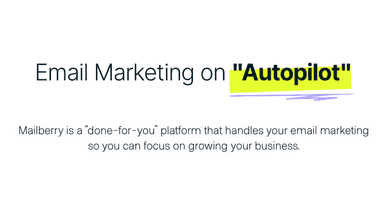
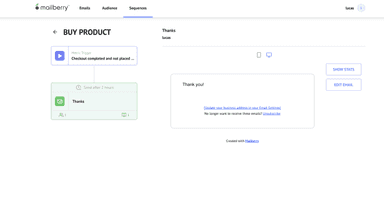
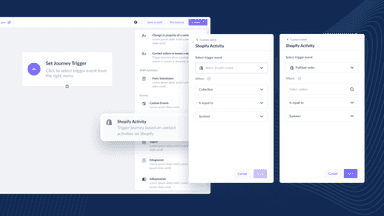
See every featureMailberry replaces blank-canvas platforms with The Email Brain™, an AI-agent system built for Shopify that learns customer behavior and unlocks growth. It combines email strategy, copywriting, design, and optimization into one intelligent platform that automates every step of email marketing.
Win back your time by using AI to create emails, build journeys, automate campaigns, and deliver reports. No technical expertise required.
- Create personalized marketing campaigns
- Obtain business metrics
- Segment your audience
- Create cart recovery, newsletters, & product recommendation emails with AI
- Gamify sales with interactive widgets like Spin-2-win, quizzes, & forms in email
- Segment based on purchase behaviour, profile & A/B test for targeted campaigns
- Plug-and-play pre-built email & sms automation for cart recovery, welcome, etc.





All the numbers
Every figure, side by side
A green dot marks the app ahead on a measured figure. Estimates, gaps and apps that leave no storefront trace never take the lead.
Adoption
| Measure |  Mailberry |  Mailmodo |
|---|---|---|
| Detected stores | 6 | 26(ahead) |
| Net store change, 28 days | 0 | 0 |
| Stores added, 28 days | Not enough data | Not enough data |
| Big-brand share | Not enough data | Not enough data |
| Top store categories | Apparel & Accessories, Health & Beauty, Cameras & Optics | Apparel & Accessories, Health & Beauty, Home & Garden |
| Top store countries | United States | India, Mexico, United States |
Reviews
| Measure | Mailberry | Mailmodo |
|---|---|---|
| App Store rating | Not published | 5.0 ★ |
| App Store reviews | Not published | 7 |
| New reviews, 28 days | Not enough data | 0 |
| Reviewers a year or more in | Not enough data | Not enough data |
FAQ
Mailberry and Mailmodo: common questions
- Which is more popular, Mailberry or Mailmodo?
- Mailmodo is detected on 4.3× as many Shopify stores as Mailberry: 26 vs 6 as of Nov 9, 2026.
- Is Mailberry or Mailmodo cheaper?
- Only Mailmodo lists a free plan. Shoplist compares base prices only between monthly plans in the same currency; usage charges and annual plans vary, so check each plan’s limits.
- What features does each app list that the other doesn’t?
- Mailberry lists 1 the others don’t mention, such as Tracking. Mailmodo lists 34 the others don’t mention, such as A/B testing, AI generation, Analytics, APIs and webhooks. A feature missing from a listing may still be supported; this compares what each App Store listing says.
- Where does this comparison’s data come from?
- Shoplist crawls Shopify storefronts to detect which apps each store runs, and reads each app’s Shopify App Store listing for reviews, pricing, features and integrations. Store counts are as of Nov 9, 2026; estimated figures are labeled.
How Shoplist compares apps
Store counts come from Shoplist’s crawl of Shopify storefronts, which detects the apps each store runs; they are as of Nov 9, 2026. Reviews, ratings, plans, features and integrations come from each app’s Shopify App Store listing. 28-day figures are labeled when estimated, and a figure that is missing or estimated never decides who leads. Read the methodology.