

Luxafor: Order alerts vs Scurix ‑ Slack Store Alerts
Two Shopify apps, side by side: detected stores, momentum, reviews, plans, listed features and who runs each. Store counts as of Jun 3, 2026 for Luxafor, Oct 13, 2026 for Scurix.
The short answer
- Only Scurix lists a free plan.
- Scurix lists 14 features Luxafor’s listing doesn’t mention, including Abandoned cart, Account activation, Customer notifications.
Head to head


Free
- · 2 active alert rules, 1 Slack channel
- · 7-day notification history
- · All triggers and conditions
- · Unlimited notifications, never capped
Unlimited
- · 90-day notification history and email fa
- · Batching and quiet hours to reduce noise
- · Scheduled digests and milestone alerts
- · Unlimited rules and Slack channels
Coverage counts what each App Store listing names. Every feature, checked off app by app, is in Shoplist.
See every featureStay aware of important Shopify activity with Luxafor Signal, a smart notification light designed for fast-paced retail and fulfillment workflows. Receive instant visual alerts with customizable colors and optional sounds for new orders, low stock, fulfillment events, and more. Unlike browser or phone notifications, Signal stays visible in your workspace at all times. Manage one or multiple devices across your shop.
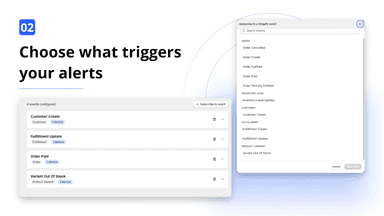
Scurix sends alerts about your store's activity straight to Slack, so you and your team stay informed without watching the Shopify admin. Create rules that fire on events like new orders, refunds, disputes, low stock, and product changes, and add conditions so you only get the alerts that matter. Each rule posts to the channel you choose.
- Connect Signal to Shopify and get instant visual alerts for your events
- Place Signal on your desk, shelf, or anywhere in your warehouse
- Works without an open app. Signal handles alerts in the background
- Assign custom colors and sounds to orders, inventory alerts, and more
- Get alerts only for the events and conditions that matter to you
- Route each alert to the right Slack channel for your team
- Reduce noise during busy periods and outside working hours
- Receive daily and weekly sales digests on your schedule



All the numbers
Every figure, side by side
A green dot marks the app ahead on a measured figure. Estimates, gaps and apps that leave no storefront trace never take the lead.
Adoption
| Measure |  Luxafor |  Scurix |
|---|---|---|
| Detected stores | Not published | Not published |
| Net store change, 28 days | 0 | 0 |
| Stores added, 28 days | Not enough data | Not enough data |
| Big-brand share | Not enough data | Not enough data |
| Top store categories | Not published | Not published |
| Top store countries | Not published | Not published |
Reviews
| Measure | Luxafor | Scurix |
|---|---|---|
| App Store rating | Not published | Not published |
| App Store reviews | Not published | Not published |
| New reviews, 28 days | Not enough data | Not enough data |
| Reviewers a year or more in | Not enough data | Not enough data |
FAQ
Luxafor and Scurix: common questions
- Is Luxafor or Scurix cheaper?
- Only Scurix lists a free plan. Shoplist compares base prices only between monthly plans in the same currency; usage charges and annual plans vary, so check each plan’s limits.
- What features does each app list that the other doesn’t?
- Scurix lists 14 the others don’t mention, such as Abandoned cart, Account activation, Customer notifications, Fraud alerts. A feature missing from a listing may still be supported; this compares what each App Store listing says.
- Where does this comparison’s data come from?
- Shoplist crawls Shopify storefronts to detect which apps each store runs, and reads each app’s Shopify App Store listing for reviews, pricing, features and integrations. Store counts are as of Jun 3, 2026 for Luxafor, Oct 13, 2026 for Scurix; estimated figures are labeled.
How Shoplist compares apps
Store counts come from Shoplist’s crawl of Shopify storefronts, which detects the apps each store runs; they are as of Jun 3, 2026 for Luxafor, Oct 13, 2026 for Scurix. Reviews, ratings, plans, features and integrations come from each app’s Shopify App Store listing. 28-day figures are labeled when estimated, and a figure that is missing or estimated never decides who leads. Read the methodology.