
LSA Low Stock Alert vs StockNest ‑ Inventory Alerts
Two Shopify apps, side by side: detected stores, momentum, reviews, plans, listed features and who runs each. Store counts as of Oct 13, 2026 for LSA Low Stock Alert, Nov 6, 2026 for StockNest.
The short answer
- Only StockNest lists a free plan. Paid plans start at $5.99/month for LSA Low Stock Alert and $7/month for StockNest.
- StockNest lists 15 features LSA Low Stock Alert’s listing doesn’t mention, including Batch notifications, Custom alerts, Email notifications.
Head to head

Receive email alerts when your products get low in stock.
Momentum
New reviews each month
Review pace is the clearest public read on how fast an app is winning new merchants.
Starter
- · Daily summary email of low stock items
- · Limit of 300 products per store
Basic
- · All features of Starter plan
- · Custom email addresses per alert
- · Filter items based on collections
- · Limit of 500 products per store
Advanced
- · All features of Basic plan
- · Instant alerts
- · Limit of 1000 products per store
Professional
- · All features in lower plans
- · Limit of 2000 products per store
Free
- · 500 stock adjustments per month
- · Back-in-stock notices on recovery
- · Bulk stock adjustments, 50 records/run
- · Instant alerts or a daily/weekly digest
- · Low-stock and out-of-stock email alerts
- · Preview, live progress, one-click undo
Starter
- · 10,000 stock adjustments per month
- · CSV export of stock status
- · CSV import of reorder points
- · Drift alerts clear when stock is fixed
- · Everything in Free
- · Negative-stock (drift) detection
Pro
- · Cover-days + lead-time rules per scope
- · Days of cover for every product
- · Everything in Starter
- · Priority email support
- · Running-out-soon alerts (cover days)
- · Sales-velocity forecasting per item
Coverage counts what each App Store listing names. Every feature, checked off app by app, is in Shoplist.
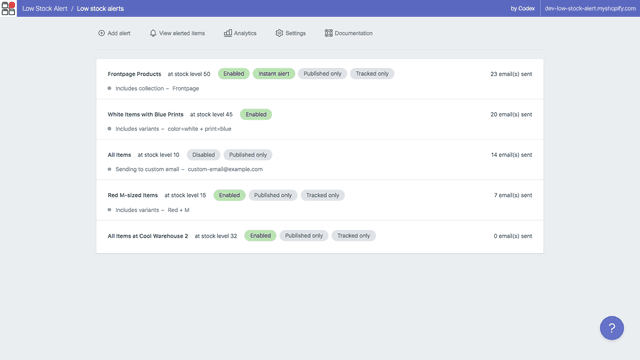
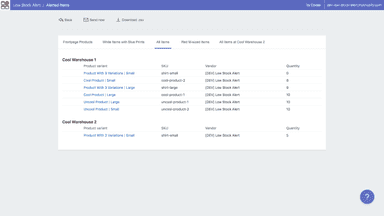
See every featureDon't lose sales or credibility when an item goes out of stock before you notice. Low Stock Alerts solves this problem by notifying you any time a product falls below your specified stock level. You'll get daily emails about all low stock items and optionally instant email alerts as soon as a product goes below the threshold.
StockNest keeps a live copy of your inventory levels for every location and watches it for two things: items about to run out, and stock that has gone negative. Set a default reorder point, then override it per SKU or per location. Alerts arrive as one deduplicated email or Slack digest, and clear themselves when stock recovers. Need to fix quantities?
- Regularly scheduled email reports (e.g. daily) for all products low in stock
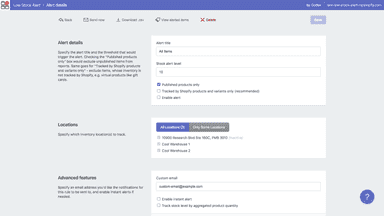
- Multiple location support
- Instant email notifications as soon as a product goes low in stock
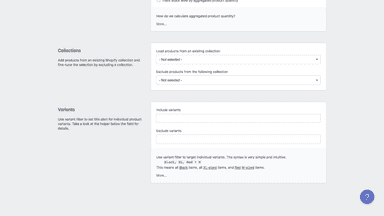
- Product filtering based on variant name, collection membership, and/or location
- Reorder points per SKU, product, collection, vendor, tag, location or default.
- Negative-stock detection so silent inventory drift surfaces as an alert
- Instant or daily/weekly digests by email or Slack; back-in-stock notices too
- Bulk stock adjustments: preview the exact records, apply in background, undo
All the numbers
Every figure, side by side
A green dot marks the app ahead on a measured figure. Estimates, gaps and apps that leave no storefront trace never take the lead.
Adoption
| Measure |  LSA Low Stock Alert | |
|---|---|---|
| Detected stores | Not published | Not published |
| Net store change, 28 days | 0 | 0 |
| Stores added, 28 days | Not enough data | Not enough data |
| Big-brand share | Not enough data | Not enough data |
| Top store categories | Not published | Not published |
| Top store countries | Not published | Not published |
Reviews
| Measure | LSA Low Stock Alert | |
|---|---|---|
| App Store rating | 4.5 ★ | Not published |
| App Store reviews | 32 | Not published |
| New reviews, 28 days | 0 | Not enough data |
| Reviewers a year or more in | Not enough data | Not enough data |
Pricing
| Measure | LSA Low Stock Alert | |
|---|---|---|
| Free plan | Not listed | Yes |
| Lowest paid monthly plan | $5.99/month(ahead) | $7/month |
| Longest free trial | 14 days | Not listed |
| Plans listed | 4 | 3 |
Listing
| Measure | LSA Low Stock Alert | |
|---|---|---|
| Shopify category rank | #175 | Not enough data |
| Shopify App Charts | Not on this week’s charts | Not on this week’s charts |
| Built for Shopify | No | No |
| Launched | Jan 21, 2016 | Oct 1, 2026 |
| Languages | 1 | 1 |
| Developer | 1719 Solutions Inc. | AppNest Studio |
FAQ
LSA Low Stock Alert and StockNest: common questions
- Is LSA Low Stock Alert or StockNest cheaper?
- Only StockNest lists a free plan. Paid plans start at $5.99/month for LSA Low Stock Alert and $7/month for StockNest. Shoplist compares base prices only between monthly plans in the same currency; usage charges and annual plans vary, so check each plan’s limits.
- What features does each app list that the other doesn’t?
- StockNest lists 15 the others don’t mention, such as Batch notifications, Custom alerts, Email notifications, Forecasting. A feature missing from a listing may still be supported; this compares what each App Store listing says.
- Where does this comparison’s data come from?
- Shoplist crawls Shopify storefronts to detect which apps each store runs, and reads each app’s Shopify App Store listing for reviews, pricing, features and integrations. Store counts are as of Oct 13, 2026 for LSA Low Stock Alert, Nov 6, 2026 for StockNest; estimated figures are labeled.
How Shoplist compares apps
Store counts come from Shoplist’s crawl of Shopify storefronts, which detects the apps each store runs; they are as of Oct 13, 2026 for LSA Low Stock Alert, Nov 6, 2026 for StockNest. Reviews, ratings, plans, features and integrations come from each app’s Shopify App Store listing. 28-day figures are labeled when estimated, and a figure that is missing or estimated never decides who leads. Read the methodology.