

Lotegrity vs LotTrack: Batch & Lot Tracking
Two Shopify apps, side by side: detected stores, momentum, reviews, plans, listed features and who runs each. Store counts as of Oct 13, 2026.
The short answer
- Paid plans start at $79/month for Lotegrity and $9.99/month for LotTrack.
- LotTrack lists 13 features Lotegrity’s listing doesn’t mention, including Auto-processing, Custom reports, Email notifications.
Head to head


Professional
- · Audit trail & activity history
- · Expiration date tracking
- · FEFO inventory allocation
- · Fulfillment traceability
- · Lot & batch traceability
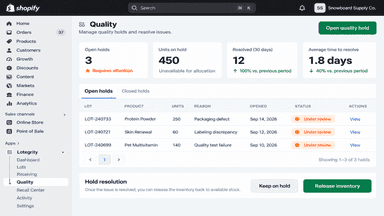
- · Quality hold management
Starter
- · Audit trail, QC hold & CSV import
- · Expiry & low-stock alerts
- · FIFO, FEFO & LIFO auto-allocation
- · Lot & batch tracking + expiry dates
- · Recall cases + customer recall emails
- · Recall traceability + CSV export
Growth
- · Audit trail, QC hold & CSV import
- · Expiry & low-stock alerts
- · FIFO, FEFO & LIFO auto-allocation
- · Lot & batch tracking + expiry dates
- · Recall cases + customer recall emails
- · Recall traceability + CSV export
Scale
- · Audit trail, QC hold & CSV import
- · Expiry & low-stock alerts
- · FIFO, FEFO & LIFO auto-allocation
- · Lot & batch tracking + expiry dates
- · Recall cases + customer recall emails
- · Recall traceability + CSV export
Coverage counts what each App Store listing names. Every feature, checked off app by app, is in Shoplist.
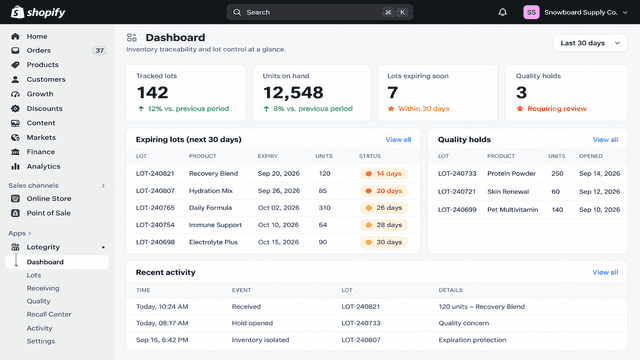
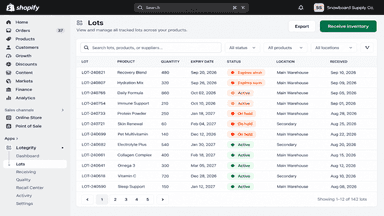
See every featureLotegrity gives merchants lot tracking and batch tracking with expiration dates, FEFO/FIFO allocation, receiving, and fulfillment traceability. See inventory by lot and location, monitor expiring stock, preserve an audit trail from receipt through fulfillment, and identify which orders were tied to each lot.
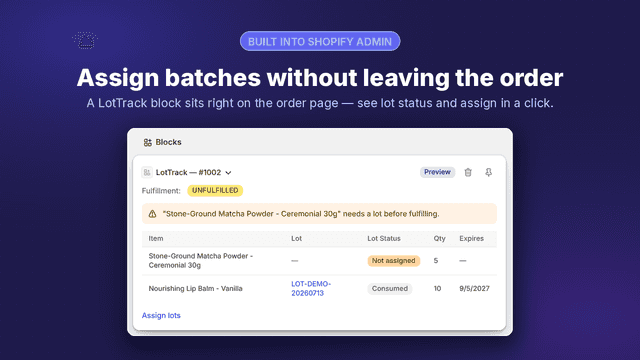
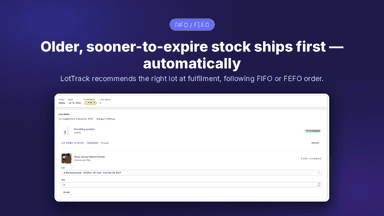
LotTrack adds lot and batch number tracking to Shopify so you can trace every unit you ship back to the exact manufacturing batch it came from. Capture manufacture and expiration dates, supplier references, and QC status. Auto-allocate stock by FIFO, FEFO, or LIFO at fulfillment. Get expiry and low-stock alerts.
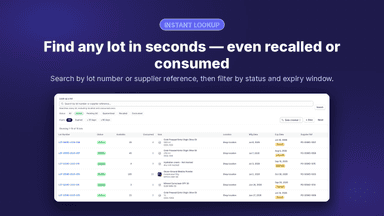
- Track inventory by lot or batch with expiration dates and locations
- Use FEFO or FIFO allocation to trace fulfilled orders back to inventory lots
- Receive stock into lots with quantities, expiry dates, and location history
- Monitor expiring inventory and see which lots need attention first
- Lot & batch tracking with full metadata
- FIFO, FEFO & LIFO stock allocation
- Expiration & low-stock alerts
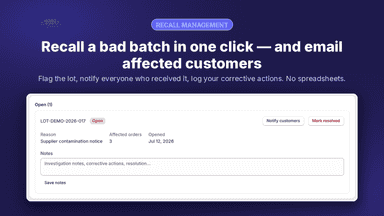
- One-click recalls & full traceability
All the numbers
Every figure, side by side
A green dot marks the app ahead on a measured figure. Estimates, gaps and apps that leave no storefront trace never take the lead.
Adoption
| Measure |  Lotegrity |  LotTrack |
|---|---|---|
| Detected stores | Not published | Not published |
| Net store change, 28 days | 0 | 0 |
| Stores added, 28 days | Not enough data | Not enough data |
| Big-brand share | Not enough data | Not enough data |
| Top store categories | Not published | Not published |
| Top store countries | Not published | Not published |
Reviews
| Measure | Lotegrity | LotTrack |
|---|---|---|
| App Store rating | Not published | Not published |
| App Store reviews | Not published | Not published |
| New reviews, 28 days | Not enough data | Not enough data |
| Reviewers a year or more in | Not enough data | Not enough data |
FAQ
Lotegrity and LotTrack: common questions
- Is Lotegrity or LotTrack cheaper?
- Paid plans start at $79/month for Lotegrity and $9.99/month for LotTrack. Shoplist compares base prices only between monthly plans in the same currency; usage charges and annual plans vary, so check each plan’s limits.
- What features does each app list that the other doesn’t?
- LotTrack lists 13 the others don’t mention, such as Auto-processing, Custom reports, Email notifications, Expiry dates. A feature missing from a listing may still be supported; this compares what each App Store listing says.
- Where does this comparison’s data come from?
- Shoplist crawls Shopify storefronts to detect which apps each store runs, and reads each app’s Shopify App Store listing for reviews, pricing, features and integrations. Store counts are as of Oct 13, 2026; estimated figures are labeled.
How Shoplist compares apps
Store counts come from Shoplist’s crawl of Shopify storefronts, which detects the apps each store runs; they are as of Oct 13, 2026. Reviews, ratings, plans, features and integrations come from each app’s Shopify App Store listing. 28-day figures are labeled when estimated, and a figure that is missing or estimated never decides who leads. Read the methodology.