

LM ‑ Dynamic Pricing vs Trubuild: Price by Zipcode
Two Shopify apps, side by side: detected stores, momentum, reviews, plans, listed features and who runs each. Store counts as of Aug 2, 2026 for LM, Oct 14, 2026 for Trubuild.
The short answer
- LM lists 3 features Trubuild’s listing doesn’t mention, including Analytics, Auto-matching, Dashboards.
Head to head


Pro
- · Create pricing profiles with priorities
- · Location-specific prices
- · Set price by ZIP, city, state or country
- · Unlimited profiles
- · Unlimited rules
Coverage counts what each App Store listing names. Every feature, checked off app by app, is in Shoplist.
See every featureLM Dynamic Pricing helps you show different prices to different customers using rule-based logic. Prices automatically update on the storefront and checkout based on customer profile, location, inventory levels, device type, or time of day.
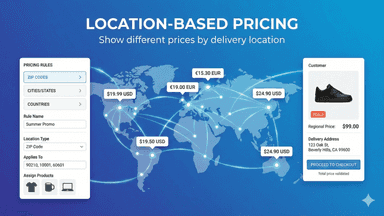
Location-Based Pricing lets merchants show different prices by delivery location without running multiple stores. Create rules for ZIP codes, cities, states, or countries, assign products to each rule, and the app shows the right price when a customer enters their address. Ideal for regional pricing, local offers. Prices are applied in the cart and validated at checkout, so the customer always sees the correct total.
- Location based rule – Show different prices by country or region (e.g. state).
- Customer preference based rule –Set prices by tags, total spent, or order count.
- Device-based rule – Show different prices for iOS and Android. Run mobile deals.
- Inventory rule – Automatically apply prices when stock is below a threshold.
- Set prices by ZIP, city, state, or country in a single store.
- Cart and checkout stay accurate with the right prices and validation.
- Create pricing profiles with priorities and assign products in bulk.
- Customers enter their address and see location-specific prices live.





All the numbers
Every figure, side by side
A green dot marks the app ahead on a measured figure. Estimates, gaps and apps that leave no storefront trace never take the lead.
Adoption
| Measure |  LM |  Trubuild |
|---|---|---|
| Detected stores | Not published | Not published |
| Net store change, 28 days | 0 | 0 |
| Stores added, 28 days | Not enough data | Not enough data |
| Big-brand share | Not enough data | Not enough data |
| Top store categories | Not published | Not published |
| Top store countries | Not published | Not published |
Reviews
| Measure | LM | Trubuild |
|---|---|---|
| App Store rating | Not published | 5.0 ★ |
| App Store reviews | Not published | 1 |
| New reviews, 28 days | Not enough data | Not enough data |
| Reviewers a year or more in | Not enough data | Not enough data |
FAQ
LM and Trubuild: common questions
- What features does each app list that the other doesn’t?
- LM lists 3 the others don’t mention, such as Analytics, Auto-matching, Dashboards. Trubuild lists 1 the others don’t mention, such as AI-powered rules. A feature missing from a listing may still be supported; this compares what each App Store listing says.
- Where does this comparison’s data come from?
- Shoplist crawls Shopify storefronts to detect which apps each store runs, and reads each app’s Shopify App Store listing for reviews, pricing, features and integrations. Store counts are as of Aug 2, 2026 for LM, Oct 14, 2026 for Trubuild; estimated figures are labeled.
How Shoplist compares apps
Store counts come from Shoplist’s crawl of Shopify storefronts, which detects the apps each store runs; they are as of Aug 2, 2026 for LM, Oct 14, 2026 for Trubuild. Reviews, ratings, plans, features and integrations come from each app’s Shopify App Store listing. 28-day figures are labeled when estimated, and a figure that is missing or estimated never decides who leads. Read the methodology.