

Kesper vs thinkr
Two Shopify apps, side by side: detected stores, momentum, reviews, plans, listed features and who runs each. Store counts as of Oct 13, 2026.
The short answer
- Only thinkr lists a free plan. Paid plans start at $49/month for Kesper and $25/month for thinkr.
- thinkr lists 11 features Kesper’s listing doesn’t mention, including Activity tracking, Checkout analytics, Custom reports.
Head to head


Momentum
New reviews each month
Review pace is the clearest public read on how fast an app is winning new merchants.
Kesper Pro
- · Demand and cash forecasts
- · Margin leak detection
- · Overschedule detection based on sales
- · Promo analysis and recommendations
- · True net margin analysis
- · Up to 36 agents working for you
Free
- · 3 Agents
- · 5 Chats per Day
- · Shopify Store Data Integration
Growth
- · 1 External Linked Data Sources
- · 10 AI Agents
- · 100 Chats per Day
- · 5 Deep Analytics Reports
- · Shopify Store Data Integration
Pro
- · 6 External Linked Data Sources
- · Shopify Store Data Integration
- · Unlimited Agents
- · Unlimited Chats
- · Unlimited Deep Research Reports
Coverage counts what each App Store listing names. Every feature, checked off app by app, is in Shoplist.
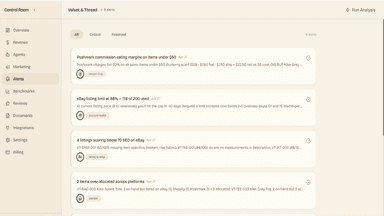
See every featureKesper is a multi-agent AI operations platform built for retail and restaurant SMBs. Instead of one chatbot that tries to do everything, Kesper runs 36 specialist AI agents — each with one job, each accountable for one slice of your operations. A few of the agents you'll meet: • Monica — Chief of Staff. Synthesizes your morning brief: yesterday's sales pace, margin movement, top issues to handle today.
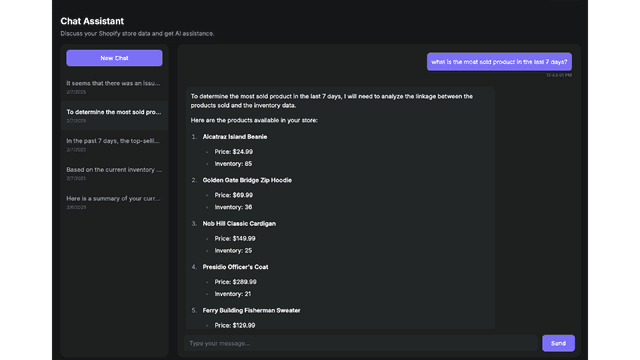
thinkr helps ecommerce stores grow by automating everyday operations with AI. Users can create "Growth Agents" and "Alert Agents" to have AI monitor and report on different areas of your store to allow you to easily scale. thinkr can also integrate with other apps you use in your business like Facebook Ads, Google Analytics, Klaviyo, and more.
- Daily 90-second operational brief, ranked by P&L impact, mobile-first.
- Profit per item after fees, broken down by platform.
- Demand and cash forecasts that flag dips before they hit.
- One-Click Profit Growth Approve suggestions and let Agents bring you profits.
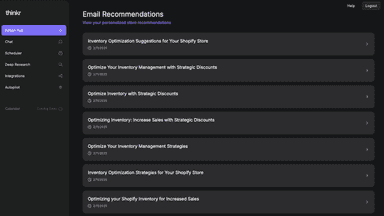
- Autopilot Received personalized growth opportunities.
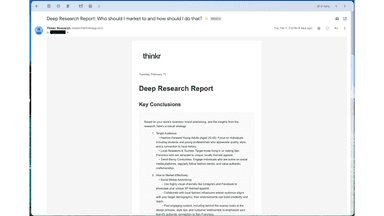
- Deep Reporting Use internal and web data to uncover insights and opportunities.
- Chat One channel for insights across 300+ apps like Klaviyo, Meta, Google.


All the numbers
Every figure, side by side
A green dot marks the app ahead on a measured figure. Estimates, gaps and apps that leave no storefront trace never take the lead.
Adoption
| Measure |  Kesper |  thinkr |
|---|---|---|
| Detected stores | Not published | Not published |
| Net store change, 28 days | 0 | 0 |
| Stores added, 28 days | Not enough data | Not enough data |
| Big-brand share | Not enough data | Not enough data |
| Top store categories | Not published | Not published |
| Top store countries | Not published | Not published |
Reviews
| Measure | Kesper | thinkr |
|---|---|---|
| App Store rating | Not published | 5.0 ★ |
| App Store reviews | Not published | 3 |
| New reviews, 28 days | Not enough data | Not enough data |
| Reviewers a year or more in | Not enough data | Not enough data |
FAQ
Kesper and thinkr: common questions
- Is Kesper or thinkr cheaper?
- Only thinkr lists a free plan. Paid plans start at $49/month for Kesper and $25/month for thinkr. Shoplist compares base prices only between monthly plans in the same currency; usage charges and annual plans vary, so check each plan’s limits.
- What features does each app list that the other doesn’t?
- thinkr lists 11 the others don’t mention, such as Activity tracking, Checkout analytics, Custom reports, Event tracking. A feature missing from a listing may still be supported; this compares what each App Store listing says.
- Where does this comparison’s data come from?
- Shoplist crawls Shopify storefronts to detect which apps each store runs, and reads each app’s Shopify App Store listing for reviews, pricing, features and integrations. Store counts are as of Oct 13, 2026; estimated figures are labeled.
How Shoplist compares apps
Store counts come from Shoplist’s crawl of Shopify storefronts, which detects the apps each store runs; they are as of Oct 13, 2026. Reviews, ratings, plans, features and integrations come from each app’s Shopify App Store listing. 28-day figures are labeled when estimated, and a figure that is missing or estimated never decides who leads. Read the methodology.