
Jika: FindUs Store Locator vs Mapzy: Store Locator
Two Shopify apps, side by side: detected stores, momentum, reviews, plans, listed features and who runs each. Store counts as of Oct 13, 2026.
The short answer
- Both list a free plan. Paid plans start at $9.90/month for Jika and $2.99/month for Mapzy.
- Jika lists 14 features Mapzy’s listing doesn’t mention, including Analytics, Business hours, Custom branding.
Head to head


Free
- · 1 location
- · Floating Widget & App Block
- · Marker Studio (Custom Icons)
- · Storefront multi-language translations
Basic
- · 1-on-1 Dedicated support
- · Advanced Settings (Locate Me)
- · Custom CSS Override
- · Dynamic Map Area Filtering
- · Full Branding & Colors
- · Google Places Auto-complete
Pro
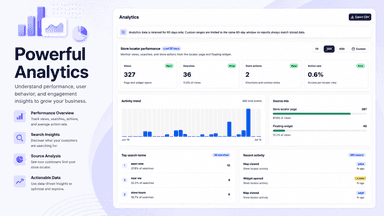
- · Advanced Analytics Dashboard
- · Everything in basic
- · Up to 500 locations
Enterprise
- · Everything in pro
- · Extra capacity: +$10/mo per 500 stores
- · Up to 1500 locations
Free
- · 1 location only
- · No auto-location finder
- · No dynamic updates
- · Single static map with watermark
Basic
- · 1 location only
- · No dynamic updates
- · No watermark
- · Single static map
Growth
- · Dynamic multi-location map
- · Find nearest store
- · No watermark
- · Up to 10 locations
Pro
- · 24/7 support
- · All Growth features
- · Bulk upload from CSV
- · Unlimited locations
Coverage counts what each App Store listing names. Every feature, checked off app by app, is in Shoplist.
See every featureThis app helps merchants showcase their stores — whether physical locations or online-only stores — so customers can find where to buy. Customers can search by address, city, state, ZIP, or store name, use their current location to find the nearest store, and sort results by distance or filter by tags.
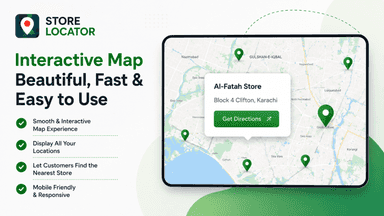
Store Locator helps merchants with one or many physical locations show customers where to find them. Add locations manually or upload a CSV in bulk, then embed a fully responsive, searchable map directly on your storefront using Shopify's theme editor. Shoppers can search by name or address, find the nearest store using their current location, and get instant directions via Google Maps.
- Interactive map and list showing all store locations on your storefront
- Search stores by address, city, state, zip code, or store name
- Use current location to find the nearest store automatically
- Filter stores by tags, or sort by distance from the customer
- Add locations manually or bulk upload via CSV spreadsheet
- Interactive Google Maps widget with search and directions
- Find nearest location using the shopper's live position
- Fully responsive design that adapts to any theme automatically




All the numbers
Every figure, side by side
A green dot marks the app ahead on a measured figure. Estimates, gaps and apps that leave no storefront trace never take the lead.
Adoption
| Measure |  Jika |  Mapzy |
|---|---|---|
| Detected stores | Not published | Not published |
| Net store change, 28 days | 0 | 0 |
| Stores added, 28 days | Not enough data | Not enough data |
| Big-brand share | Not enough data | Not enough data |
| Top store categories | Not published | Not published |
| Top store countries | Not published | Not published |
Reviews
| Measure | Jika | Mapzy |
|---|---|---|
| App Store rating | Not published | 5.0 ★ |
| App Store reviews | Not published | 2 |
| New reviews, 28 days | Not enough data | Not enough data |
| Reviewers a year or more in | Not enough data | Not enough data |
FAQ
Jika and Mapzy: common questions
- Is Jika or Mapzy cheaper?
- Both list a free plan. Paid plans start at $9.90/month for Jika and $2.99/month for Mapzy. Shoplist compares base prices only between monthly plans in the same currency; usage charges and annual plans vary, so check each plan’s limits.
- What features does each app list that the other doesn’t?
- Jika lists 14 the others don’t mention, such as Analytics, Business hours, Custom branding, Custom CSS. A feature missing from a listing may still be supported; this compares what each App Store listing says.
- Where does this comparison’s data come from?
- Shoplist crawls Shopify storefronts to detect which apps each store runs, and reads each app’s Shopify App Store listing for reviews, pricing, features and integrations. Store counts are as of Oct 13, 2026; estimated figures are labeled.
How Shoplist compares apps
Store counts come from Shoplist’s crawl of Shopify storefronts, which detects the apps each store runs; they are as of Oct 13, 2026. Reviews, ratings, plans, features and integrations come from each app’s Shopify App Store listing. 28-day figures are labeled when estimated, and a figure that is missing or estimated never decides who leads. Read the methodology.