

Inventory Man vs Spot: Multi Store Sync
Two Shopify apps, side by side: detected stores, momentum, reviews, plans, listed features and who runs each. Store counts as of Oct 13, 2026 for Inventory Man, Jun 25, 2026 for Spot.
The short answer
- Inventory Man lists 4 features Spot’s listing doesn’t mention, including Inventory planning, SKUs, Stock replenishment.
Head to head


Monthly
Yearly
Coverage counts what each App Store listing names. Every feature, checked off app by app, is in Shoplist.
See every featureEffortlessly manage your multi-location stores with the Multi-Location Inventory Insights app. This powerful tool gives store owners an intuitive way to track inventory across all locations, making it easier to manage stock, plan transfers, and optimize product performance. This is an absolute necessity for stores with multiple locations.
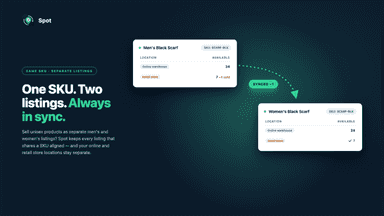
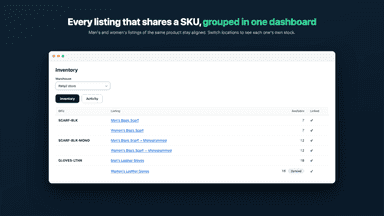
Duplicate product listings with the same SKU are common for unisex products, men's and women's pages. Shopify still deducts stock from only the purchased variant. Spot solves that same-SKU syncing problem without turning every location into one pool.
- Get Location Level Inventory Levels of all variants of searched product
- Make Location-wise informed decisions on stock levels and replenishments.
- Easy stock transfer planning -See which variant is selling out at which location
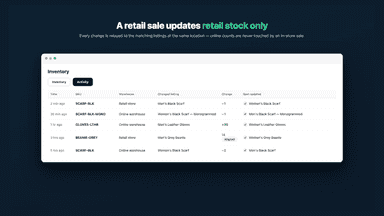
- A sale on one listing instantly updates every listing with the same SKU
- Locations stay separate — retail store stock never mixes with online
- Keep separate men's and women's listings for SEO while sharing one SKU
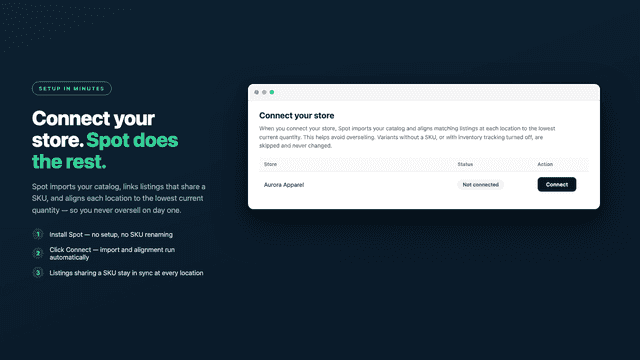
- Aligns mismatched listings to the lowest quantity to help avoid overselling


All the numbers
Every figure, side by side
A green dot marks the app ahead on a measured figure. Estimates, gaps and apps that leave no storefront trace never take the lead.
Adoption
| Measure |  Inventory Man |  Spot |
|---|---|---|
| Detected stores | Not published | Not published |
| Net store change, 28 days | 0 | 0 |
| Stores added, 28 days | Not enough data | Not enough data |
| Big-brand share | Not enough data | Not enough data |
| Top store categories | Not published | Not published |
| Top store countries | Not published | Not published |
Reviews
| Measure | Inventory Man | Spot |
|---|---|---|
| App Store rating | Not published | Not published |
| App Store reviews | Not published | Not published |
| New reviews, 28 days | Not enough data | Not enough data |
| Reviewers a year or more in | Not enough data | Not enough data |
Pricing
| Measure | Inventory Man | Spot |
|---|---|---|
| Free plan | Not listed | Not listed |
| Lowest paid monthly plan | $3/month | No monthly plan listed |
| Longest free trial | 14 days | Not listed |
| Plans listed | 2 | Not published |
Listing
| Measure | Inventory Man | Spot |
|---|---|---|
| Shopify category rank | #451 | Not enough data |
| Shopify App Charts | Not on this week’s charts | Not on this week’s charts |
| Built for Shopify | No | No |
| Launched | Feb 25, 2025 | Jun 17, 2026 |
| Languages | 1 | 1 |
| Developer | The Metros Collective | Arjun Builds |
FAQ
Inventory Man and Spot: common questions
- What features does each app list that the other doesn’t?
- Inventory Man lists 4 the others don’t mention, such as Inventory planning, SKUs, Stock replenishment, Stock transfer. Spot lists 2 the others don’t mention, such as Inventory sync, Multi-location. A feature missing from a listing may still be supported; this compares what each App Store listing says.
- Where does this comparison’s data come from?
- Shoplist crawls Shopify storefronts to detect which apps each store runs, and reads each app’s Shopify App Store listing for reviews, pricing, features and integrations. Store counts are as of Oct 13, 2026 for Inventory Man, Jun 25, 2026 for Spot; estimated figures are labeled.
How Shoplist compares apps
Store counts come from Shoplist’s crawl of Shopify storefronts, which detects the apps each store runs; they are as of Oct 13, 2026 for Inventory Man, Jun 25, 2026 for Spot. Reviews, ratings, plans, features and integrations come from each app’s Shopify App Store listing. 28-day figures are labeled when estimated, and a figure that is missing or estimated never decides who leads. Read the methodology.