
Importer ‑ Bulk Images Import vs PixMatch ‑ Bulk Photo Import
Two Shopify apps, side by side: detected stores, momentum, reviews, plans, listed features and who runs each. Store counts as of Oct 13, 2026.
The short answer
- Both list a free plan. Paid plans start at $2.99/month for Importer and $29/month for PixMatch.
- Importer lists 2 features PixMatch’s listing doesn’t mention, including Search and filter, SKU and barcodes.
Head to head


Momentum
New reviews each month
Review pace is the clearest public read on how fast an app is winning new merchants.
Free
- · Assign image to variant
- · Export images by Handle or SKU
- · Import/Export Images
- · Up to 10 Upload Images
Basic Plan
- · Assign image to variant
- · Export images by Handle or SKU
- · Import/Export Images
- · Up to 500 Upload Images
Advance Plan
- · Assign image to variant
- · Export images by Handle or SKU
- · Import/Export Images
- · Up to 5000 Upload Images
Professional Plan
- · Assign image to variant
- · Export images by Handle or SKU
- · Import/Export Images
- · Up to 50000 Upload Images
Free
Pro
Studio
Coverage counts what each App Store listing names. Every feature, checked off app by app, is in Shoplist.
See every featureIf you have a new or existing store and need to add or update product images, this app can be very helpful. With the product handle or SKU, you can easily import a CSV file and assign images to specific product variants. The app will record all activities and generate log files to check if they were imported properly.
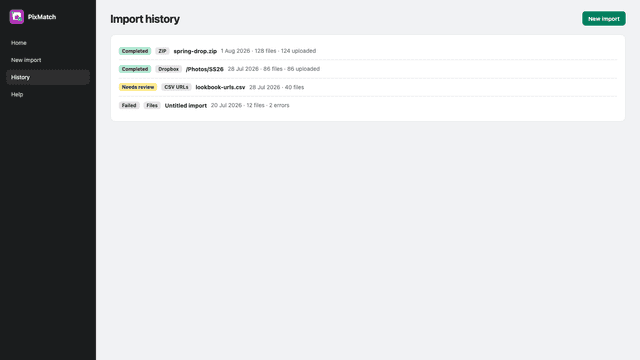
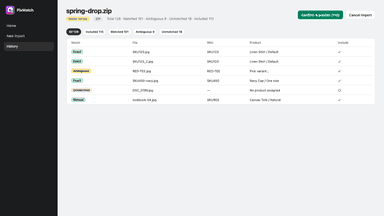
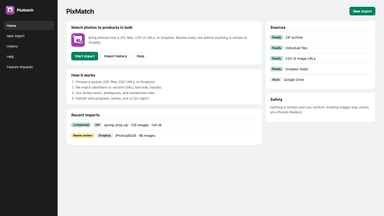
PixMatch helps merchants attach large sets of product photos to the correct Shopify product variants. You import images from a ZIP archive, local files, a CSV of image URLs, or a Dropbox folder, then match each file to a variant using SKU or another catalog identifier you choose. Before anything is written to Shopify, you review proposed matches, resolve exceptions, and approve what should be published.
- Upload multiple product images at once by SKU or Handle through a CSV file.
- Export all images of the products along with their titles, SKUs, and handles.
- Keep track of all activity records, including success and error logs.
- Assign product image to a specific product variant.
- Match bulk product images to variants by SKU or your chosen catalog field.
- Import from ZIP archives, local files, CSV URLs, or Dropbox folders.
- Review matches, resolve exceptions, and approve changes before publishing.
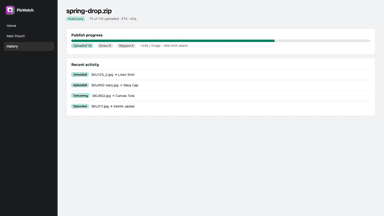
- Publish approved images to Shopify with staged uploads and progress tracking.


All the numbers
Every figure, side by side
A green dot marks the app ahead on a measured figure. Estimates, gaps and apps that leave no storefront trace never take the lead.
Adoption
| Measure |  Importer |  PixMatch |
|---|---|---|
| Detected stores | Not published | Not published |
| Net store change, 28 days | 0 | 0 |
| Stores added, 28 days | Not enough data | Not enough data |
| Big-brand share | Not enough data | Not enough data |
| Top store categories | Not published | Not published |
| Top store countries | Not published | Not published |
Reviews
| Measure | Importer | PixMatch |
|---|---|---|
| App Store rating | 1.7 ★ | Not published |
| App Store reviews | 2 | Not published |
| New reviews, 28 days | Not enough data | Not enough data |
| Reviewers a year or more in | Not enough data | Not enough data |
FAQ
Importer and PixMatch: common questions
- Is Importer or PixMatch cheaper?
- Both list a free plan. Paid plans start at $2.99/month for Importer and $29/month for PixMatch. Shoplist compares base prices only between monthly plans in the same currency; usage charges and annual plans vary, so check each plan’s limits.
- What features does each app list that the other doesn’t?
- Importer lists 2 the others don’t mention, such as Search and filter, SKU and barcodes. PixMatch lists 1 the others don’t mention, such as Variants. A feature missing from a listing may still be supported; this compares what each App Store listing says.
- Where does this comparison’s data come from?
- Shoplist crawls Shopify storefronts to detect which apps each store runs, and reads each app’s Shopify App Store listing for reviews, pricing, features and integrations. Store counts are as of Oct 13, 2026; estimated figures are labeled.
How Shoplist compares apps
Store counts come from Shoplist’s crawl of Shopify storefronts, which detects the apps each store runs; they are as of Oct 13, 2026. Reviews, ratings, plans, features and integrations come from each app’s Shopify App Store listing. 28-day figures are labeled when estimated, and a figure that is missing or estimated never decides who leads. Read the methodology.