

GuardIA vs Reclaim: Chargeback Recovery
Two Shopify apps, side by side: detected stores, momentum, reviews, plans, listed features and who runs each. Store counts as of Oct 13, 2026 for GuardIA, Sep 3, 2026 for Reclaim.
The short answer
- GuardIA lists 8 features Reclaim’s listing doesn’t mention, including Auto-cancel, Bots, Chargeback alerts.
Head to head


Momentum
New reviews each month
Review pace is the clearest public read on how fast an app is winning new merchants.
Premium Shield
Free
Coverage counts what each App Store listing names. Every feature, checked off app by app, is in Shoplist.
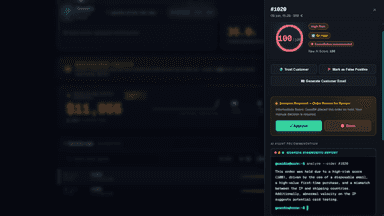
See every featureShopify flags fraud risk. GuardIA compiles the evidence to recover it. GuardIA scores every order in real time and auto-holds or cancels risky ones (flag + note in your Admin). When a chargeback is opened, it automatically gathers proof of delivery, tracking, AVS/CVV/3-D Secure results and customer history via Shopify's GraphQL Admin API, then builds an audit-ready PDF representment package in one click.
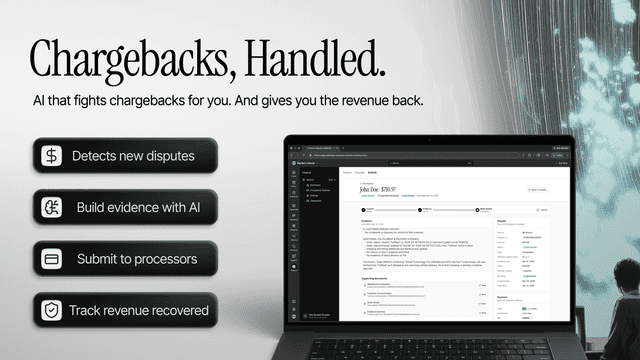
Reclaim helps Shopify merchants fight chargebacks with AI-built dispute responses. When a dispute comes in, Reclaim gathers relevant order, payment, tracking, delivery, customer, and support evidence, prepares a response tailored to the dispute reason, and helps submit it before the deadline. Track dispute activity, response status, and recovery outcomes across supported payment providers.
- One-click PDF representment package, ready to submit to your bank or Shopify
- Auto-collects proof of delivery, tracking, AVS/CVV/3-D Secure & order history
- Real-time AI order scanning with automatic hold or cancel on risky orders
- Cryptographic fingerprint correlation certifies the analysis at time of order
- AI consolidates evidence from across tools and combines into a dispute package
- Aggregates analytics on chargebacks from Paypal, Stripe, Shopify and more
- Integrates with web pixels, 150+ carriers, payment and order info for evidence





All the numbers
Every figure, side by side
A green dot marks the app ahead on a measured figure. Estimates, gaps and apps that leave no storefront trace never take the lead.
Adoption
| Measure |  GuardIA |  Reclaim |
|---|---|---|
| Detected stores | Not published | Not published |
| Net store change, 28 days | 0 | 0 |
| Stores added, 28 days | Not enough data | Not enough data |
| Big-brand share | Not enough data | Not enough data |
| Top store categories | Not published | Not published |
| Top store countries | Not published | Not published |
Reviews
| Measure | GuardIA | Reclaim |
|---|---|---|
| App Store rating | Not published | 5.0 ★ |
| App Store reviews | Not published | 18 |
| New reviews, 28 days | Not enough data | Not enough data |
| Reviewers a year or more in | Not enough data | Not enough data |
FAQ
GuardIA and Reclaim: common questions
- What features does each app list that the other doesn’t?
- GuardIA lists 8 the others don’t mention, such as Auto-cancel, Bots, Chargeback alerts, Fake accounts. Reclaim lists 3 the others don’t mention, such as AI-powered detection, Automated workflows, Chargeback analytics. A feature missing from a listing may still be supported; this compares what each App Store listing says.
- Where does this comparison’s data come from?
- Shoplist crawls Shopify storefronts to detect which apps each store runs, and reads each app’s Shopify App Store listing for reviews, pricing, features and integrations. Store counts are as of Oct 13, 2026 for GuardIA, Sep 3, 2026 for Reclaim; estimated figures are labeled.
How Shoplist compares apps
Store counts come from Shoplist’s crawl of Shopify storefronts, which detects the apps each store runs; they are as of Oct 13, 2026 for GuardIA, Sep 3, 2026 for Reclaim. Reviews, ratings, plans, features and integrations come from each app’s Shopify App Store listing. 28-day figures are labeled when estimated, and a figure that is missing or estimated never decides who leads. Read the methodology.