

Gro Multi‑Store Sync vs HubStock ‑ Multi‑Store Sync
Two Shopify apps, side by side: detected stores, momentum, reviews, plans, listed features and who runs each. Store counts as of Oct 19, 2026 for Gro Multi‑Store Sync, Oct 13, 2026 for HubStock.
The short answer
- Both list a free plan. Paid plans start at $5.99/month for Gro Multi‑Store Sync and $24/month for HubStock.
- HubStock lists 12 features Gro Multi‑Store Sync’s listing doesn’t mention, including Automated alerts, Custom, Detailed logs.
Head to head


Momentum
New reviews each month
Review pace is the clearest public read on how fast an app is winning new merchants.
Free for Testing
- · 2-way Inventory Sync
- · Export & Sync Collections
- · Export & Sync Products
- · Free for Testing with stores of any size
- · Sync Product & Variant Metafields
Small
- · $5.99 per connected store
- · 2-way Inventory Sync
- · Export & Sync Collections
- · Export & Sync Products
- · Flat price Locked in for Life
- · For syncing up to 100 products
Big
- · $14.99 per connected store
- · 2-way Inventory Sync
- · Export & Sync Collections
- · Export & Sync Products
- · Flat price Locked in for Life
- · For syncing up to 1000 products
Large
- · $49.99 per connected store
- · 2-way Inventory Sync
- · Export & Sync Collections
- · Export & Sync Products
- · Flat price Locked in for Life
- · For syncing up to 15,000 products
Free
- · Covered by the master store's plan
- · For destination stores
Starter
- · 25,000 History entries
- · 300 products · 1,500 variants
- · 5 mapped locations per store
- · Email & live chat support
- · Match & link existing products by SKU
- · Product & category metafields sync
Growth
- · 1,500 products · 7,500 variants
- · 10 mapped locations per store
- · 150,000 History entries
- · Email & live chat support
- · Match & link existing products by SKU
- · Product & category metafields sync
Scale
- · 25 mapped locations per store
- · 5,000 products · 25,000 variants
- · 750,000 History entries
- · Match & link existing products by SKU
- · Need more than 25 stores? Contact us
- · Product & category metafields sync
Coverage counts what each App Store listing names. Every feature, checked off app by app, is in Shoplist.
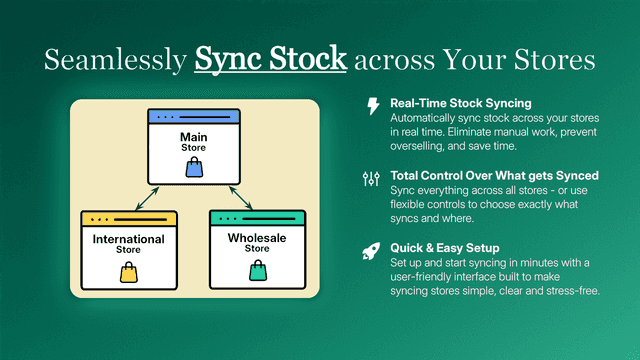
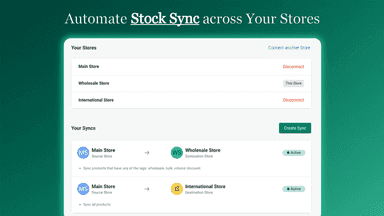
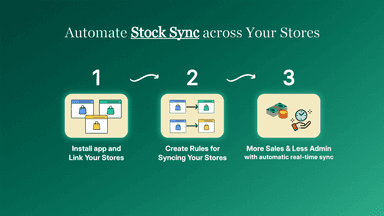
See every featureRunning multiple stores shouldn't be a full-time job. Automate real-time sync across stores to scale operations with ease and accuracy. Ideal for running multi-store setups, with international, wholesale, speciality stores etc; the app is easy to set up and manage, yet flexible enough for your unique needs.
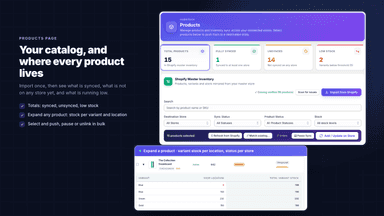
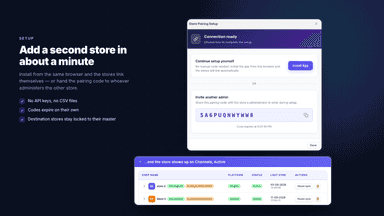
HubStock syncs a network of stores from one master store. Stock lives on the master only — destination stores mirror it — so two stores never fight over the same number. Import your catalog, connect a destination store with a pairing code, then map your locations. Products that already exist there are matched by SKU and linked, not duplicated.
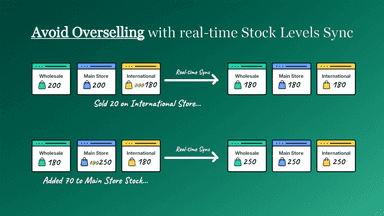
- Automatic real-time sync of inventory levels across stores.
- Flexible control over which products get synced and where
- Multi-location support for syncing inventory
- Map products using SKU or barcodes with detailed mapping preview
- Real-time inventory sync from one master store to every connected store
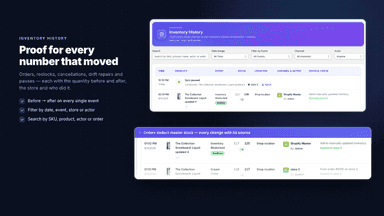
- Orders on any store deduct master stock; cancellations restore it automatically
- Already selling there? Match by SKU and link, in bulk or one product at a time
- Product and category metafields sync, including their definitions

All the numbers
Every figure, side by side
A green dot marks the app ahead on a measured figure. Estimates, gaps and apps that leave no storefront trace never take the lead.
Adoption
| Measure |  Gro Multi‑Store Sync |  HubStock |
|---|---|---|
| Detected stores | Not published | Not published |
| Net store change, 28 days | 0 | 0 |
| Stores added, 28 days | Not enough data | Not enough data |
| Big-brand share | Not enough data | Not enough data |
| Top store categories | Not published | Not published |
| Top store countries | Not published | Not published |
Reviews
| Measure | Gro Multi‑Store Sync | HubStock |
|---|---|---|
| App Store rating | 5.0 ★ | Not published |
| App Store reviews | 5 | Not published |
| New reviews, 28 days | Not enough data | Not enough data |
| Reviewers a year or more in | Not enough data | Not enough data |
Pricing
| Measure | Gro Multi‑Store Sync | HubStock |
|---|---|---|
| Free plan | Yes | Yes |
| Lowest paid monthly plan | $5.99/month(ahead) | $24/month |
| Longest free trial | 14 days | 15 days |
| Plans listed | 4 | 4 |
Listing
| Measure | Gro Multi‑Store Sync | HubStock |
|---|---|---|
| Shopify category rank | #187(ahead) | #635 |
| Shopify App Charts | Not on this week’s charts | Not on this week’s charts |
| Built for Shopify | No | No |
| Launched | May 15, 2025 | Sep 8, 2026 |
| Languages | 1 | 1 |
| Developer | Gro Multi Store Apps | NDTify |
FAQ
Gro Multi‑Store Sync and HubStock: common questions
- Is Gro Multi‑Store Sync or HubStock cheaper?
- Both list a free plan. Paid plans start at $5.99/month for Gro Multi‑Store Sync and $24/month for HubStock. Shoplist compares base prices only between monthly plans in the same currency; usage charges and annual plans vary, so check each plan’s limits.
- What features does each app list that the other doesn’t?
- HubStock lists 12 the others don’t mention, such as Automated alerts, Custom, Detailed logs, Error reports. A feature missing from a listing may still be supported; this compares what each App Store listing says.
- Where does this comparison’s data come from?
- Shoplist crawls Shopify storefronts to detect which apps each store runs, and reads each app’s Shopify App Store listing for reviews, pricing, features and integrations. Store counts are as of Oct 19, 2026 for Gro Multi‑Store Sync, Oct 13, 2026 for HubStock; estimated figures are labeled.
How Shoplist compares apps
Store counts come from Shoplist’s crawl of Shopify storefronts, which detects the apps each store runs; they are as of Oct 19, 2026 for Gro Multi‑Store Sync, Oct 13, 2026 for HubStock. Reviews, ratings, plans, features and integrations come from each app’s Shopify App Store listing. 28-day figures are labeled when estimated, and a figure that is missing or estimated never decides who leads. Read the methodology.